
Night photography has a certain magic. City lights glow differently after dark. Stars reveal stories you never see during the day. However, capturing that magic is not easy. Blurry images, heavy noise, and missed focus often ruin what looks perfect to the naked eye.
The good news? you do not need the most expensive camera body to fix this. In fact, the right lens can completely change your night photography results. Whether you shoot city streets, low-light events, or star-filled skies, choosing the right lens is the single most important decision you will make for clean, sharp, and professional low-light images.
This guide explains why lens choice matters more than settings, what truly affects night image quality, and how the right lens helps you shoot confidently when the light disappears.
Night Photography
In simple terms, night and low-light photography mean taking pictures when there’s not much light. Think cityscapes at night, dimly lit indoor parties, night street shots, concerts, weddings, and even taking photos of stars. Unlike shooting in daylight, low-light situations really test your gear. Autofocus can have problems, shutter speeds get slower, and images can look grainy. Because of this, photographers can get annoyed when their photos aren’t sharp or are too grainy, even if they framed the shot well.
Many beginners think a new camera is the answer. But the key thing is how much light the sensor gets. That’s where your lens is super important. With a good low-light lens, you can get more light into the camera, which cuts down on blur and graininess before you start editing. If you understand these basics, you can pick better equipment and see better photos right away.
Why Lens Choice Matters Most in Night Photography
When shooting in low light, your lens does far more than simply frame the scene. It controls how much light enters the camera, how sharp your subject appears, and how clean your final image looks.
Camera bodies evolve quickly, but lenses define image character. A high-quality lens can transform an average camera into a powerful night-shooting tool. On the other hand, a slow or low-quality lens will struggle even on the best sensor.
More importantly, fast lenses allow you to shoot at lower ISO levels. This directly reduces digital noise, preserves colors, and keeps shadows cleaner. In addition, better optics improve autofocus accuracy in dark environments, which is crucial for events, street photography, and handheld night shooting.
This is why experienced photographers invest in lenses first. When light is limited, the lens becomes the foundation of image quality.
How Lenses Control Light, Sharpness, and Noise at Night
In the case of night shooting, your lens is the true hero in the quality of the image. Your photos look sharp and clean, and the sharpness and cleanliness of your photos depend directly on the quantity of light that a lens is able to gather in low-light situations. The wide aperture lens enables more light to reach the camera sensor, hence enabling you to use higher shutter speeds and lower ISO settings. Consequently, your pictures will be sharper and will have much less digital noise.
Sharpness also matters when shooting wide open. High-quality lenses are designed to stay clear and detailed even at their widest apertures, so city lights stay crisp and stars remain well defined instead of turning soft or blurry.
In addition, good lenses also deal with bright lights better. Special coatings cut down on glare from things like streetlights and headlights, which helps keep colors real and the image clear. In short, a good lens doesn’t just make night photos brighter – it keeps them looking sharp and natural, even when the light is bad.
Essential Lens Characteristics for Night Photography
Choosing the right lens for night photography is more than picking the widest zoom. The lens you select controls how much light reaches your camera, how sharp your images are, and how natural they look in low-light conditions. Understanding essential characteristics will help you capture stunning, clear, and vibrant night photos every time.
Fast Aperture and Light-Gathering Ability
A lens with a wide opening, such as f/1.4 or f/2.8, allows more light to enter your camera. This is very important if you are taking photos at night. When you have more light, you can use a lower ISO, which helps reduce image noise. A fast shutter speed can also freeze the action. Fast lenses help keep your images bright, sharp, and full of detail. Whether shooting city streets, concerts, or stars, a lens that gathers light efficiently makes night photography easier and more enjoyable.
Ideal Focal Lengths for Night Scenes
Wide-angle lenses, like 14–24mm, are perfect for capturing expansive cityscapes or starry skies. They allow you to capture more of the scene and are compatible with long exposures. The 70-200mm telephoto lenses isolate and work well in capturing distant lights. The correct focal length will make your compositions balanced, sharp and impressive to look at. A combination of focal lengths will allow you to produce both the dramatic landscape and close-up and intimate shots during the night.
Optical Performance and Control of Distortion
The lenses of high quality keep sharpness in the frame even at a large aperture. They also reduce distortion, making the lines straight and the objects look natural. At the same time, the lenses have coatings that minimize flares and ghosting from the streetlights, neon signs or car headlights. This guarantees more contrast and pure colors when taking photos at night. You are able to shoot sharp stars, clear cityscapes and bright lights without losing the quality of the image with fine optics.
Focusing Performance in Low-Light Conditions
Autofocus can struggle at night, but a good lens makes it easier. Lenses with advanced motors and fast optics lock onto subjects accurately, even in dim light. This is essential for events, night streets, or astrophotography. Manual focus also works smoothly with high-quality optics. Reliable focus ensures your shots are sharp from the first click, letting you enjoy the moment instead of worrying about blurry images.
Best SIGMA Lenses for Night Photography
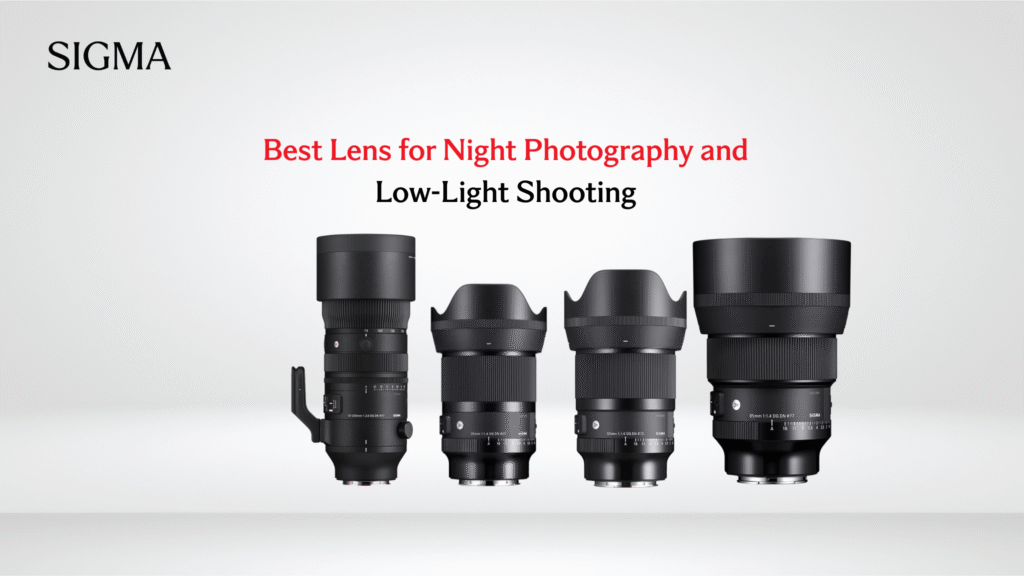
The first step on the way to the beautiful night shooting is the selection of the appropriate lens. SIGMA lenses are extremely diverse and are used in low-light environments, urban landscapes, events, and astrophotography. These lenses have high-speed apertures and new-fangled optics that allow you to take sharp, vivid and clean images in difficult light.
From wide-angle lenses for dramatic night skies to versatile zooms for events and portraits, SIGMA lenses give photographers the flexibility to shoot creatively without compromise. These expert recommendations cover the best options for street photography, portraits, astrophotography, and low-light events, helping you make confident lens choices for your nighttime adventures.
Best SIGMA Lenses for Night Street Photography
Night street photography is the art of photographing the lively city in the dark. What you want is equipment that would provide a razor-sharp performance, which is fast, and can work with artificial lighting. Large apertures assist in attaining high rates of shutter speed, reduced noise, and high optical effects, maintaining image clarity. This enables photographers to work hand-held in dark streets without fear, having creative control over framing, depth and exposure even in uncontrollable lighting conditions.
These are the best SIGMA lenses for sharp and vibrant night street shots:
SIGMA 24mm f/1.4 DG DN Art
The SIGMA 24mm f/1.4 DG DN Art lens is great for taking night street photos that pop. Its wide angle lets you get those cityscapes and neon streets just right. Plus, the f/1.4 aperture pulls in a lot of light, so you get less noise and can shoot at faster speeds. Everything stays sharp across the image, and special coatings keep streetlight glare under control. It’s also small and light, which is perfect when filming without support.
Key Features:
- Ultra-fast f/1.4 aperture for low-light clarity
- Wide-angle perspective for urban landscapes
- Excellent edge-to-edge sharpness
- Multi-layer coating to reduce flare
- Compact, lightweight design for street mobility
SIGMA 35mm f/1.4 DG DN Art
The SIGMA 35mm f/1.4 DG DN Art lens works well for night street shots and casual photos. Its standard focal length is a good mix of background and subject, which makes it great for capturing city life as it happens. The wide f/1.4 aperture provides brighter, clearer images, even in low light. The sharp lens gives you crisp details, even at the edges, and it’s built tough, allowing you to shoot spontaneously without worry. The autofocus is quick and dependable in low light, which helps you grab those quick moments on dimly lit streets.
Key Features:
- Bright f/1.4 aperture for low-light shooting
- Balanced 35mm field for context and detail
- Exceptional sharpness and clarity
- Durable, lightweight build for mobility
- Reliable autofocus in dim environments
Best SIGMA Lenses for Night Portrait Photography
Taking night portraits needs a lens that’s good at gathering light and creating a nice blurred background. Wide apertures can help separate your subject from the background, reduce image noise, and let you use faster shutter speeds when it’s dark. Good quality optics are key for sharp details and natural-looking skin. With these features, your night portraits can seem clean and professional, even if you don’t use a flash. These features are great for street shots, candid photos, and evening events.
Here are SIGMA’s best lenses designed for professional night portrait photography in low-light conditions:
SIGMA 50mm f/1.4 DG DN Art
The SIGMA 50mm f/1.4 DG DN Art lens works great for night portraits. Its wide f/1.4 enables you to obtain bright, clear shots, even when it’s dark. You can get a nice blurred background to make your subject stand out, and the sharp lens keeps faces looking detailed. It also deals with indoor lighting well, so you won’t get too much flare. Additionally, it’s small enough to carry around, and the autofocus is spot-on even when there’s not much light.
Key Features:
- Ultra-bright f/1.4 aperture for clean portraits
- Smooth bokeh for subject separation
- Sharp, detailed optics
- Minimal flare and ghosting
- Compact and lightweight for handheld use
SIGMA 85mm f/1.4 DG DN Art
The SIGMA 85mm f/1.4 DG DN Art lens works great for portraits in low light. Its long focal length separates your subject from the background, giving you that nice blurry background that looks professional. The wide aperture permits a lot of light, so your photos come out cleaner and more vibrant. It’s sharp from edge to edge, so you can see all the details, and coatings on the lens keep city lights from causing unwanted flare. Furthermore, it focuses fast, even when it’s dark, which is awesome for nighttime events or just grabbing casual shots.
Key Features:
- Long focal length for subject isolation
- Wide f/1.4 aperture for low-light clarity
- Smooth, creamy bokeh
- Sharpness across the frame
- Reliable low-light autofocus
Best SIGMA Lenses for Night Sky and Astrophotography
Astrophotography requires gear that can capture faint stars and wide night skies with minimal distortion. Ultra-wide perspectives help frame expansive scenes, while fast apertures collect more light for crisp stars and detailed Milky Way shots. Strong coma control keeps stars sharp across the frame, and advanced coatings reduce flare from nearby light sources. Lightweight builds work well on tripods, making long exposures easier and more stable.
Below are SIGMA’s top-recommended lenses for capturing stunning night skies and detailed astrophotography images:
SIGMA 14mm f/1.4 DG DN Art
This lens is great for photographers aiming to capture those stunning, super-wide night skies. It grabs broad starscapes and Milky Way shots with awesome sharpness. The wide aperture makes it possible to shoot cleaner long exposures, and the coma correction keeps stars crisp across the entire frame. Special coatings cut down on flare to keep contrast high, and its balanced build makes it comfy to use on a tripod during those long shoots.
Key Features:
- Ultra-wide angle for large night sky scenes
- Very bright aperture for low-light shooting
- Strong coma control for clean star points
- Flare-resistant optical coatings
- Tripod-friendly, balanced construction
SIGMA 20mm f/1.4 DG DN Art
This lens gives you a narrower view, great for mixing night skies with scenery or cityscapes. Because of its aperture, it takes bright, clear pictures even in low light, and it keeps things sharp from edge to edge. Stars look crisp and clear, and special coatings cut down on glare from nearby lights. Plus, it’s lightweight, so you can easily put together wide night shots.
Key Features:
- Wide focal length for astrophotography and landscapes
- Fast aperture for bright, detailed night images
- Consistent sharpness across the frame
- Coatings to control glare and reflections
- Lightweight design for stable tripod use
Best SIGMA Zoom Lenses for Low-Light Events and Night Use
Zoom lenses provide flexibility for low-light events like concerts, weddings, and parties. They maintain sharpness, handle artificial light well, and reduce blur in handheld shots. Photographers can capture wide scenes or isolate subjects without changing gear.
Below are the SIGMA best recommended zoom lenses for your events.
SIGMA 24-70mm f/2.8 DG DN II Art
The SIGMA 24-70mm f/2.8 DG DN II Art is a great lens for shooting at night. It goes from wide to a bit telephoto, good if you’re shooting groups, getting natural expressions, or getting some background. The f/2.8 stays the same the whole time, so your shots will be bright and clear. It also helps keep things from blurring when you’re not using a tripod. It stays sharp, even when you zoom, and the coatings help keep down glare. It’s built tough and can easily deal with longer shoots.
Key Features:
- Constant f/2.8 aperture for low-light.
- Versatile 24–70mm focal range.
- Optical stabilization for handheld shooting.
- Sharp across all focal lengths.
- Coatings reduce flare in artificial light.
SIGMA 70-200mm f/2.8 DG DN OS Sports
For lonely subjects at night events, it is none other than the SIGMA 70-200mm f/2.8 DG DN OS Sports who really represent some examples of such those typical living in that environment, to be regular and discreet. It has a long telephoto reach to grab images from far away.
Constant f/2.8 aperture permits usage in less-than-ideal lighting conditions. Optical stabilization enables handheld shooting without any motion blur. Edge-to-edge sharpness makes details clear, and lens coatings minimize distracting reflections from bright lights. The rugged build ensures it can handle long night shoots for some time.
Key Features:
- Telephoto 70–200mm for distant subjects
- Constant f/2.8 aperture for low-light
- Optical stabilization for handheld shots
- Sharp edge-to-edge performance
- Durable build for extended night use
Choosing the Right SIGMA Lens for Your Camera System
Wondering which SIGMA lens works best for your camera? Mirrorless and DSLR setups treat their lenses in distinct ways, so compatibility is key. SIGMA lenses are also available for both cameras and provide wide apertures, sharp optics and consistent performance. So, pick the best lens to make sure your camera produces solid low-light and night shots. Let’s discuss this in detail.
Using SIGMA Lenses on Mirrorless Cameras
SIGMA lenses are built to perform smoothly on mirrorless cameras. Autofocus stays fast and accurate even in low light. Wide apertures like f/1.4 or f/2.8 let in more light, giving bright, sharp, and low-noise images. Optical stabilization helps reduce handheld blur, while compact designs make them easy to carry for night streets, events, or astrophotography. Special lens coatings minimize flare from city lights, keeping your shots clean and vibrant.
Using SIGMA Lenses on DSLR Cameras
SIGMA lenses work reliably on DSLRs with strong mounts and optimized optics. Fast apertures capture more light, producing detailed, low-noise images at night. Wide-angle and telephoto settings provide some versatility for portraits, street photography or night skies. You also get stabilization and an accurate autofocus makes sure the results are sharp, while a rugged build will stand up to all-day shoots. Moreover, thanks to the advanced coatings on all glass and multiple elements in the lens, you’ll be able to get sharp, professional-quality still images in any low-light scenario.
Practical Night Photography Tips from Professionals
Night photography can be tricky, but small adjustments make a huge difference. Proper exposure, focus, stabilization, and lens choice help you capture sharp, vibrant, and clean images even in challenging low-light conditions. Here are the following tips to improve your night photography:
Tips:
- Exposure Balance for Night Scenes: Adjust shutter speed, aperture, and ISO carefully to balance ambient and artificial light. Bracketing exposures helps capture highlights and shadows for well-lit, natural-looking night images.
- Achieving Accurate Focus in the Dark: Use manual focus or focus assist tools when autofocus struggles. Focus on bright points, edges, or contrasting objects to ensure sharp, professional-quality results in low light.
- Improving Image Quality in Low Light: Shoot with fast-aperture lenses, keep ISO low, and use stabilization like tripods. Capture RAW files for post-processing, reducing noise while maintaining details and clarity.
Why SIGMA Pakistan Is the Right Place to Buy Night Photography Lenses
SIGMA Pakistan is the sole distributor of genuine SIGMA lenses in Pakistan. Buying from unauthorized sources can lead to fake products, no warranty, and limited after-sales support. When you buy from us, every lens comes with a full brand warranty and reliable after-sales service. We also offer doorstep delivery to make your purchase convenient and worry-free.
With over 100 authorized resellers nationwide, we ensure that authentic SIGMA lenses are accessible wherever you are. We organize photography classes and live demonstrations to help enthusiasts see lenses in action. Our team guides you through every purchase so you can make informed decisions that perfectly match your night photography needs. Buying through us combines trust, expertise, and convenience, giving you peace of mind with every lens.
Final Thoughts on Selecting the Best Lens for Night Photography
To sum up, choosing the right lens is the foundation of successful night photography. Fast apertures, precise optics, and minimal distortion allow you to capture sharp, vibrant images even in the darkest conditions. Whether shooting city streets, portraits, events, or astrophotography, SIGMA lenses provide reliable performance and creative flexibility.
Understanding lens characteristics, compatibility with your camera, and low-light capabilities helps you make informed decisions. Investing in the right lens not only improves image quality but also enhances confidence and creativity. With the proper SIGMA lens in hand, every night becomes an opportunity to capture stunning, professional-quality photographs that truly shine.
