
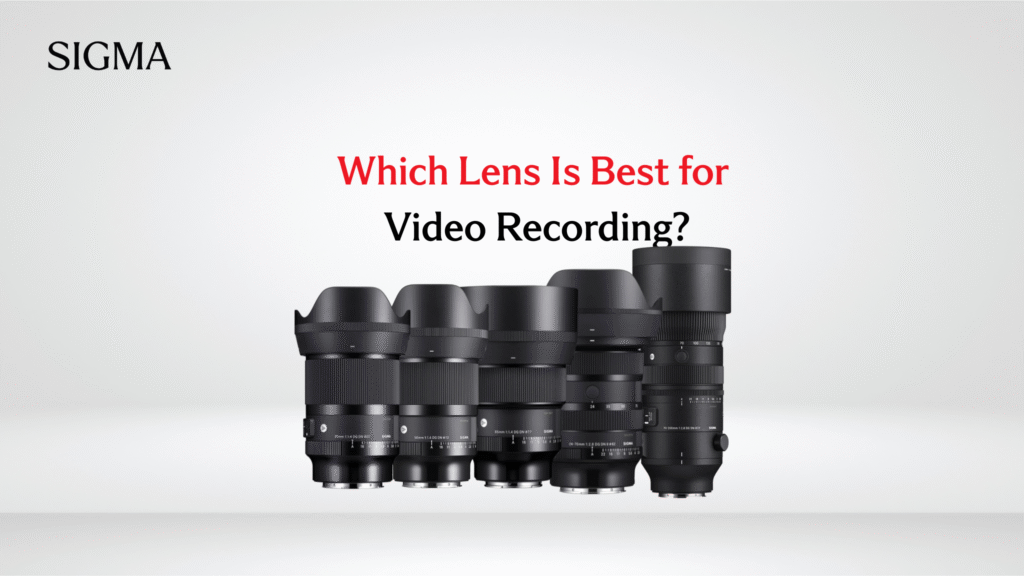
Choosing the best lens for video recording can feel overwhelming. Every creator online has a different opinion. Some recommend wide lenses. Others swear by a 50mm. Meanwhile, you simply want a video that looks clean, cinematic, and professional.
Here’s the truth. Video lenses are not about trends. Instead, they depend on how you shoot, what you shoot, and how close you are to your subject. A good lens controls motion, depth, and emotion. As a result, your footage feels smooth instead of shaky and cinematic instead of flat.
Whether you shoot interviews, YouTube videos, events, concerts, or short films, the right lens makes your workflow easier. In this guide, you’ll learn which lens is best for videography, how focal lengths work, and how Sigma lenses fit into real-world video production.
The Only Two Lenses You Need for Video
If you want a simple yet powerful setup, most videographers only need two lenses for video recording.
First, you need a wide-to-standard zoom lens. This lens handles talking shots, room scenes, vlogs, and handheld work. A lens like the Sigma 24–70mm f/2.8 offers flexibility. You can move from wide shots to medium framing without changing lenses, which saves time during shoots.
Second, you need a standard prime lens, usually a 50mm lens. This lens is perfect for cinematic close-ups, interviews, and emotional storytelling. It produces natural background blur and feels close to human vision.Together, these two lenses cover almost every video scenario. Simple gear leads to consistent, professional results.
Which One Lens Is Best for Videography | Advice for Videographers
If you must choose only one lens for videography, a standard zoom lens is the safest option. It adapts quickly to different shooting situations. You can reframe instantly without interrupting the flow of recording.
For beginners and professionals alike, a Sigma zoom lens is a smart investment. It reduces lens changes, maintains exposure, and keeps your workflow smooth. This matters most when filming events, interviews, or fast-paced content.
However, if you shoot controlled scenes, a 50mm prime lens can also work well. It encourages better framing and intentional movement. Ultimately, the best lens depends on your shooting style and environment.
Is a 50mm Lens Good for Video?
Yes, a 50mm lens is excellent for video recording, especially when you want natural-looking footage. It closely matches human vision, which makes scenes feel realistic and emotionally engaging. Faces appear balanced, while backgrounds blur smoothly.
For creators using Sigma 50mm Art lenses, the benefit is higher sharpness, accurate colors, and strong low-light performance. This makes the lens ideal for interviews, short films, and YouTube content.
However, it may feel tight in small spaces. Still, when you want clean storytelling shots with cinematic depth, the 50mm lens performs exceptionally well.
Which Type of Camera Is Best for Video Recording?
The best camera for video recording supports strong lenses, reliable autofocus, and modern video formats. Today, mirrorless cameras are widely preferred because they are lightweight and video-focused.That said, the lens matters more than the camera body. Even a mid-range camera can deliver professional results when paired with a high-quality Sigma lens. Sigma lenses work across major mirrorless systems and provide consistent performance.Good glass improves sharpness, color accuracy, and background separation. As a result, your videos look professional regardless of the camera you use.
Is 35mm or 50mm Better?
The choice between 35mm and 50mm depends on your shooting style. A 35mm lens is wider and more flexible. It works well for handheld shots, indoor filming, and vlogs.On the other hand, a 50mm lens feels tighter and more cinematic. It is ideal for close-ups, interviews, and emotional scenes.Sigma offers both focal lengths in its Art series. Many professionals carry both lenses to stay creative in different situations. This combination provides balance, flexibility, and visual consistency.
Which Focal Lengths Are Commonly Used for Videography?
Most videographers rely on a small group of focal lengths. 24mm to 35mm works well for wide shots and movement. 50mm is commonly used for interviews and storytelling. 85mm to 100mm creates strong compression and dramatic visuals. Sigma lenses cover all these focal lengths, which makes them versatile tools for video creators. Zoom lenses offer speed and flexibility, while prime lenses provide cleaner depth and better low-light results.Understanding focal lengths helps you choose lenses that match your creative goals.
Which Lenses Do You Use the Most for Shooting Video?
Many professionals rely on a standard zoom lens as their main video tool. It handles unpredictable scenes and speeds up production. A Sigma 24–70mm zoom lens is often the most used option because it adapts instantly.Alongside it, a Sigma 50mm prime lens is used for cinematic close-ups and interviews. This two-lens setup allows creators to shoot wide, medium, and tight shots confidently.The goal is not to own many lenses. Instead, it is using a few reliable lenses that deliver consistent quality.
Best Camera Lens for Cinematic Video Shoots
The best camera lens for cinematic video shoots delivers smooth focus, pleasing background blur, and natural colors. Wide apertures help separate subjects and add emotional depth.Sigma lenses are popular for cinematic video because they balance sharpness with organic rendering. They avoid harsh digital looks and maintain consistency across scenes.Sigma lenses can help you tell better stories, no matter if you pick a zoom or a prime. They’re good for movies, documentaries, branded content, and even those high-quality social media videos.
What is a 50mm lens best for?
A 50mm lens is best for storytelling video. It captures emotion without distortion. This makes it ideal for interviews, dialogue scenes, portraits, and cinematic sequences.Sigma 50mm lenses stand out for clarity and smooth background blur. They isolate subjects naturally and perform well in low light.If your work focuses on people, emotion, and narrative, a 50mm lens is a reliable creative choice.
What Are the Disadvantages of a 50mm Lens?
Despite its strengths, a 50mm lens has limitations. It can feel tight in small rooms, which forces you to step back. This is not always possible indoors.It also lacks the flexibility of a zoom lens. For this reason, many videographers pair a 50mm lens with a Sigma zoom lens.Knowing these limitations helps you plan shots better. When used correctly, the advantages still outweigh the drawbacks.
Is a 50mm Camera Good for Concert Videography?
A 50mm lens works well for concert videography, especially for close-ups and emotional moments. It handles stage lighting beautifully and separates performers from busy backgrounds.Sigma 50mm lenses perform strongly in low light. However, they work best from a controlled distance. For wide stage shots, a zoom lens is more practical.Many concert shooters combine a Sigma zoom lens with a 50mm prime for full coverage.
What Is a 50–100mm Lens Used For?
The 50–100mm focal range is used for portraits, interviews, performances, and cinematic compression. It adds depth and isolates subjects effectively.Sigma lenses in this range maintain sharpness and color consistency. They are ideal when you want attention focused on the subject, not the background.These focal lengths are common in films, documentaries, and live performances.
What Distance Is a 50mm Lens Good For?
A 50mm lens works best at medium distance. It performs well when you stand a few feet away from your subject. This allows natural framing without distortion.This distance is perfect for interviews and dialogue scenes. Sigma 50mm lenses maintain clarity and focus at this range.Understanding working distance helps you frame confidently and achieve consistent results.
Final Thoughts
The best lens for video recording depends on how you shoot. Zoom lenses offer speed and flexibility. Prime lenses offer depth and emotion.Start simple. Choose lenses that match your style. And remember—great video comes from understanding your lens, not owning too many of them.
