
Choosing the right portrait lenses can completely transform your photography. Even with all the advanced camera technology arriving in 2026, the lens you pick still determines image sharpness, depth, and subject separation. While many photographers focus on camera bodies, professionals know that prime lenses and zoom lenses do the real heavy lifting when it comes to flattering results.
This guide is designed to keep things practical and simple. From aperture advantages to real-world use cases, you’ll learn how to choose the best lens for your style, ensuring every shot looks professional and polished. By the end, you’ll feel confident picking lenses that support both your creativity and long-term growth.
What Is a Portrait Lens?
If you’re serious about finding the right lens, you know that how it actually feels out in the mud and wind matters a lot more than just the numbers on a box. Having fast autofocus, steady shots, and a lens that can take a few bumps is what makes all the difference when things get wild. Plus, it’s great to know your photos will look professional even when you’re zoomed in all the way.
The goal of portrait photography is to highlight expressions, skin tones, and emotion while minimizing distortion. Therefore, focal length plays a critical role in shaping perspective. Wider lenses can distort facial features if used too closely, whereas mid-to-telephoto lenses provide natural proportions.
Additionally, aperture performance matters significantly. Portrait lenses often feature wide apertures such as f/1.4 or f/1.8, which allow smooth background blur and strong subject separation. Combined with sharp optics and fast autofocus, these features ensure professional clarity and consistent results in both studio and outdoor environments.
Why Focal Length Matters in a Portrait Lens
Focal length directly affects facial proportions and background compression. Shorter focal lengths like 35mm work well for environmental portraits, while 85mm to 135mm produces flattering headshots. Longer focal lengths compress perspective, making facial features appear balanced and natural. This is why many professionals rely on mid-telephoto lenses for close-up portraits.
Moreover, proper distance between subject and photographer reduces distortion. Instead of standing too close with a wide lens, a longer focal length allows comfortable working space and better composition. Choosing the right focal length ensures natural rendering and professional-level results.
How Wide Aperture Creates Background Blur
A wide aperture, such as f/1.4 or f/1.2, allows more light to enter the sensor while reducing depth of field. As a result, the subject appears sharp while the background becomes soft and blurred.
This effect, commonly known as bokeh, enhances subject isolation and draws viewer attention to facial expressions. Wider apertures also improve low-light performance, allowing photographers to shoot indoors without increasing ISO excessively.
In professional portrait work, background blur is not just aesthetic; it eliminates distractions. Clean separation between subject and surroundings gives images a polished, cinematic look that clients value.
Key Features of a Professional Portrait Lens
Professional portrait lenses share several essential features. These include fast apertures, high sharpness, reliable autofocus, durable build quality, and mount compatibility. Each feature contributes to image consistency and long-term reliability. Understanding these core characteristics ensures photographers invest in equipment that supports demanding professional workflows without compromise.
Fast Aperture (f/1.4 – f/1.2)
Fast apertures allow better control over depth and light. Many professionals prefer a prime lens with f/1.4 or wider for its superior background separation. Wider apertures also enable lower ISO usage in dim conditions, resulting in cleaner images. In weddings or indoor events, this advantage becomes critical.
Additionally, shallow depth of field enhances subject focus while creating dramatic visual impact. A fast aperture is often the defining characteristic that separates entry-level lenses from professional optics. For serious portrait photographers, aperture flexibility directly impacts creative freedom and image quality.
Sharpness & Detail Rendering
Sharpness defines professional quality. Modern portrait lenses are engineered to deliver high center sharpness while maintaining smooth edge transitions. High-resolution sensors demand precise optics. Therefore, quality glass elements reduce chromatic aberration and maintain clarity even at wide apertures.
Skin tones must appear natural and detailed without harsh contrast. Balanced rendering ensures fine textures remain visible while preserving softness where needed. Consistent sharpness across various apertures improves reliability. Professionals rely on predictable performance, especially when delivering high-resolution commercial work.
Autofocus Accuracy
Accurate autofocus ensures sharp eyes and crisp facial details. In portrait photography, eye focus is critical. Modern systems use advanced motor technology for fast and silent operation. Whether using a prime lens or a zoom lens, precision matters equally.
Eye-detection autofocus combined with responsive motors increases keeper rates. This is especially valuable during events where expressions change quickly. Reliable autofocus also improves workflow efficiency. Instead of refocusing repeatedly, photographers can concentrate on composition and client interaction.
Build Quality & Reliability
Professional portrait sessions often involve outdoor conditions and extended shooting hours. Therefore, lens construction matters. Weather sealing, durable materials, and stable internal mechanisms ensure long-term reliability. High-quality lenses maintain performance even after intensive use.
Professional optics also resist dust and moisture. This durability protects your investment and reduces maintenance costs. Strong build quality ensures consistent performance across years of assignments, making it a key consideration when selecting premium portrait lenses.
L-Mount & Sony E Compatibility
Modern professionals require system flexibility. Many portrait lenses are available in L-Mount and Sony E-Mount formats.
This compatibility ensures seamless integration with leading mirrorless systems. Autofocus accuracy, stabilization, and communication between camera and lens remain optimized.
Choosing compatible mounts protects long-term system investment. As mirrorless technology continues to dominate the market, selecting lenses that fully support these platforms guarantees professional reliability and performance consistency.
Prime vs Zoom as a Portrait Lens
The debate between prime lens and zoom lens options continues in professional portrait work. While primes emphasize optical simplicity and wide apertures, zooms prioritize framing flexibility. Understanding both types helps photographers select tools that match their shooting style. Some professionals carry both to maximize versatility. The choice ultimately depends on workflow, subject distance, and creative goals.
If you want a deeper comparison of focal length flexibility, aperture performance, and real-world use cases, read our detailed Prime vs Zoom Lens Guide to understand which option suits your photography style best.
Why Prime Lenses Are Preferred for Portrait Photography
A prime lens offers wider apertures and often superior optical sharpness. Many portrait specialists favor primes because of their shallow depth of field and artistic rendering. An 85mm prime lens remains a classic choice for flattering headshots due to its natural compression and creamy background blur.
Additionally, primes are lightweight and encourage deliberate composition. By physically moving instead of zooming, photographers refine framing skills. For studio portraits and creative headshots, primes provide unmatched aesthetic control and image consistency.
When a Zoom Lens Works for Portraits
A zoom lens offers flexibility during dynamic sessions. In weddings or events, subjects move constantly. Therefore, quick focal adjustments become essential. If you wonder what is a zoom lens, it is a camera gear that covers multiple focal lengths in one body. This adaptability supports efficient shooting.
In zoom lens photography, versatility reduces lens changes and speeds workflow. High-end models, often considered the best zoom lens choices, deliver excellent sharpness. Although zoom lens price may be higher, the efficiency and convenience justify the investment in professional environments.
Top SIGMA Portrait Lens Options
SIGMA offers industry-leading optics designed for professional results. These portrait lenses combine advanced engineering with artistic rendering. From versatile mid-range focal lengths to specialized telephoto options, SIGMA delivers consistent performance across modern mirrorless systems.
While major camera brands like Sony produce strong native-mount lenses, SIGMA has positioned itself globally as a leader in high-quality third-party optics particularly for Sony E-mount and L-Mount systems. The brand is known for combining sharpness, fast apertures, and reliable autofocus at competitive pricing.
Whether you prefer a prime lens or a sigma zoom lens, the lineup supports diverse creative needs while maintaining professional optical standards trusted worldwide.
35mm: The Environmental Portrait Storyteller
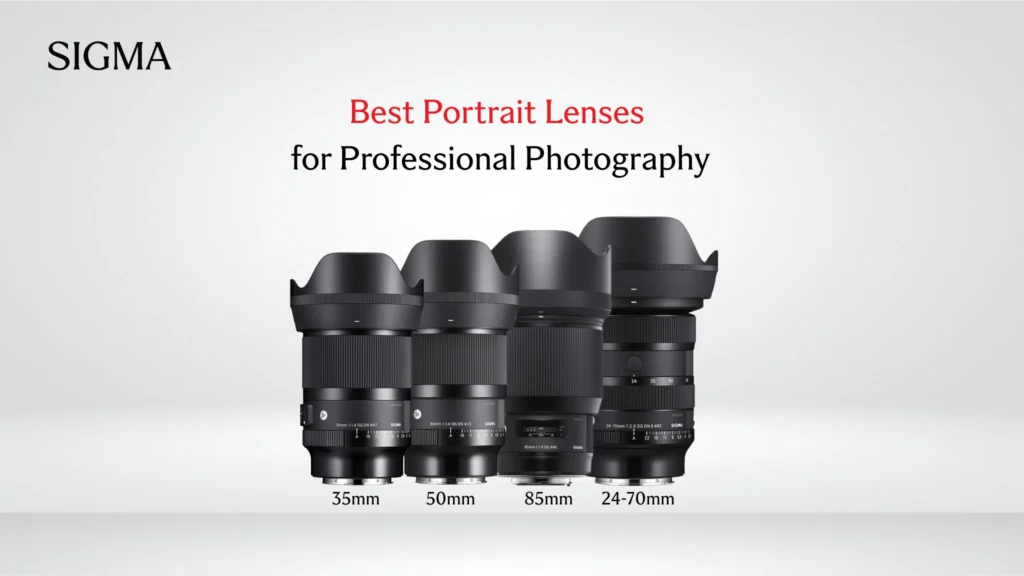
The SIGMA 35mm F1.4 DG DN | Art is ideal for environmental portraits that combine subject and surroundings. A 35mm focal length captures context while keeping attention on the person. This makes it perfect for lifestyle, documentary, and brand storytelling sessions. Because of its wide aperture, it produces soft background blur without removing important environmental details. As a result, images feel immersive and natural. Moreover, the perspective remains realistic, avoiding heavy compression.
If you want portraits that tell a broader story while maintaining subject clarity, 35mm offers balanced depth, strong sharpness, and creative flexibility.
50mm: The Natural Perspective of the Human Eye
The SIGMA 50mm F1.4 DG DN | Art delivers a perspective close to natural human vision. Because of this balanced focal length, portraits feel realistic and visually comfortable. It works well for studio sessions, outdoor shoots, and commercial headshots.
Additionally, the wide f/1.4 aperture creates beautiful background blur while preserving sharp facial details. This combination makes it a reliable choice for professionals who need versatility. Since distortion remains minimal, facial proportions look natural even at closer distances. Therefore, 50mm remains one of the most trusted focal lengths for photographers seeking consistent, professional portrait results.
85mm: The Gold Standard for Professional Headshots
The SIGMA 85mm F1.4 DG DN | Art is widely recognized as a professional standard for portrait work. An 85mm focal length provides flattering compression that enhances facial structure without distortion. Because of its wide aperture, it produces smooth, creamy background blur that isolates the subject beautifully. As a result, headshots appear polished and refined.
This lens performs exceptionally well for corporate portraits, wedding photography, and creative studio sessions. Moreover, the working distance allows comfortable interaction with clients. If your focus is high-end portrait quality with strong subject separation and natural proportions, 85mm remains a top-tier professional choice.
SIGMA 135mm F1.4 DG DN | Art – Maximum Compression
The SIGMA 135mm F1.4 DG DN | Art delivers dramatic compression and powerful subject isolation. With this longer focal length, backgrounds appear closer and softer, creating cinematic depth. Because of its fast f/1.4 aperture, it produces exceptional bokeh while maintaining outstanding sharpness on the subject. This makes it ideal for tight headshots and artistic portrait sessions.
Additionally, 135mm minimizes distortion and enhances detail clarity, especially in facial features. The extended working distance also provides comfortable shooting space. For photographers seeking maximum separation, strong compression, and premium optical performance, 135mm offers unmatched visual impact and professional-level results.
Choosing the Best Portrait Lens for Your Photography Style
Selecting among portrait lenses depends on shooting style, subject distance, and creative vision. Some photographers prioritize shallow depth and controlled environments. Others need flexibility during fast-paced assignments.
Before purchasing, evaluate lighting conditions, working distance, and client expectations. While primes emphasize aesthetic control, zooms provide adaptability. Balancing focal length, aperture, and workflow ensures long-term satisfaction. Rather than following trends, align lens choice with professional goals and project demands.
Wedding & Event Portraits
Wedding and event portraits require flexibility, speed, and consistent performance. In fast-moving environments, a zoom lens helps photographers adjust framing instantly without changing position. This is especially useful for group portraits, candid reactions, and ceremony moments.
However, many professionals also carry a fast prime lens for romantic couple portraits and low-light scenes. By combining both, photographers balance versatility with artistic depth. Since events are unpredictable and space can be limited, adaptable focal length coverage is essential. It reduces missed opportunities and ensures a smooth workflow throughout the entire celebration.
A standard 24–70mm professional zoom lens is commonly used for wedding and event portrait photography because it offers framing flexibility without compromising image quality.
Studio & Commercial Portrait Photography
Studio and commercial portrait photography prioritize control, lighting precision, and consistent results. In controlled environments, photographers often prefer a prime lens because it offers sharp detail and predictable depth of field. Since lighting setups remain stable, focal flexibility becomes less critical than optical quality. Wide apertures help create clean subject separation when needed. Additionally, commercial clients expect accurate color rendering and consistent clarity.
Therefore, professionals choose lenses known for reliable performance and strong detail reproduction, ensuring every image meets branding, advertising, and corporate standards.
Environmental & Street Portraits
Environmental and street portraits combine subject presence with surrounding context. A moderate focal length allows photographers to include background elements while maintaining subject focus. In busy urban settings, a lightweight prime lens supports mobility and discretion.
However, in dynamic scenes, a zoom lens can provide quick framing adjustments without interrupting the moment. Because lighting and movement change rapidly outdoors, adaptability becomes essential. Ultimately, strong observation skills and thoughtful composition matter most, while the chosen lens supports storytelling and authentic visual expression.
Portrait Lens Quick Comparison Table
| Focal Length | Best For | Background Blur | Working Distance | Ideal Use Case |
| 35mm | Environmental portraits | Moderate | Close | Lifestyle, documentary, storytelling |
| 50mm | Natural perspective portraits | Strong | Medium | Studio, commercial, everyday portraits |
| 85mm | Professional headshots | Very strong | Comfortable | Corporate, weddings, classic portraits |
| 135mm | Tight headshots, artistic work | Maximum | Longer | Cinematic portraits, subject isolation |
| 24–70mm (Zoom) | Flexible framing | Moderate to strong | Adjustable | Events, weddings, dynamic sessions |
Before investing, compare focal length needs, working distance, and professional workflow.
Where to Buy Official SIGMA Lenses in Pakistan
To ensure authenticity and warranty coverage, purchase through Sigma Pakistan’s official website and authorized dealer network. With over 100+ resellers nationwide, customers receive genuine products, reliable after-sales support, and verified quality assurance.
Buying from authorized sources protects your investment and guarantees brand warranty, original packaging, technical assistance, and transparent pricing. Sigma Pakistan maintains strict quality standards, ensuring professional photographers access reliable equipment across the country.
Always verify dealer authorization before purchase to secure long-term performance and peace of mind.
Frequently Asked Questions
The best focal length for portraits typically ranges between 85mm and 135mm. These lengths provide flattering compression and natural facial proportions. They also create strong background blur for subject separation. However, 50mm works well for half-body shots, while 35mm suits environmental portraits with added context.
Both 50mm and 85mm are excellent for portraits, but they serve different purposes. A 50mm lens offers a natural perspective and works well in tighter spaces. An 85mm lens provides better compression and smoother background blur, making it ideal for professional headshots and close-up portraits.
Apertures between f/1.4 and f/2.8 are ideal for portrait photography. Wider apertures like f/1.4 create soft background blur and strong subject isolation. Meanwhile, f/2 to f/2.8 maintains sharp facial details while keeping depth control. The right choice depends on lighting conditions and desired artistic effect.
Yes, many professionals prefer prime lenses for portrait photography. Prime lenses often provide wider apertures, sharper image quality, and smoother background blur. They also encourage deliberate composition and controlled framing. For studio and wedding portraits, prime lenses deliver consistent, high-end visual results.
Yes, 135mm is excellent for portraits, especially tight headshots. It provides strong compression, flattering facial proportions, and dramatic background separation. The longer focal length also minimizes distortion and enhances detail clarity. Many professionals use 135mm for artistic portraits requiring cinematic depth and powerful subject isolation.
