
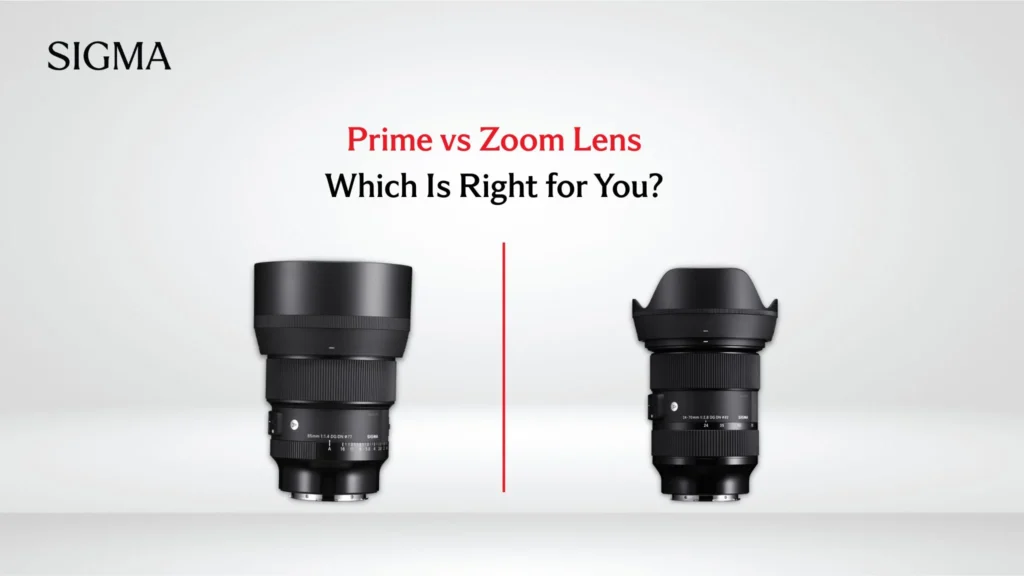
Choosing between a prime and a zoom lens is one of the biggest decisions photographers face in 2026. Both options deliver excellent results, yet they serve different creative purposes. If you are confused about prime vs zoom, you are not alone. Many beginners and even experienced creators struggle to decide which lens suits their style, budget, and workflow. While gear discussions often focus on brand and specifications, the real difference lies in flexibility, aperture control, and shooting experience. Some photographers prefer lightweight simplicity. Others value versatility in fast-changing situations. Therefore, understanding how each lens works helps you make a smart, long-term investment.
This guide breaks everything down in simple language. By the end, you will clearly understand strengths, limitations, and ideal use cases so you can confidently choose the right lens for your photography journey.
What Is a Prime Lens?
If you are asking what a prime lens is, the answer is simple: it is a lens with a fixed focal length. That means it does not zoom in or out. Instead, you physically move closer or farther from your subject to adjust framing. This fixed lens is known for sharp image quality, wider apertures, and lightweight design. Because it has fewer internal moving parts, it often produces cleaner images with strong contrast and clarity. Fast prime options are popular among portrait photographers, street shooters, and low-light creators. They encourage intentional composition and help photographers develop better framing skills. Although they lack zoom flexibility, they offer superior optical performance and creative control.
Fixed Focal Length Explained
A fixed focal length means the lens captures images at one specific distance, such as 35mm, 50mm, or 85mm. You cannot zoom in electronically or mechanically. Instead, you adjust composition by moving physically. This limitation actually improves creativity. Photographers learn to observe angles and positioning more carefully. Because the lens design is simpler, image sharpness often improves. Many professionals prefer fixed focal lengths for consistent framing and reliable results in portraits, street photography, and controlled studio environments.
Why Prime Lenses Have Wider Apertures
Prime lenses often feature wider maximum apertures like f/1.4 or f/1.8. This is possible because their optical construction is simpler. A wider aperture allows more light into the sensor, improving low-light performance significantly. In dim environments, this advantage becomes noticeable. You can keep ISO lower and maintain cleaner images. Additionally, wide apertures create stronger background blur, also known as bokeh.
For example, an 85mm portrait prime is widely used in portrait work because it produces flattering compression and creamy background separation. Wider apertures not only enhance artistic control but also allow faster shutter speeds indoors. Therefore, these fast lenses remain a favorite for photographers who prioritize low-light and subject isolation performance.
When to Use a Prime Lens
Use a prime lens when image quality, background blur, and low-light performance matter most. Portrait sessions, street photography, and indoor events benefit greatly from wider apertures. Additionally, fixed focal options are ideal when you want a lightweight setup. Travel shooters who prefer minimal gear often choose a single focal length for creative discipline. If you enjoy moving around to frame shots carefully, this lens type will strengthen your visual storytelling skills while maintaining sharp, high-quality results.
What Is a Zoom Lens?
If you are wondering what a zoom lens is, it is a lens that covers multiple focal lengths within one unit. Instead of moving physically, you adjust framing by rotating the zoom ring. For example, a 24-70mm lens lets you capture wide shots and medium telephoto views without changing lenses. A versatile zoom option offers flexibility and speed. It is highly practical in dynamic environments like weddings, sports, or travel. Because you can quickly adapt to distance changes, you avoid missing important moments.
While zoom-based models may be slightly heavier, they simplify workflow. Many photographers rely on them when conditions change quickly and repositioning is not possible.
Variable Focal Length Explained
Variable focal length means the lens can cover a range, such as 70-200mm or 24-105mm. This allows you to adjust framing instantly. Instead of swapping lenses, you zoom in for close-ups and zoom out for wider views. This saves time during fast events. Although some variable focal lenses have variable apertures, professional models maintain constant brightness throughout the range. Flexibility makes them ideal for event coverage and outdoor shooting conditions.
Why Zoom Lenses Offer More Flexibility
Zoom lenses excel in unpredictable situations. If your subject moves or distance changes quickly, you can adjust framing without physically relocating. For example, in wedding ceremonies, photographers cannot interrupt moments. A multi-range zoom setup lets them capture wide venue shots and tight emotional close-ups instantly. Wildlife photographers also benefit because animals rarely stay still.
Additionally, these versatile zoom models reduce the need to carry multiple lenses. Instead of packing three focal lengths, one lens can handle various scenarios. This flexibility improves efficiency and workflow. Although these lenses may not always match the widest apertures of primes, their adaptability makes them extremely valuable for versatile shooting environments.
When to Use a Zoom Lens
Choose a zoom lens when flexibility and speed are priorities. Events, wildlife, sports, and travel often require quick adjustments. In crowded locations where movement is limited, zoom capability becomes essential. If you prefer convenience over switching lenses repeatedly, a zoom-friendly option is practical. Many professionals use zooms for fast-paced projects where capturing the moment matters more than achieving extreme background blur.
The “Fixed vs. Variable” Focal Length Debate
The debate in prime vs zoom often centers on creative control versus flexibility. Fixed focal lengths encourage intentional framing and stronger composition skills. Meanwhile, variable focal lengths prioritize adaptability. Prime users argue that simplicity improves discipline and image sharpness. Zoom users highlight speed and convenience in unpredictable conditions. In reality, both serve different needs. Studio and portrait photographers may lean toward primes, while event shooters favor zooms. Rather than choosing one universally, many professionals combine both in their kit. The right answer depends on shooting style, budget, and workflow preferences—not on brand loyalty or trends.
Prime vs Zoom Lens – Key Differences
Understanding key differences helps simplify the prime vs zoom decision. While primes emphasize sharpness and wide apertures, zooms prioritize versatility. Both have strengths in different scenarios. Comparing image quality, size, cost, and performance in low light clarifies which suits your creative direction best.
Sharpness & Image Quality
Prime lenses often deliver slightly sharper images due to simpler optical construction. Fewer moving elements reduce distortion and chromatic aberration.
However, modern professional zoom lenses have improved significantly. High-end zooms now rival primes in clarity, especially in mid-range focal lengths. For commercial work, both can produce excellent results. That said, pixel-level sharpness may favor primes in controlled environments. For everyday shooting, differences are minimal. Therefore, image quality alone should not determine your purchase. Instead, consider your shooting conditions and creative requirements before deciding.
Aperture & Low Light Performance
Prime lenses generally offer wider apertures like f/1.4 or f/1.8. This improves low-light performance and background separation. Zoom lenses typically range between f/2.8 and f/4. While professional zooms maintain constant aperture, they rarely match extreme brightness of primes. In dim environments such as indoor events, primes allow lower ISO settings and cleaner images. However, f/2.8 zoom lenses still perform reliably in most professional situations. If low-light photography is your priority, primes hold a technical advantage.
Depth of Field & Bokeh
Wider apertures create stronger subject separation and creamy background blur. Prime lenses excel in producing smooth bokeh effects. Portrait photographers often prefer fixed focal lengths for aesthetic depth control. However, zoom lenses at longer focal lengths can also create pleasing compression. Ultimately, both can deliver professional results. The difference lies in maximum aperture capability. If artistic blur is central to your style, primes offer more dramatic separation. Otherwise, zooms remain versatile and effective.
Size & Weight
Prime lenses are usually smaller and lighter. This makes them ideal for travel and street photography. Zoom lenses, especially professional models, tend to be heavier due to complex internal mechanisms. Carrying multiple primes may offset weight savings, though. If portability is essential, primes offer comfort. If convenience matters more than minimal weight, zooms simplify your kit. Therefore, consider how often you travel and how long you shoot in one session.
Cost Comparison
Price often influences buying decisions. Prime lenses are generally more affordable at entry level. However, professional zooms can cost significantly more due to advanced engineering. Comparing prime lens price in Pakistan and overall zoom lens price helps buyers plan realistically.
| Feature | Prime Lens | Zoom Lens |
| Focal Length | Fixed | Variable |
| Aperture | Wider (f/1.4–f/1.8) | Moderate (f/2.8–f/4) |
| Flexibility | Limited | High |
| Weight | Lightweight | Heavier |
| Best For | Portraits, low light | Events, travel |
| Cost | Moderate | Higher |
Prime vs Zoom for Different Photography Styles
Different photography styles demand different tools. In the ongoing prime vs zoom discussion, context matters most. Portraits may benefit from shallow depth, while wildlife requires reach and adaptability. Instead of choosing based on trends, evaluate how each lens supports your specific creative goals.
Portrait Photography
Portrait photographers often prefer wide apertures for background separation. An 85mm prime lens remains a classic choice for flattering compression and creamy bokeh. However, mid-range zoom options like 24-70mm can also handle portrait sessions effectively. Studio professionals may use primes for artistic control, while event portrait shooters prefer variable focal flexibility. If your focus is aesthetic blur and low light, primes perform exceptionally. If you shoot group portraits and single subjects in one session, these multi-purpose zoom models provide practical framing control.
Wedding Photography
Weddings are unpredictable. Moments happen quickly, and repositioning is not always possible. Therefore, zoom lenses dominate wedding coverage. A 24-70mm or 70-200mm lens allows quick adjustments without lens changes. However, many professionals carry a fast prime for creative couple portraits. Combining both ensures flexibility and artistic depth. For wedding coverage, versatility usually outweighs fixed focal limitations.
Travel Photography
Travel photographers value portability and convenience. A lightweight prime encourages minimal gear, while a versatile zoom reduces lens swapping. If you want flexibility for landscapes and street scenes, a zoom works well. However, many creators enjoy traveling with one fast prime to simplify their setup. Ultimately, your travel style determines the choice. For dynamic city shooting, zoom lens photography offers quick adaptability.
Wildlife & Sports
Wildlife and sports demand reach and speed. Subjects move unpredictably and often remain distant. A telephoto zoom lens is essential here. It allows quick focal adjustments without losing action. Primes can offer superior sharpness, but fixed focal length limits framing flexibility. For fast-moving scenarios, telephoto zoom setups provide a clear advantage. Professionals rely on adaptable long-range zoom models for consistent results.
Video & Cinematic Work
Video creators consider focus breathing, aperture consistency, and smooth zoom control. Zoom lenses provide flexibility during live recording. However, primes deliver cinematic depth and low-light strength. Many filmmakers combine both. A fast prime supports dramatic scenes, while a versatile zoom handles run-and-gun shooting. Choosing depends on production style and movement control needs.
Pros and Cons of Prime Lenses
Prime lenses offer simplicity and strong optical performance, but understanding their advantages and limitations helps photographers make smarter decisions.
Pros:
- Wider apertures allow better performance in low light.
- These lenses are lightweight, compact, and easy to carry.
- They often produce sharper images with better clarity.
- Strong background blur creates beautiful subject separation effects.
Cons:
- They do not offer zoom flexibility for framing.
- You must move physically to adjust composition distance.
- Multiple lenses are required to cover different focal lengths.
Pros and Cons of Zoom Lenses
Zoom lenses provide versatility and convenience, yet photographers should evaluate their strengths and trade-offs before choosing one.
Pros:
- Zoom lenses provide flexible framing without changing position.
- They reduce the need for frequent lens changes.
- Ideal for events, travel, and dynamic shooting situations.
- They support an efficient and faster shooting workflow.
Cons:
- These zoom-based systems are generally heavier than prime options.
- They usually offer smaller maximum aperture openings.
- Professional zoom-range models often come at higher prices.
Best Prime & Zoom Lens Options in Pakistan
In Pakistan, photographers have access to high-quality lens options through authorized distributors. When comparing prime lens price and zoom pricing, consider performance and long-term value rather than just cost.
Recommended Prime Lenses
- Sigma 35mm f/1.4 Art – Ideal for street and low-light photography
- Sigma 50mm f/1.4 Art – Excellent for portraits and studio work
- Sigma 85mm f/1.4 Art – Professional portrait lens with beautiful compression
These lenses deliver strong sharpness and wide apertures for creative control.
Recommended Zoom Lenses
- Sigma 24-70mm f/2.8 Art – Versatile standard zoom for events
- Sigma 70-200mm f/2.8 – Excellent telephoto performance
- Sigma 150-600mm – Popular wildlife option and considered among the best zoom lens choices
A professional sigma zoom lens balances flexibility and image quality.
Why Buying from an Authorized Distributor Matters
Purchasing from an authorized distributor ensures product authenticity, warranty support, and long-term reliability. Sigma Pakistan provides genuine products, verified quality, and after-sales service across the country. Buying from trusted sources protects your investment. Warranty coverage ensures technical support if needed. Additionally, official distributors Hope Enterprises provide updated models and transparent pricing, helping photographers make secure purchases with confidence.
Frequently Asked Questions
In many cases, a prime lens can produce slightly sharper images because it has a simpler optical design. Fewer moving elements often result in better clarity and contrast. However, modern high-quality variable focal length lenses also deliver excellent sharpness, especially professional-grade models from trusted brands.
Professional photographers use prime lenses because they offer wider apertures, strong background blur, and consistent image quality. They perform better in low light and create pleasing subject separation. In addition, fixed focal lengths encourage photographers to move creatively and improve composition skills.
Yes, you can absolutely use a zoom range lens for portrait photography. Many photographers prefer focal lengths between 70mm and 135mm for flattering facial compression. A good zoom allows flexible framing without changing position, which is helpful during events, weddings, and fast-paced portrait sessions.
Prime lenses are generally better for low light because they often have wider maximum apertures like f/1.8 or f/1.4. Wider apertures allow more light into the camera sensor. While some professional zoom setups perform well, primes usually deliver brighter exposures and cleaner images in dark conditions.
Both lens types can work well for portraits, but many photographers prefer an 85mm prime lens for natural compression and beautiful background blur. However, a quality zoom lens also offers flexibility during shoots. The best choice depends on your style, shooting environment, and creative preference.
👉For more lens comparisons and buying guides, visit Sigma Pakistan official blog section.
Final Thoughts
Choosing between prime and zoom lenses depends entirely on your creative style and workflow. The prime vs zoom debate has no universal winner. Primes excel in low light and artistic depth, while zooms dominate flexibility and speed.
Instead of following trends, evaluate your shooting environment and goals. Many professionals combine both for maximum versatility. If you prioritize sharp portraits and cinematic blur, primes shine. If you need adaptability in fast situations, zooms deliver. With the right knowledge and trusted purchasing decisions, you can build a lens kit that supports growth and long-term creative success in any photography field.
