
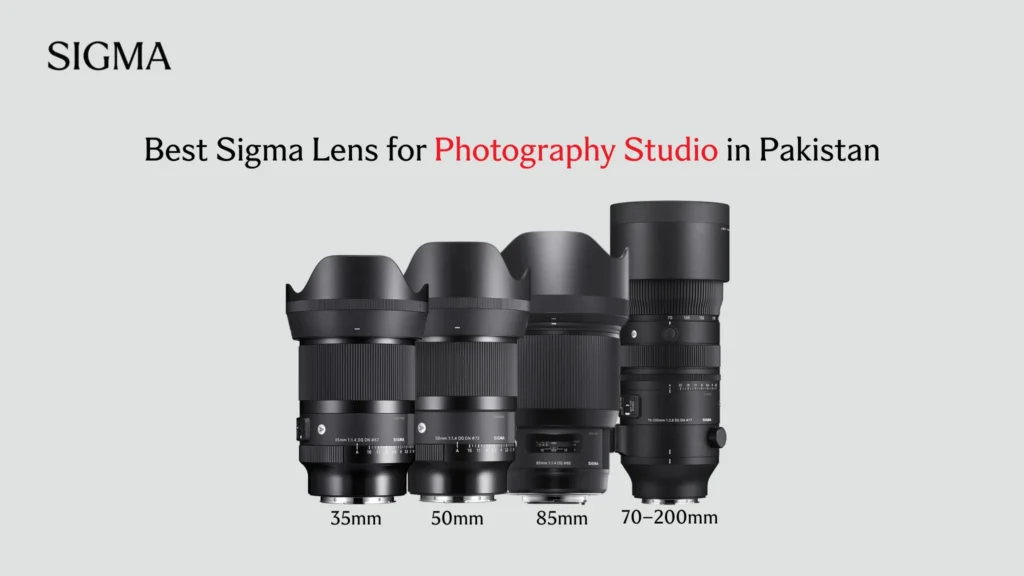
Choosing the right lens for a photography studio in Pakistan is one of the most important decisions a serious creator can make. While camera bodies evolve every year, lens quality continues to define sharpness, color depth, and subject separation. In controlled indoor environments across Karachi, Lahore, Islamabad, and other major cities, precision matters even more. Every detail from skin tones to fabric textures must appear accurate and refined.
Moreover, studio professionals in Pakistan require equipment that performs consistently under artificial lighting conditions commonly used in commercial setups. Whether you capture portraits, fashion campaigns, corporate headshots, wedding studio sessions, or commercial products, lens performance directly impacts client satisfaction. Therefore, selecting the best lens for studio photography is not simply about focal length. It involves aperture control, optical clarity, system compatibility, and local availability.
In this 2026 guide, we explain which Sigma lenses deliver dependable results inside a modern photography studio. You will also learn how focal length affects working distance and how to match lenses with studio size. By the end, you can confidently invest in optics that support long-term professional growth in Pakistan’s competitive photography industry.
What Makes a Great Photography Studio Lens?
A great photography studio lens delivers sharp, consistent results in controlled indoor lighting. In a studio environment, every detail matters, from skin tones to product textures. Therefore, the lens must offer reliable sharpness, accurate color reproduction, and strong contrast. Focal length should match your shooting space and subject type. In addition, a wide aperture helps control depth of field and background blur. Fast, accurate autofocus also improves efficiency during portrait or fashion sessions.
Overall, the best studio lens combines clarity, flexibility, and reliable performance for professional results. Choosing the right photography studio lens improves sharpness, depth control, and overall consistency. Let’s examine each essential factor in detail so you can confidently choose the right lens for consistent, high-quality studio results.
Ideal Focal Length for Studio Shoots
Focal length influences perspective, subject compression, and required working distance. In a photography studio, space limitations often determine which range works best. Shorter focal lengths like 35mm allow full-body compositions in compact rooms often found in home studios across Pakistan. Mid-range options such as 50mm provide natural proportions suitable for half-body portraits. Meanwhile, 85mm and beyond deliver flattering compression for headshots, bridal shoots, and beauty campaigns.
Longer focal lengths require more physical distance between camera and subject. Therefore, studio size must align with lens selection. Selecting the right focal length ensures balanced facial proportions, accurate framing, and efficient workflow without compromising visual quality.
Aperture & Depth of Field Control
A wide aperture enhances creative control in indoor photography. Even with professional studio lighting, depth of field defines subject isolation and background softness. Lenses with f/1.4 or f/2.8 allow controlled blur while maintaining subject sharpness. In portrait setups, wider apertures create subtle separation from backdrops commonly used in Pakistani studios. However, for product work, stopping down to f/5.6 or f/8 improves full-surface clarity. Therefore, flexibility matters more than maximum brightness alone. A lens that performs consistently across multiple aperture settings ensures reliable results. In professional studio work, depth precision directly affects image polish and overall presentation quality.
Sharpness & Color Accuracy
Sharpness defines commercial credibility. Inside a photography studio, images must withstand large prints, billboard scaling, retouching, and detailed cropping.
High-resolution Sigma Art lenses deliver excellent center sharpness with smooth edge transitions. In addition, advanced optical coatings reduce flare and preserve contrast under strong lighting setups. This becomes critical in fashion and product campaigns.
Color accuracy is equally essential. Skin tones must appear natural, while brand colors require consistency. Reliable optical engineering ensures balanced contrast and faithful color reproduction. As a result, post-production adjustments remain minimal, improving efficiency and workflow stability for professional photographers in Pakistan.
Best Sigma Lenses for Photography Studio
Sigma’s Art and Sports series provide premium optical solutions for modern photography studio professionals. These lenses combine precision engineering with consistent performance under artificial lighting. Whether you prioritize portrait compression, natural perspective, or flexible framing, Sigma offers reliable options across focal lengths.
Below are four standout lenses frequently selected by local studio photographers. Each delivers unique strengths while maintaining professional-grade clarity and color accuracy.
Sigma 85mm F1.4 DG DN Art – Portrait Perfection
The Sigma 85mm F1.4 DG DN Art is widely respected for portrait excellence in a professional photography studio. Its flattering compression enhances facial structure without distortion. Moreover, the wide f/1.4 aperture provides refined background separation, ideal for beauty, bridal, and corporate headshots.
Engineered with advanced glass elements, this lens delivers remarkable sharpness and consistent contrast. Even at wider apertures, detail retention remains impressive. For photographers focused on expressive portrait work, the 85mm focal length balances working distance and composition control effectively.
Main Features:
- Fast f/1.4 aperture for superior subject isolation
- Exceptional center sharpness with smooth edge transitions
- Advanced coatings reduce flare under strong studio lights
- Lightweight mirrorless design for comfortable handheld sessions
- Fast, silent autofocus for accurate eye detection
Use Cases: Corporate portraits, beauty photography, fashion headshots.
Sigma 50mm F1.4 DG DN Art – Natural Perspective
The Sigma 50mm F1.4 DG DN Art offers a perspective close to human vision. In a professional photography studio, this focal length produces balanced proportions suitable for half-body portraits and commercial shoots.
Its optical construction maintains strong detail even at f/1.4. Additionally, distortion remains minimal, preserving natural subject representation. This makes it a reliable choice for editorial work and brand campaigns requiring realistic rendering.
Main Features:
- Natural perspective for versatile studio compositions
- Bright f/1.4 aperture for creative depth control
- High-resolution optics support commercial-grade output
- Smooth bokeh enhances subject separation
- Durable build optimized for professional usage
Use Cases: Commercial portraits, editorial photography, branding shoots.
Sigma 24-70mm F2.8 DG DN Art – Versatile Studio Zoom
The Sigma 24-70mm F2.8 DG DN Art provides flexibility within a controlled photography studio environment. Instead of changing position frequently, photographers can reframe efficiently.
This constant f/2.8 zoom lens maintains exposure stability across focal lengths. Furthermore, optical sharpness remains strong throughout the zoom range, supporting both portraits and product captures.
Main Features:
- Constant f/2.8 aperture ensures consistent brightness
- Flexible focal range reduces lens swapping
- Excellent sharpness across entire zoom spectrum
- Weather-sealed construction enhances durability
- Responsive autofocus supports dynamic studio sessions
Use Cases: Product shoots, fashion campaigns, weddings and multi-subject compositions.
Sigma 35mm F1.4 DG DN Art – Environmental Studio Shots
The Sigma 35mm F1.4 DG DN Art excels in smaller photography studio spaces. Its wider angle captures environmental elements while maintaining subject clarity.
The bright aperture supports creative depth control. Meanwhile, optical precision ensures minimal distortion when used correctly. This lens works particularly well for lifestyle branding and full-body portraits.
Main Features:
- Wide f/1.4 aperture for controlled background blur
- Compact design ideal for smaller studio setups
- High contrast and color consistency
- Accurate autofocus performance for portrait sessions
- Excellent edge-to-edge clarity for environmental frames
Use Cases: Lifestyle shoots, full-body portraits, creative branding sessions.
Comparison Table
| Lens | Best For | Aperture | Studio Size |
| 35mm F1.4 | Full body, small rooms | f/1.4 | Compact |
| 50mm F1.4 | Natural portraits | f/1.4 | Medium |
| 85mm F1.4 | Headshots | f/1.4 | Medium-Large |
| 24-70mm F2.8 | Product & flexible work | f/2.8 | All sizes |
Choosing a Lens Based on Your Studio Size
Studio dimensions significantly influence lens performance. In compact rooms, wide focal lengths prevent framing limitations. Conversely, larger studios allow telephoto compression and creative distance flexibility.
When evaluating a photography studio, measure the available shooting depth from camera position to subject backdrop. Limited space restricts long focal lengths. However, wider lenses require careful composition to avoid distortion.
Therefore, lens selection must align with the environment scale. Smaller studios benefit from 35mm or 50mm lenses, while expansive professional spaces support 85mm and 70-200mm options. Matching focal length with room size ensures comfortable movement, balanced perspective, and efficient workflow.
Focal Length vs Distance Table
| Focal Length | Full Body Distance | Half Body | Headshot |
| 35mm | 1.5–2m | 1–1.5m | 0.8m |
| 50mm | 2–3m | 1.5–2m | 1m |
| 85mm | 3–4m | 2–3m | 1.5m |
| 70-200mm | 4m+ | 3m+ | 2m+ |
Small Studios (Home Setup): Why the 35mm F1.4 Art is King
In compact home setups, working distance becomes limited. Therefore, the 35mm F1.4 Art performs exceptionally well. It allows full-body portraits without forcing the photographer against the wall.
Additionally, the wide aperture supports subject separation even when space restricts depth. Because of its moderate angle, distortion remains manageable with proper positioning. For creators building a budget-friendly indoor photography studio, this lens balances flexibility and clarity.
Because it is compact and easy to handle, it supports smooth movement during sessions. For small studios, flexibility and clarity matter more than heavy compression, which is why 35mm remains a smart, cost-effective option.
Large Professional Studios: The Freedom of the 70-200mm F2.8 Sports
In spacious commercial environments, longer focal lengths unlock creative control. The 70-200mm F2.8 Sports lens thrives in a large photography studio. Its telephoto compression enhances facial proportions and isolates subjects dramatically. Because ample space exists, photographers can step back comfortably while maintaining framing precision. This allows dynamic compositions during fashion campaigns and editorial sessions.
Furthermore, the constant aperture allows consistent exposure under varied lighting arrangements. Although heavier than a prime lens, its versatility reduces lens changes during complex shoots. For professionals managing high-end portrait or commercial assignments, the 70-200mm provides flexibility, compression, and reliability unmatched in larger studio settings.
Prime vs Zoom Lens for Studio Photography
Choosing between a prime lens and a zoom lens depends on workflow preferences and creative priorities within a photography studio. Fixed focal length lenses typically offer wider apertures and lighter designs. Meanwhile, variable focal lenses emphasize flexibility and framing efficiency. Both can produce exceptional results when matched correctly with shooting style.
Understanding the strengths of each type helps professionals optimize performance and reduce session interruptions. Instead of focusing purely on specifications, consider how lens behavior affects composition speed, subject interaction, and overall studio efficiency.
When to Choose a Prime
A prime lens works best when maximum sharpness and wide aperture control are priorities. In portrait-focused studio sessions, f/1.4 apertures enhance subject isolation. Additionally, primes encourage deliberate composition. Since framing requires physical movement, photographers often refine perspective naturally. In controlled lighting environments, this precision improves consistency.
For beauty, fashion, and headshot photography, prime lenses deliver refined rendering and aesthetic depth unmatched by many zoom options.
When a Zoom is Better
Zoom lenses excel during dynamic sessions. If multiple framing styles are required quickly, a zoom reduces time spent repositioning equipment.
In product photography or commercial branding shoots, flexible focal coverage enhances efficiency. The ability to adjust composition instantly improves workflow fluidity. Although aperture may be narrower than some primes, high-quality zoom optics maintain strong sharpness. For fast-paced studio assignments, flexibility often outweighs maximum brightness advantages.
Studio Workflow Considerations
Workflow efficiency directly influences profitability. Switching lenses frequently may slow production. Therefore, planning lens selection before sessions improves productivity. Evaluate subject type, studio size, and lighting configuration in advance. If sessions focus on portraits exclusively, primes may suffice. However, multi-product shoots benefit from zoom adaptability. Ultimately, balancing speed and image quality ensures professional output without compromising creative control.
Best Camera Settings for Photography Studio
Even the best lens requires optimized camera settings inside a photography studio. Controlled lighting allows greater flexibility compared to outdoor conditions.
However, exposure balance remains critical. Aperture influences depth, ISO affects clarity, and autofocus ensures precision. Therefore, understanding ideal studio configurations improves reliability and reduces post-production corrections. With proper adjustments, photographers can maintain consistent output across portrait, product, and commercial sessions.
Recommended Aperture
For portraits, f/4 to f/8 provides balanced sharpness and subject isolation. Wider apertures create artistic blur, yet moderate settings ensure consistent focus across facial features.
In product work, stopping down to f/8 or f/11 increases surface detail clarity. Studio lighting compensates for reduced brightness. Selecting aperture based on subject type ensures precise depth control and polished professional results.
ISO & Lighting Balance
In a controlled studio, ISO typically remains low. Values between ISO 100 and 200 maintain maximum image clarity. Since artificial lighting supplies sufficient brightness, increasing ISO unnecessarily introduces noise. Instead, adjust lighting intensity or shutter speed to maintain exposure. Balancing ISO with aperture preserves detail and color accuracy, supporting high-resolution output and efficient editing workflows.
Autofocus Tips
Accurate focus ensures professional results in any photography studio session. Use advanced autofocus features to maintain precision and reduce retakes.
Tips:
- Enable eye-detection autofocus for portrait accuracy
- Use single-point AF for product photography precision
- Calibrate focus before every major lighting adjustment
Photography Studio Setup in Pakistan
Building a reliable photography studio in Pakistan requires more than lights and backdrops. Lens selection, mount compatibility, and warranty coverage significantly influence long-term reliability.
Because professional assignments demand consistent results, investing in genuine equipment ensures durability and service access. Moreover, choosing compatible mounts supports future system upgrades.
Whether you focus on portrait, commercial, or branding photography, selecting lenses engineered for local service support reduces operational risks. Therefore, evaluating official distribution channels becomes just as important as optical performance when assembling a professional studio setup.
Recommended Sigma Mount Options
Sigma lenses are available in Sony E-mount and L-Mount configurations. Both systems integrate seamlessly with modern mirrorless bodies. These mounts ensure accurate autofocus communication and consistent performance under studio lighting. Additionally, mirrorless platforms enhance eye detection and exposure preview. Selecting the correct mount protects long-term investment and system expandability.
Full Frame vs APS-C for Studio
Full-frame cameras deliver broader dynamic range and smoother background separation. In professional photography, they provide refined tonal transitions. APS-C systems offer affordability and compact setups. However, full-frame sensors typically excel in color depth and low-light control.
For studio professionals prioritizing commercial output, full-frame systems often provide stronger overall performance.
Official Sigma Warranty Advantage
Purchasing through Sigma Pakistan’s authorized network guarantees authenticity and official warranty support. Professional lenses represent significant investments.
Official distribution ensures firmware updates, servicing, and verified product quality. In a demanding photography studio, equipment reliability prevents costly downtime.
Therefore, sourcing lenses from authorized resellers protects both financial investment and professional credibility.
Conclusion – Choosing the Right Sigma Studio Lens
The choice of the best lens in your photography studio is based on the focal length, the flexibility of the aperture and the space you have. Though 35mm and 50mm are available to fit smaller rooms, 85mm and 70-200mm lenses allow attaining more compression in larger studios.
Ultimately, lens performance determines sharpness, color accuracy, and workflow efficiency. The Art and Sports series by SIGMA provides reliable solutions that are designed to give the same indoor results.
By aligning studio size with focal length and purchasing through official channels, photographers in Pakistan can secure long-term reliability. The right lens not only enhances image quality but also strengthens professional reputation and client trust.
👉Explore official Sigma lenses for studio photography at Sigma Pakistan to ensure warranty-backed performance
Frequently Asked Questions
For a small photography studio, a 35mm or 50mm lens usually works best. These focal lengths allow full-body and half-body shots without requiring much distance. In tight spaces, wider lenses provide flexibility while maintaining natural proportions. A fast aperture like f/1.4 or f/1.8 also improves background separation and creative control.
Yes, 85mm is very good for a studio portrait. It provides flattering facial compression and proportions. This focal length decreases the distortion and increases the separation of subjects, particularly in head shots and portraits of the upper body. Nonetheless, it can be effectively utilized in mid to large studio spaces, where there is sufficient working space.
In studio photography, apertures between f/5.6 and f/8 are commonly used for sharp, detailed images. These settings ensure both eyes and facial features remain in focus. However, wider apertures like f/2 or f/2.8 can create softer background blur when artistic separation is required.
Yes, the number of studio professionals using prime lenses is huge. Prime lenses have a tendency to provide high-quality images and wider apertures. Due to the possibility of controlling studio lighting, photographers can focus on precision and uniformity. A prime lens also encourages intentional framing and consistent composition throughout the session.
Studio photographers use prime lenses because they offer excellent sharpness and predictable results. Wide apertures allow strong subject isolation when needed. Additionally, these are often lighter and simpler in design, which improves optical performance. In controlled studio settings, flexibility in zoom is usually less important than clarity.
Both 85mm and 105mm are strong options for studio portraits. An 85mm lens works well in medium-sized studios and provides natural compression. A 105mm lens offers slightly stronger background separation and tighter framing. The best choice depends on available space and desired portrait style.
