
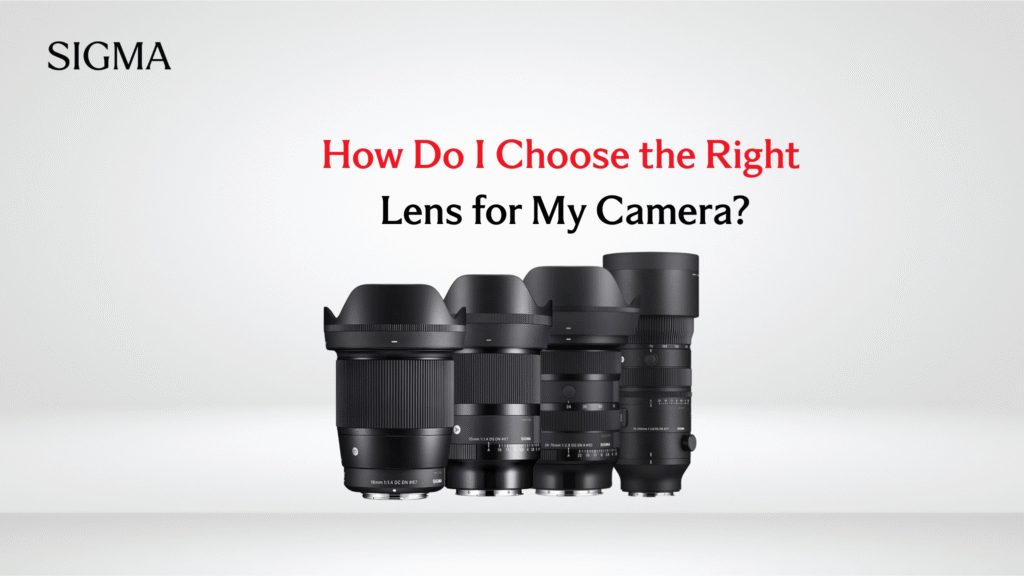
Picking a camera lens can feel like stepping into a candy store with endless options—exciting, but also overwhelming. Every photographer, whether hobbyist or professional, has faced that moment: holding a camera body in one hand and staring at a wall of lenses, wondering, “Which one will actually make my photos pop?” The truth is, your camera body is important, but the lens you pair it with can completely transform your images. From capturing vibrant landscapes to intimate portraits, the right lens is your creative partner. This guide will help you cut through the confusion, understand why lens choice is so crucial, and see why SIGMA lenses are trusted by photographers around the world. By the end, you’ll feel confident selecting lenses that fit your style, your camera, and your vision.
Introduction – Why Choosing the Right Camera Lens Matters
When it comes to photography, many beginners overlook the fact that the importance of lenses over camera bodies cannot be overstated. While cameras often get the spotlight, a high-quality lens has more impact on your photos than an expensive camera body. The lens shapes how your images look—affecting sharpness, clarity, and even the mood of your shots.
It’s normal to feel lost at first because common confusion among beginners is choosing lenses based on brand hype rather than understanding their features. Some are dazzled by zoom ranges or maximum apertures without realizing how these affect real-world shooting. Knowing what each lens does helps you match it to your photography style.
Your choice of lens influences not just composition, but also image quality. That’s why lens choice affects sharpness, depth, and low-light performance, which is something every photographer should consider. A good lens can make low-light scenes look stunning, isolate subjects with creamy backgrounds, and render every detail sharply.
For those looking for reliable options, SIGMA lenses are a reliable option and are often recommended by both beginners and pros. They offer excellent build quality, consistent performance, and versatile options across focal lengths and apertures, making them a safe choice for a wide range of photography styles.
What Is a Camera Lens?
If the camera body is the brain, the lens is the eye of your photography. Simply put, a lens is the piece of glass (or multiple glass elements) that sits in front of your camera sensor and directs light to create an image. But it’s much more than a window—it controls how the world is captured, shaping sharpness, color, and depth.
Every lens has its own personality: wide-angle lenses capture expansive landscapes, telephoto lenses bring distant subjects up close, and prime lenses excel at low-light and portrait photography. Understanding what a lens does will help you make better choices and get images that truly match your vision.
Whether you’re snapping quick street photos or setting up a professional shoot, knowing how lenses work gives you control over the final look of your shots, making photography more fun and less of a guessing game.
Quick Answer for Beginners
A key question many ask is: what a camera lens does. Simply put, it gathers light and focuses it onto your camera’s sensor, forming the image you see. Without a lens, your camera is just a box; the lens is what actually captures the scene in front of you.
Beyond just capturing an image, how lenses control light and focus is crucial for creativity. Aperture, focal length, and lens construction determine how much light enters, how background blur is rendered, and how sharp your subject appears. Mastering these basics allows you to craft photos exactly how you imagine them.
Another important concept is understanding the difference between kit lenses and dedicated lenses. Kit lenses usually come bundled with cameras and are versatile, but often compromise on aperture or sharpness. Dedicated lenses, on the other hand, are designed for specific tasks, such as portraits, landscapes, or low-light shooting, delivering superior results.
How Do I Know Which Lens Fits My Camera?
Finding a lens that fits your camera might seem tricky at first, but it’s mostly about understanding compatibility. Every camera brand and type has specific mounts that determine which lenses will physically attach and function properly.
Deciding on the wrong mount can mean a lens that won’t fit or one that limits performance, no matter how good it is. By learning the basics of camera mounts, you can confidently pick lenses that work seamlessly with your gear, saving time, money, and frustration.Let’s break down the key points so you can find the perfect match for your camera.
Camera Mount Compatibility
First, it’s important to understand DSLR vs Mirrorless mounts:
- DSLR cameras use larger, often optical-viewfinder-compatible mounts, which have been around for decades.
- Mirrorless cameras have smaller, shorter flange-distance mounts designed for more compact bodies.
- Always check whether a lens is specifically designed for a DSLR or mirrorless to avoid fit and performance issues.
Each major brand has its own mount system, so knowing the Canon, Nikon, Sony, and L-Mount overview is helpful. Canon has EF, EF-S, and RF mounts; Nikon uses F-mount for DSLRs and Z-mount for mirrorless; Sony offers E-mount and FE lenses, while the L-Mount is shared by Leica, Panasonic, and Sigma. This knowledge helps you navigate lens options confidently.
Remember, mount compatibility is critical because even the most expensive, high-quality lens won’t work if it doesn’t match your camera’s mount. Ensuring proper compatibility is the first step toward a smooth photography experience and getting the most from your lenses.
APS-C vs Full-Frame Cameras
Understanding camera sensors is key when determining lenses, and sensor size is easier to explain than it sounds. APS-C sensors are smaller than full-frame sensors, which means they capture a narrower portion of the scene. Full-frame sensors, on the other hand, are closer in size to traditional 35mm film and can capture more light, detail, and dynamic range, giving images a richer and more immersive look.
This difference leads to a crop factor in simple terms, which affects how lenses behave on different cameras. For example, a 50mm lens on an APS-C camera acts more like a 75mm lens in field of view because the smaller sensor “crops” the image. Understanding crop factor helps you predict how your final image will look and choose the lens that aligns with your composition
Finally, it’s important to know how sensor size affects lens selection. Smaller sensors often allow the use of compact, affordable lenses, but may limit wide-angle perspectives. Full-frame cameras benefit from lenses that maximize image quality and depth, especially in low light. By matching your lens to your sensor size, you ensure sharper, more dynamic photos and get the most from your camera setup.
What Are the Different Types of Camera Lenses?
Camera lenses come in many shapes and sizes, each designed for specific shooting styles and creative goals. From wide-angle lenses that capture sweeping landscapes to telephoto lenses that bring distant subjects up close, understanding the types of lenses available helps you choose the right tool for your photography. Lenses are not just accessories—they define how your images look, control depth of field, and influence low-light performance. By learning the different types, you’ll know which lens suits everyday snapshots, portraits, action shots, or cinematic creations. Let’s discuss these types in detail:
Standard Zoom Lenses
Most photographers start with typical focal ranges between 18-55mm or 24-70mm, making standard zoom lenses versatile and practical. These lenses cover a wide spectrum from wide-angle to short telephoto, letting you adapt to many situations without constantly changing lenses.
For many, everyday photography use makes standard zoom lenses the most popular choice. They’re perfect for family events, street photography, travel, and casual portraits, giving you flexibility while keeping your kit simple. Their all-in-one convenience makes them ideal for beginners and even pros who need a reliable lens for quick shooting.
Wide-Angle Lenses
Wide-angle lenses are perfect for capturing landscapes and architecture with dramatic perspectives. Their shorter focal lengths allow you to include more of a scene in a single frame, making mountains, city skylines, or historic buildings appear expansive and immersive. These lenses also help emphasize depth, giving your photos a sense of scale that standard lenses often can’t achieve.
In addition, wide-angle lenses shine for interior and travel photography. They allow you to shoot in tight spaces, like cozy rooms or narrow streets, without cutting out important details. For travelers and content creators, these lenses make it easy to showcase destinations fully, capturing both the environment and the people within it in one compelling shot.
Telephoto Lenses
Telephoto lenses are ideal for capturing distant subjects, making them perfect for wildlife and sports photography. Their long focal lengths let you get close-up shots without disturbing animals or missing fast-moving action on the field. With a telephoto lens, you can isolate your subject and capture details that would be impossible with standard lenses, giving your photos a professional, polished look.
Another key feature is subject compression, which happens when telephoto lenses make the background appear closer to your subject. This effect enhances depth and creates stunning portraits or dramatic action shots. Understanding how telephoto lenses compress distances helps you control the look and feel of your images, giving you more creative freedom in every frame.
Prime Lenses
Prime lenses are known for their simplicity and precision, offering a fixed focal length with benefits that many photographers love. Unlike zoom lenses, they don’t let you adjust the focal length, which encourages you to move and frame your shots creatively. This fixed perspective often results in more intentional compositions and a stronger understanding of how to capture your subject effectively.In addition, prime lenses excel at better sharpness and low-light use. Their wide maximum apertures allow more light to hit the sensor, making them perfect for dimly lit environments and creating creamy background blur. Whether you’re shooting portraits, street scenes, or indoor events, prime lenses provide exceptional image quality that can elevate your photography to the next level.
Macro Lenses
Macro lenses are designed for photographers who love close-up photography and want to capture the smallest details with stunning clarity. These lenses allow you to focus extremely close to your subject, revealing textures and patterns that often go unnoticed by the naked eye. From tiny insects to intricate flower petals, macro lenses make every detail pop.
They are also ideal for product, food, and detail shots, giving content creators, food photographers, and online sellers the ability to showcase their subjects with precision. Whether it’s a sparkling piece of jewelry, a gourmet dish, or a handcrafted item, macro lenses help you highlight every nuance, making your images more professional and visually captivating.
What Focal Length Should I Choose?
Focal length is one of the most important factors in deciding on a lens, yet it’s often misunderstood by beginners. It determines how “zoomed in” or “zoomed out” your images appear, influencing composition, perspective, and the overall look of your photos.
Picking the most fitting focal length can transform ordinary snapshots into striking images that feel professional and intentional. Whether you’re shooting sweeping landscapes, intimate portraits, or action-packed scenes, understanding focal length helps you control the way your subject and background interact.
In essence, it’s your creative tool for shaping visual storytelling, letting you capture exactly what you see—or even how you want others to see it.
Understanding Focal Length
Simply put, what focal length means is the distance between the lens’s optical center and the camera sensor, measured in millimeters. This number affects how much of the scene your camera captures and how close your subject appears. A short focal length captures a wide scene, while a long focal length brings distant subjects closer.
Another key point is the angle of view explained, which refers to how much of the scene the lens can include in the frame. Wide-angle lenses offer expansive views, perfect for landscapes, while telephoto lenses have a narrower angle, isolating your subject. Knowing this helps you choose lenses that fit your shooting style and ensure your compositions match your vision.
Best Focal Lengths by Photography Type
Different types of photography benefit from specific focal lengths. Opting for the correct one can make your images sharper, more immersive, and perfectly composed for your subject and style.
Portrait Photography
For portrait photography, lenses between 50mm and 135mm are ideal. These focal lengths create flattering proportions, avoid facial distortion, and allow you to isolate the subject from the background. Wider apertures enhance creamy background blur, highlighting your subject beautifully. Whether you’re shooting headshots or full-body portraits, relying on a suitable lens ensures professional-looking results and adds depth and character to every shot.
Landscape Photography
In landscape photography, wide-angle lenses around 16mm to 35mm are perfect for capturing expansive vistas and dramatic skies. They allow you to include foreground, middle ground, and background elements, creating a sense of depth and scale. These lenses help emphasize vastness, showcase natural beauty, and make viewers feel immersed in the scene, transforming ordinary landscapes into breathtaking images.
Event & Wedding Photography
For event and wedding photography, zoom lenses between 24mm and 70mm are highly versatile. They let you capture candid moments, wide group shots, and intimate close-ups without constantly changing lenses. Fast apertures also allow better low-light performance during ceremonies or receptions. With the ideal focal length, you can document the full story of the event while maintaining beautiful composition and sharpness.
Videography & Filmmaking
In videography and filmmaking, lenses around 24mm to 85mm are often preferred. Wide lenses capture cinematic environments, while medium telephoto lenses help isolate subjects and create natural background blur. Understanding focal length ensures smooth framing, storytelling consistency, and a professional cinematic look. Using lenses suited for video also helps control focus, depth, and perspective effectively.
Product Photography
For product photography, lenses between 50mm and 100mm work best. They allow you to highlight details, textures, and colors without distortion. Macro lenses are especially useful for close-ups of small items like jewelry or gadgets. Using an appropriate focal length ensures your products look appealing, professional, and true-to-life, helping your audience connect instantly with what you’re showcasing.
What Does Aperture Mean and Why Is It Important?
Aperture is one of the most powerful tools in photography, controlling how much light enters your camera and affecting the overall look of your images. Working with a suitable aperture can dramatically change your photos, helping you capture sharp landscapes, creamy portraits, or low-light scenes with ease. It’s not just a technical setting—it’s a creative tool that shapes depth, focus, and mood.
Understanding aperture empowers you to take control of your shots, ensuring every image matches your vision. Whether you’re a beginner or an experienced photographer, mastering aperture makes your photography more intentional and professional.
Understanding Aperture (f/1.4, f/2.8 Explained)
Aperture directly affects light intake, determining how much light reaches your camera sensor. Wide apertures like f/1.4 let in more light, making them perfect for low-light conditions or indoor photography. Smaller apertures, like f/8 or f/11, limit light but increase the depth of field, keeping more of your scene in focus.
Another key effect is background blur (bokeh), which gives images a professional, cinematic look. Wider apertures create smooth, creamy bokeh, isolating your subject from distracting backgrounds. Understanding how aperture controls both light and bokeh lets you make creative choices that enhance your storytelling and overall image quality.
Choosing the Right Aperture
When shooting in dim or challenging conditions, low-light shooting becomes much easier with a wider aperture. Settings like f/1.4 or f/2.8 allow more light to reach the sensor, reducing the need for high ISO and minimizing noise. This is especially useful for indoor events, evening portraits, or night street photography, where capturing natural light is key to maintaining image quality.
Another important consideration is sharpness vs depth of field. Smaller apertures, like f/8 or f/11, keep more of the scene in focus, ideal for landscapes or group shots. Larger apertures create a shallow depth of field, beautifully isolating your subject while softly blurring the background. Understanding this balance lets you choose the right aperture for each scene, giving you control over both technical quality and creative expression.
How Important Is Image Stabilization in a Lens?
When shooting handheld, the benefits of handheld photography become immediately apparent with image-stabilized lenses. They reduce camera shake, letting you capture sharper images without relying on a tripod. This is especially helpful in low-light conditions or when using telephoto lenses, where even slight movements can blur your shots.
For videographers, stability in video recording is crucial. Lenses with built-in stabilization help create smooth, professional-looking footage without jitters, making handheld filming easier and more flexible. This is ideal for vloggers, event shooters, or anyone capturing motion, allowing you to focus on creativity rather than worrying about shaky footage.
It’s also important to know when stabilization is necessary. While fast shutter speeds can reduce blur in some situations, stabilization is vital for long lenses, low-light shooting, or slow-motion video. Opting for a lens with proper stabilization ensures more reliable results and greater freedom to shoot in diverse conditions.
Which Lens Is Best for Photography vs Videography?
The optimal lens depends on whether your main focus is photography or videography. Each medium has unique demands, and understanding these helps you pick lenses that deliver the best results for your creative goals.
Best Lens Features for Photography
For photography, autofocus accuracy is essential. Fast and precise autofocus ensures that your subjects remain sharp, even in dynamic or fast-moving scenes. Whether capturing wildlife, sports, or candid portraits, accurate autofocus lets you focus on composition and timing rather than worrying about missed shots.
Another key factor is optical sharpness. High-quality lenses maintain crisp details across the frame, minimizing distortions, chromatic aberrations, and softness at the edges. Sharp optics make your images look professional and enhance everything from landscapes to close-up portraits, ensuring every photo captures your vision perfectly.
Best Lens Features for Videography
When filming, silent autofocus is crucial to avoid capturing distracting lens noise in your recordings. Lenses with quiet motors let you focus naturally without audio interference, making them ideal for interviews, vlogs, or cinematic projects where sound quality is as important as image quality.
Another important feature is smooth focus transitions. For professional-looking videos, your focus shifts should be gradual and controlled rather than abrupt. Lenses designed for videography allow seamless focus pulls, helping you guide viewers’ attention and maintain cinematic storytelling without drawing attention to focus changes.Finally, a constant aperture is highly valuable for video work. Lenses with a consistent aperture throughout the zoom range maintain exposure even when adjusting focal length, preventing sudden brightness changes in your footage. This ensures professional, polished results whether you’re filming close-ups, landscapes, or dynamic scenes.
How Do I Select the Right Lens for My Photography Style?
Selecting a lens isn’t just about technical specs—it’s about matching your gear to your creative vision. Understanding your photography style helps you pick lenses that make every shot effortless, sharp, and visually striking.
Portrait Photography
For portrait photography, lenses with focal lengths between 50mm and 135mm are ideal. They flatter facial features, provide beautiful background blur, and let you isolate your subject effectively. Wide apertures enhance low-light performance and create creamy bokeh, making subjects pop in both indoor and outdoor settings. Using the SIGMA 85mm f/1.4 DG DN Art lens ensures your portraits are professional, visually compelling, and full of depth, helping you capture emotion and personality in every frame.
Landscape Photography
In landscape photography, wide-angle lenses from 16mm to 35mm allow you to capture expansive vistas and dramatic perspectives. They emphasize depth, include foreground and background elements, and create immersive images that transport viewers to the scene. These lenses also perform well in low-light sunrise or sunset conditions, ensuring sharpness and clarity across the frame. Selecting the SIGMA 14-24mm f/2.8 DG DN Art lens makes landscapes feel vast, detailed, and visually stunning.
Event & Wedding Photography
For event and wedding photography, versatile zoom lenses like 24-70mm are essential. They let you capture candid moments, group shots, and intimate details without constantly changing lenses. Fast apertures improve performance in low-light venues, while flexible focal lengths ensure you’re ready for any scene. The SIGMA 24-70mm f/2.8 DG DN ll Art lens allows you to tell the full story of the event with sharp, beautifully composed images.
Content Creation & YouTube
For content creation and YouTube, lenses with wide apertures and versatile focal ranges are ideal. They deliver crisp, professional-looking videos with smooth focus transitions. Wide-angle lenses work well for vlogs, while medium telephoto lenses help isolate the subject and enhance cinematic effects. Using the Sigma 16mm f/1.4 DC DN Contemporary lens ensures better low-light performance, natural background blur, and overall high-quality footage for engaging content.
Commercial & Product Photography
For commercial and product photography, lenses between 50mm and 100mm work best. Macro lenses are particularly useful for highlighting small details, textures, and colors accurately. High optical sharpness ensures products appear professional and true-to-life. Using the SIGMA 105mm f/2.8 DG DN Macro Art lens helps you create images that attract customers, showcase products effectively, and maintain consistent quality across your portfolio or online store.
Should I Buy a Zoom Lens or a Prime Lens?
This is one of the most common questions photographers ask—and for good reason. Zoom and prime lenses serve different purposes, and neither is universally “better.” The best option depends on how you shoot, what you shoot, and how much flexibility you want while learning and growing.
Zoom Lens Pros and Cons
Pros
- Versatile focal lengths in a single lens, reducing the need to switch lenses.
- Ideal for travel, events, and fast-moving situations.
- Convenient for beginners still exploring different photography styles.
- Great all-round option for everyday shooting.
Cons
- Usually heavier and larger than prime lenses.
- Often have smaller maximum apertures.
- It can be less sharp than primes at certain focal lengths.
- Typically, more expensive at professional quality levels.
Prime Lens Pros and Cons
Pros
- Wider apertures for better low-light performance.
- Sharper images with excellent detail and contrast.
- Lighter and more compact than zoom lenses.
- Encourages better composition and creative movement.
Cons
- Fixed focal length limits flexibility.
- Requires moving physically to reframe shots.
- Less convenient for fast-changing scenes.
- May require owning multiple lenses for versatility.
Which One camera lens Is Better for Beginners?
For beginners, the best option depends on learning style and shooting habits. Zoom lenses are often easier to start with because they offer flexibility and convenience while you explore different focal lengths.
On the other hand, prime lenses help beginners understand composition, depth of field, and light more deeply. Many photographers start with a zoom lens for versatility and later add a prime lens to refine their skills and image quality. Ideally, combining both over time creates a well-rounded kit that grows with your photography journey.
Are Third-Party Lenses Like SIGMA Worth Buying?
Many photographers hesitate when they hear “third-party lens,” but lenses from brands like SIGMA have reshaped how people think about gear choices. They often deliver professional-level performance without the premium price tag of first-party lenses, making them appealing for beginners and pros alike.
Whether you’re capturing portraits, landscapes, or video content, a well-designed SIGMA lens can be an excellent addition to your kit. In countries like Pakistan, the growing availability of SIGMA cameras and lenses also means better access to genuine products and warranty support. With strong optical performance and durable build quality, many photographers find that the value you get from a SIGMA lens often matches—or even exceeds—what you’d expect from native options.
Image Quality & Build Comparison
When comparing image quality & build comparison, SIGMA lenses often surprise people with sharp optics and solid construction that rival many first-party lenses. Many models use advanced elements and coatings that control flare and chromatic aberrations, delivering clear, contrasty photos.
Build quality varies across lines, but even SIGMA’s Contemporary lenses offer balanced durability and a lightweight design that works well for travel or everyday shooting. For photographers who care about real-world performance, SIGMA lenses generally hold their own in both images and handling.
Why Professionals Choose SIGMA Lenses
Many photographers choose SIGMA not just for price, but for the range within its lineup — Art, Contemporary, and Sports lines offer options for every style of shooting. The Art series focuses on high resolution and creative expression, the Contemporary line balances portability with performance, and Sports lenses deliver rugged build and telephoto reach for action photography.
Another reason pros lean toward SIGMA is value for money. Compared to equivalent first-party lenses, SIGMA often delivers similar or even better optical quality at a lower cost, allowing photographers to invest in more focal lengths or faster glass without overspending.
And their availability in Pakistan has improved significantly. SIGMA lenses are offered through Sigma Pakistan and its authorized dealers. This means genuine products with warranty support and easier access to replacements or service, giving photographers peace of mind when investing in gear.
How Much Should I Spend on a Camera Lens?
Spending on lenses can feel confusing at first, but it really comes down to getting gear that matches your goals and budget. Lenses vary widely in price, and knowing what to expect helps you make smart investments without overspending. Whether you’re just starting out or building a pro kit, setting clear lens budgets makes your gear choices easier and ensures you get the best performance for what you pay.
Below are some realistic ranges to help you plan your lens purchases wisely.
Budget Lens Range
Budget lenses typically sit in the lower price tier but still offer solid performance for everyday photography. Many good entry-level lenses include primes and basic zooms that are sharp, lightweight, and enjoyable to use.
These lenses are ideal for beginners, hobbyists, and anyone who wants reliable image quality without overspending. While you may not get features like weather sealing or ultra-fast autofocus, you will get lenses that help you learn, experiment, and grow your skills while delivering pleasing, consistent results.
Mid-Range Lenses
Mid-range lenses strike a strong balance between performance and practicality. This category includes highly capable zooms and faster prime lenses that offer noticeable improvements in image quality.
This range of lenses often features better optics, wider constant apertures, and more dependable autofocus systems. They are well-suited for serious hobbyists, event photographers, and content creators who want more creative control and sharper results without stepping into fully professional gear.
Professional Lenses
Professional lenses are built for photographers who demand the highest level of performance and reliability, offering a long-term investment perspective for serious creators. They are designed with advanced optical formulas, durable construction, and features like weather resistance and fast, accurate autofocus. These lenses deliver exceptional sharpness and consistent results in challenging conditions. Investing in professional lenses makes sense for commercial work, weddings, and studio photography, where image quality, durability, and reliability are non-negotiable.
Tip: Lenses often hold their value better than camera bodies, so investing in quality glass is usually worth it over time.
Common Mistakes to Avoid When Choosing a Camera Lens
Selecting the wrong lens can waste money and limit your creativity. Avoid these common pitfalls to make smarter lens choices and get the best results from your camera gear.
- Ignoring mount compatibility can render even the best lens useless. Always check that the lens fits your camera body.
- Buying extreme focal lengths too early may overwhelm beginners. Start with versatile lenses first.
- Overlooking aperture needs can hurt low-light performance and background blur. Choose lenses that match your shooting conditions.
- Paying for unused features wastes money. Focus on what supports your photography style, not extras you won’t use.
How Do I Know If a Lens Is Right Before Buying?
Before committing to a lens, it’s important to test and research thoroughly. Selecting the proper lens can save money, improve your photography, and prevent frustration from mismatched gear.
Consider options like renting to try a lens firsthand, reading real-world reviews from other photographers, and experimenting with focal lengths to see what fits your style.
Doing this homework ensures the lens meets your creative needs, performs well in your typical shooting scenarios, and delivers value over time. Taking these steps helps you invest confidently in gear that supports your vision and growth as a photographer.
Renting vs Buying
Renting a lens lets you try it without full commitment, which is great for testing performance, handling, and compatibility. It’s cost-effective for one-time projects or experimental shooting. However, buying has long-term benefits: you own the lens, can rely on it anytime, and recoup value if you resell. For photographers who plan to use a lens regularly, buying is usually the better choice, offering convenience, familiarity with the gear, and a lasting investment in your photography kit.
Reading Real-World Reviews
Checking real-world reviews helps you understand how a lens performs beyond specs. Other photographers often share insights on sharpness, autofocus reliability, low-light performance, and handling. Reviews reveal strengths and weaknesses that marketing materials might not cover. By reading diverse experiences, you can gauge whether a lens meets your needs, avoiding surprises after purchase. This step ensures you select lenses that consistently deliver in practical shooting conditions, helping you make informed, confident buying decisions.
Testing Focal Length Needs
Testing focal length needs is a practical way to see which lens suits your shooting style. Walking around with a borrowed or rental lens helps you understand perspective, field of view, and framing before investing. This hands-on approach prevents buying lenses that are too wide, too tight, or otherwise mismatched to your projects. By experimenting, you ensure your lens choice enhances creativity, improves composition, and matches your day-to-day photography requirements.
Frequently Asked Questions About Choosing Camera Lenses
A versatile zoom lens or a standard prime is best for beginners. SIGMA 18-50mm f/2.8 DC DN Contemporary is a great choice. It covers everyday situations, is easy to handle, and helps you learn composition, exposure, and low-light shooting while offering sharp results.
Can One Lens Work for Photos and Videos?
Yes, some lenses perform well for both photography and videography. Lenses with smooth focus, minimal focus breathing, and a wide aperture work best. SIGMA 24-70mm f/2.8 DG DN II Art is a great example. It offers versatile focal lengths, constant aperture, and quiet autofocus, making it suitable for capturing sharp photos and professional-looking videos.
Yes, expensive lenses matter for serious photography, and SIGMA Art and Sports lenses offer sharp images, excellent low-light performance, fast autofocus, and durable builds. Still, for casual shooting, SIGMA’s Contemporary or budget-friendly options deliver great results, as composition and lighting often matter more than perfection.
Most SIGMA lenses are made for major brands like Canon, Nikon, Sony, and L-Mount. Check your camera mount before buying. SIGMA offers lenses for both DSLR and mirrorless cameras. Compatibility is critical for autofocus and image stabilization. Always verify the model to ensure full functionality.
Start with a versatile prime lens. SIGMA 50mm f/1.4 DG DN Art is ideal for beginners. It works well for portraits, street, and everyday photography, delivers excellent sharpness and low-light performance, and provides beautiful background blur. Later, add telephoto or macro lenses to expand your creative options.
Final Thoughts – How to Choose the Right Lens with Confidence
Always match the lens choice with the shooting purpose. Consider what you shoot most often—portraits, landscapes, events, or videos. Selecting lenses that fit your style ensures better results, less frustration, and a smoother learning curve as you develop your photography or videography skills.
It’s important to focus on long-term usability. Investing in well-built, versatile lenses means they stay useful even as your skills improve or your camera body changes. High-quality lenses, like SIGMA Art or Contemporary series, can last for years, delivering consistent performance across different projects and lighting conditions.
Finally, invest in lenses that grow with your skills. Start with versatile lenses and gradually add specialized glass as you learn composition, lighting, and focal length preferences. This approach helps you expand your creative possibilities while ensuring each lens in your kit remains valuable over time.
