
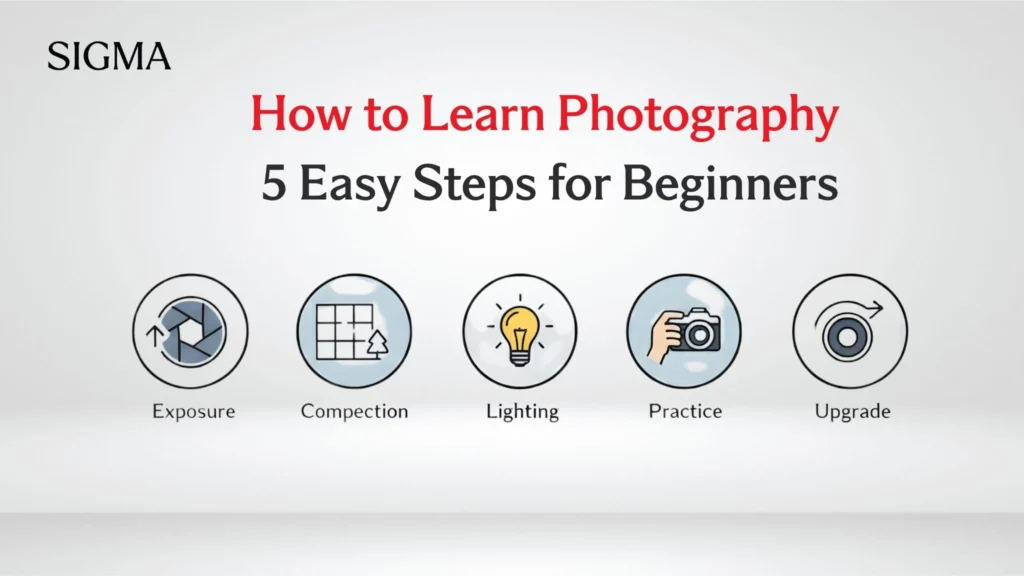
Learning photography in 2026 is easier than ever, yet many beginners still feel confused about where to start. With advanced cameras, smartphones, and endless online tutorials, information is everywhere. However, real progress comes from understanding the fundamentals and practicing them correctly. If you’re wondering how to learn photography the right way, the answer is simpler than you think. Strong basics, consistent practice, and gradual technical improvement build long-term skills. Instead of chasing expensive gear or complex settings, beginners should focus on exposure, composition, and lighting. These core elements shape every great image.
This guide breaks down everything step by step in clear, simple language. Whether you use a DSLR, mirrorless camera, or even a smartphone, these proven methods will help you build confidence. By following these five practical steps, you can develop real creative control and start capturing professional-quality images with clarity and purpose.
What is the best way to learn photography?
The best way to learn photography is to understand the exposure triangle (ISO, shutter speed, aperture), practice composition techniques, use manual mode gradually, and apply your skills through real-world shooting exercises. These four elements form the foundation of every successful image. First, understanding ISO, shutter speed, and aperture allows you to control brightness and motion. Then, practicing composition techniques such as rule of thirds and framing improves visual balance. After that, switching slowly from auto to manual mode builds confidence without overwhelming you. Finally, applying skills in real shooting situations turns theory into practical ability.
Although tutorials are helpful, hands-on practice creates lasting improvement. Start small, repeat exercises regularly, and review your images critically. Over time, mistakes become learning opportunities. Consistency matters more than expensive equipment. With patience and structured learning, anyone can build strong fundamentals and steadily improve image quality in any environment.
Photography Basics Every Beginner Should Understand
Before adjusting camera settings, it is important to understand what photography for beginners truly involves. Strong basics create confidence and reduce confusion later. Learning what photography means, how light behaves, and how exposure works builds a solid foundation. These core ideas help beginners make informed creative decisions instead of relying only on automatic modes.
What Is Photography?
Photography is the art and science of capturing light to create an image. At its core, a camera records light reflected from subjects and stores it as a digital or physical photograph. However, it is more than simply pressing a button. It involves understanding timing, perspective, lighting, and storytelling. Every image communicates emotion or information. A skilled photographer controls light, framing, and focus to guide the viewer’s attention. In modern digital cameras, sensors replace traditional film. Still, the principle remains the same: control light to create meaning. When beginners understand this concept, they move beyond random snapshots and begin making intentional creative choices.
The Exposure Triangle Explained Simply
The exposure triangle includes ISO, aperture, and shutter speed. These three settings control brightness and creative effects. ISO adjusts sensitivity to light. Aperture controls how much light enters the lens. Shutter speed determines how long light reaches the sensor. When one setting changes, the others must adjust to maintain balance. For example, increasing shutter speed may require raising ISO or widening aperture. Understanding this relationship allows better control over images in different lighting conditions. Mastering this triangle is essential for creative growth and technical confidence.
Exposure Triangle Quick Reference Table
| Setting | Controls | Low Value Effect | High Value Effect | Best For |
| ISO | Light sensitivity | Cleaner image, less noise | Brighter image, more noise | Low light situations |
| Aperture (f-stop) | Light entry & depth | More sharp background (f/8–f/16) | Blurry background (f/1.8–f/2.8) | Portraits & landscapes |
| Shutter Speed | Motion control | Motion blur (1/30) | Freeze action (1/1000) | Sports & night shots |
Why Light Matters Most
Light shapes mood, depth, and clarity in every image. Without good light, even expensive cameras struggle to produce strong results. Soft morning light creates warm tones, while harsh midday light produces strong shadows.
Natural light is ideal for beginners because it changes throughout the day. Learning to observe direction, intensity, and color of light improves image quality dramatically. Instead of focusing only on equipment, beginners should study how light interacts with subjects. Once you understand light behavior, every setting adjustment becomes easier and more purposeful.
Learn Your Camera Settings
Understanding your camera’s controls builds confidence quickly. While automatic modes help at the beginning, real improvement happens when you explore manual options. Start slowly and experiment with basic adjustments. Reading your camera manual and practicing regularly makes learning smoother and less overwhelming.
Auto vs Manual Mode
Auto mode lets the camera choose settings for you. It is helpful for quick shots and learning framing. However, it limits creative control.
Manual mode allows full control over ISO, aperture, and shutter speed. Although it may feel challenging at first, it gives better results in tricky lighting. Beginners should start in semi-automatic modes, then gradually move to full manual. This step-by-step approach prevents frustration while building confidence and technical understanding.
| Camera Mode | Who Controls Settings? | Best For | Skill Level |
| Auto Mode | Camera controls everything | Quick shots, beginners | Entry level |
| Aperture Priority | You set aperture, camera adjusts shutter | Portraits, background blur | Beginner to intermediate |
| Shutter Priority | You set shutter speed, camera adjusts aperture | Sports, moving subjects | Beginner to intermediate |
| Manual Mode (M) | You control ISO, aperture & shutter speed | Creative control, professional work | Intermediate to advanced |
ISO, Aperture & Shutter Speed Explained
To achieve the perfect exposure in photography, you must balance three core settings known as the Exposure Triangle:
- ISO: This determines the sensor’s sensitivity to light. Lower ISO (100) produces crisp, clean images in bright light; higher ISO (3200+) helps in low light but introduces “noise” or grain.
- Aperture: This controls the lens opening size, measured in f-stops (e.g., f/2.8). A wide aperture lets in more light and creates a shallow “bokeh” background blur.
- Shutter Speed: This measures how long the sensor is exposed to light. Fast speeds (1/1000s) freeze motion, while slow speeds (1/30s) create intentional motion blur.
Mastering these settings allows photographers to control both the brightness and the creative aesthetic of every shot.
Beginner Camera Settings to Try Today
Start experimenting with simple combinations to see real results. These beginner settings help you understand exposure control in different lighting conditions.
- Use ISO 100–200 in daylight with aperture f/8 and moderate shutter speed for sharp outdoor images with balanced brightness and clear background detail.
- Try aperture f/2.8 indoors with slightly higher ISO to create soft background blur while keeping your subject sharp and properly exposed.
- For moving subjects, use fast shutter speed above 1/500 with balanced ISO to freeze motion clearly without motion blur.
Master Composition Techniques
Strong composition transforms ordinary images into powerful visuals. Even basic subjects look impressive when framed thoughtfully. Learning simple composition techniques improves storytelling and clarity. Instead of centering everything automatically, experiment with balance, spacing, and visual flow to create stronger results.
Below are a few common composition techniques every photographer should know:
Rule of Thirds
Divide your frame into nine equal sections using imaginary lines. Place your subject along these lines or at their intersections. This creates balance and visual interest. Most cameras offer grid overlays to help apply this rule easily. Instead of placing subjects in the center, shifting slightly improves composition naturally. Over time, this technique becomes instinctive and improves framing quality.
Leading Lines
Leading lines guide the viewer’s eyes through an image. Roads, railings, rivers, and buildings often create natural lines. Use these lines to direct attention toward your subject. This technique adds depth and structure. Strong leading lines create movement and visual engagement. When used thoughtfully, they strengthen storytelling in landscape and street shots.
Framing & Balance
Framing uses objects like windows, trees, or doors to surround your subject. This adds depth and focus. Balance ensures that no part of the image feels too heavy or empty. If one side has strong elements, balance it with subtle details on the other side. Together, framing and balance create harmony and improve visual impact.
Practice with Real Photography Projects
Practice is essential to truly learn photography. Reading guides builds knowledge, but applying skills develops mastery. Real projects improve observation and confidence. Choose simple themes and repeat them weekly. Portraits help you understand focus and lighting. Landscapes improve composition and depth. Night photography strengthens exposure control. By practicing consistently, beginners transform technical knowledge into practical ability. Mistakes are part of growth. Review your images, identify errors, and adjust settings accordingly. Over time, improvements become visible and rewarding.
Portrait Practice
Start by photographing family or friends near natural light. Focus on eye sharpness and background blur. Use wider aperture for soft backgrounds. Observe how light falls on faces. Avoid harsh shadows by positioning subjects near windows. Practice different angles and distances. Portrait practice improves communication skills and technical control simultaneously.
Landscape Challenge
Visit parks or open areas during sunrise or sunset. Use smaller aperture like f/8 for sharp scenery. Pay attention to foreground elements for depth. Include leading lines such as paths or rivers. Landscape projects strengthen patience and timing. Repeating this challenge weekly builds confidence and visual awareness.
Night Photography Exercise
Try photographing city lights at night. Use tripod support for stability. Select slower shutter speed and lower ISO. Experiment with light trails from moving vehicles. Night exercises improve exposure control and understanding of light sensitivity. Although challenging, night practice accelerates technical growth significantly.
Upgrade Your Skills & Equipment
As your skills improve, you may consider equipment upgrades. However, technical growth should come first. Strong fundamentals produce better results than expensive gear alone. When ready, upgrading camera lenses or exploring manual controls expands creative freedom. Beginners often invest in camera bodies too early. Instead, focus on learning before spending heavily. Structured learning through workshops or masterclasses also accelerates progress. Skill development and smart equipment choices work together to elevate results.
When to Switch to Manual Mode
Switch when you feel comfortable adjusting ISO, aperture, and shutter speed individually. If auto mode limits your creativity, manual mode gives freedom. Practice during controlled environments first. Gradual transition reduces mistakes and builds confidence.
Best Beginner Cameras in Pakistan
Beginner-friendly cameras include entry-level DSLR and mirrorless models with intuitive controls. Look for good autofocus, lightweight design, and manual options. Brands offering user-friendly interfaces help beginners progress smoothly without overwhelming complexity.
Why Your First Lens Upgrade is Better Than a New Camera
Upgrading your lens often improves image quality more than replacing your camera body. Better lenses offer sharper images and wider apertures. A prime lens, for example, improves low-light performance and background blur significantly. Investing in quality glass enhances results without unnecessary body upgrades.
Where to Practice Your Skills in Pakistan
Pakistan offers diverse locations ideal for improving photography skills. From historical architecture to mountains and vibrant streets, each region presents unique opportunities. Exploring different environments strengthens adaptability and creative thinking.
Architectural Shots in Lahore
Lahore’s historical landmarks provide excellent subjects for structured composition. Capture symmetry, patterns, and details in Mughal architecture. Early morning light enhances textures and reduces crowds. Practice framing through arches and doorways. Architectural shots improve patience and composition precision.
Landscape Practice in the North
Northern areas offer mountains, lakes, and valleys perfect for wide landscape shots. Use foreground elements for depth. Golden hour enhances natural colors. Landscape environments strengthen exposure control and composition awareness.
Street Photography in Karachi
Karachi’s busy streets offer dynamic subjects. Focus on candid moments and natural expressions.Use faster shutter speed for movement. Street practice builds observation skills and storytelling ability.
You can also learn and get hands-on practice at Sigma Pakistan initiated Sigma Academy photography master classes. Check our YouTube channel and social handles for the latest updates and learning resources.
Frequently Asked Questions
For most beginners, basic photography skills can be learned within 1 to 3 months with regular practice. Understanding exposure, lighting, and composition takes time. However, consistent shooting and reviewing your images helps improve faster. Mastery may take years, but strong fundamentals develop quickly with focused learning.
Yes, you can start learning professional photography using a smartphone. Modern phones offer manual controls, portrait modes, and strong image quality. While advanced cameras provide more flexibility, composition, lighting, and creativity matter more than equipment. Many professionals begin by practicing core skills before upgrading gear.
Photography is not hard to learn, but it requires patience and practice. Beginners may feel confused by camera settings at first. However, once you understand ISO, shutter speed, and aperture, everything becomes clearer. With consistent practice and real-world shooting, confidence and skill improve steadily over time.
Blurry photos usually happen because of camera shake, incorrect focus, or slow shutter speed. Low light conditions also increase blur if the camera moves slightly. Using proper focus settings, increasing shutter speed, and stabilizing your camera with a tripod helps capture sharper and clearer images consistently.
Final Thoughts
Learning photography is a journey built on patience, practice, and understanding core principles. Mastering exposure, light, composition, and camera settings creates a strong technical foundation. However, consistent real-world practice transforms knowledge into skill. Instead of rushing into expensive upgrades, focus on structured learning and steady improvement. Explore different environments, review your work critically, and continue refining your approach. With dedication and the right guidance, anyone can progress from beginner to confident creator. By following these five practical steps, you build not only technical control but also creative vision that defines strong, impactful images.
