* L-Mount is a registered trademark of Leica Camera AG.
* This product is developed, manufactured and sold based on the specifications of E-mount which was disclosed by Sony Corporation under the license agreement with Sony Corporation.
I series Premium Compact Primes for mirrorless users
The Sigma I series features full-frame-compatible lenses that offer mirrorless users a new and better alternative, both in the experience of shooting with the lens and in the impressive results it is able to achieve.
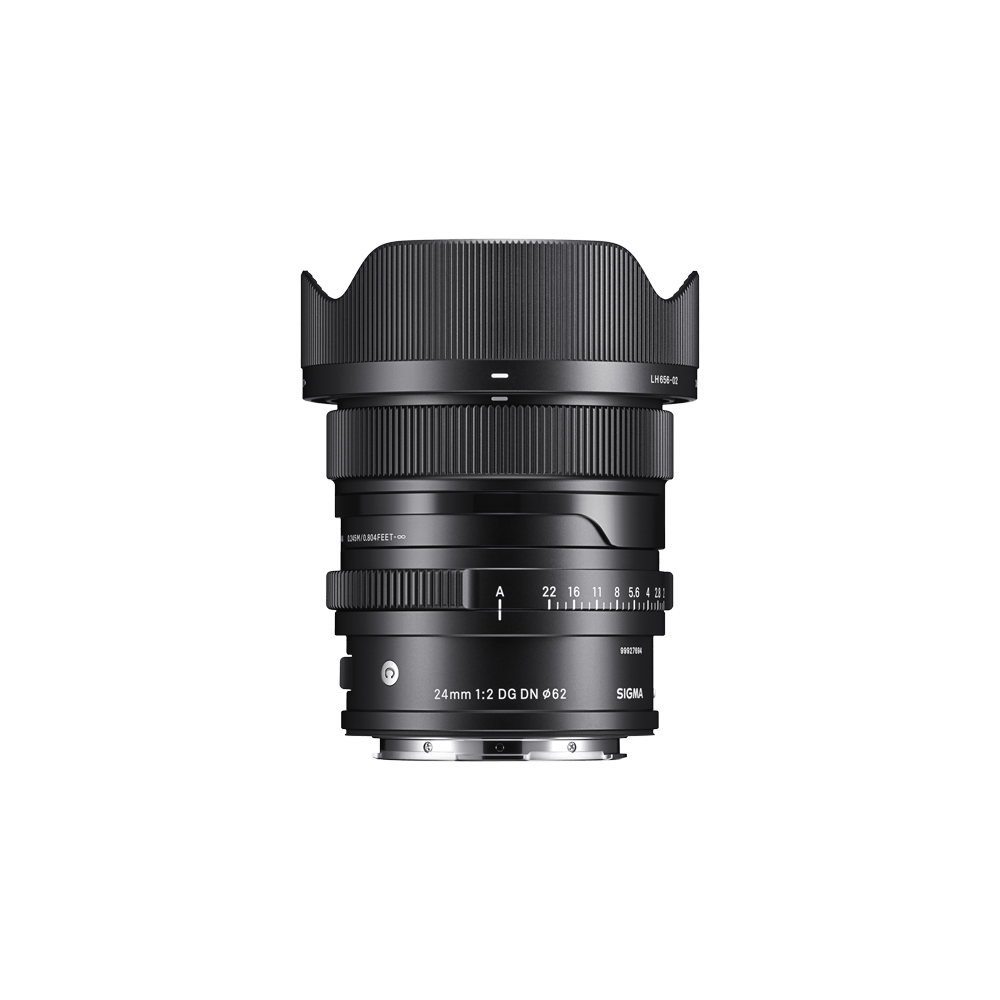
One of the key advantages of mirrorless cameras is their smaller form-factor, and this new 24mm optic is designed to be perfectly matched to these more compact systems without sacrificing performance. This combination of superb optical quality with exceptional portability, not previously possible with DSLR systems, will bring new opportunities to this and future generations of photographers.
Simultaneously, Sigma is aware that, in this day and age when we have such huge diversity when it comes to what we use to photograph, as represented by smartphones, people look for something more than a mere act of “taking pictures” when they choose to own a camera and lenses.
Sigma’s excellence in development and processing technologies has been built up since it was founded in 1961, and has become further sophisticated with the introduction of the Sigma Global Vision in 2012. With this as a base Sigma has given careful thought to how photographers use and enjoy their lenses, including optical design, advanced functionality, build quality and the experience of picking up and using the lens, and with all of this carefully considered the I series was born.
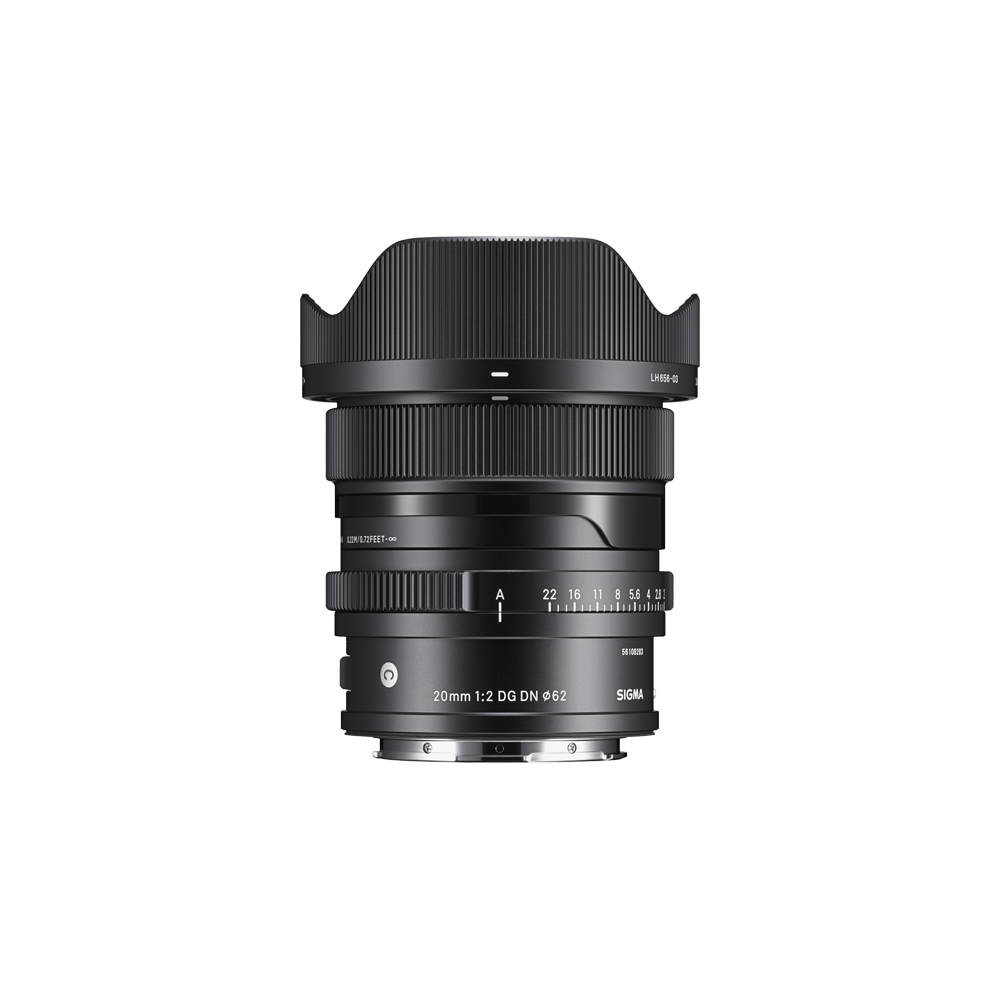
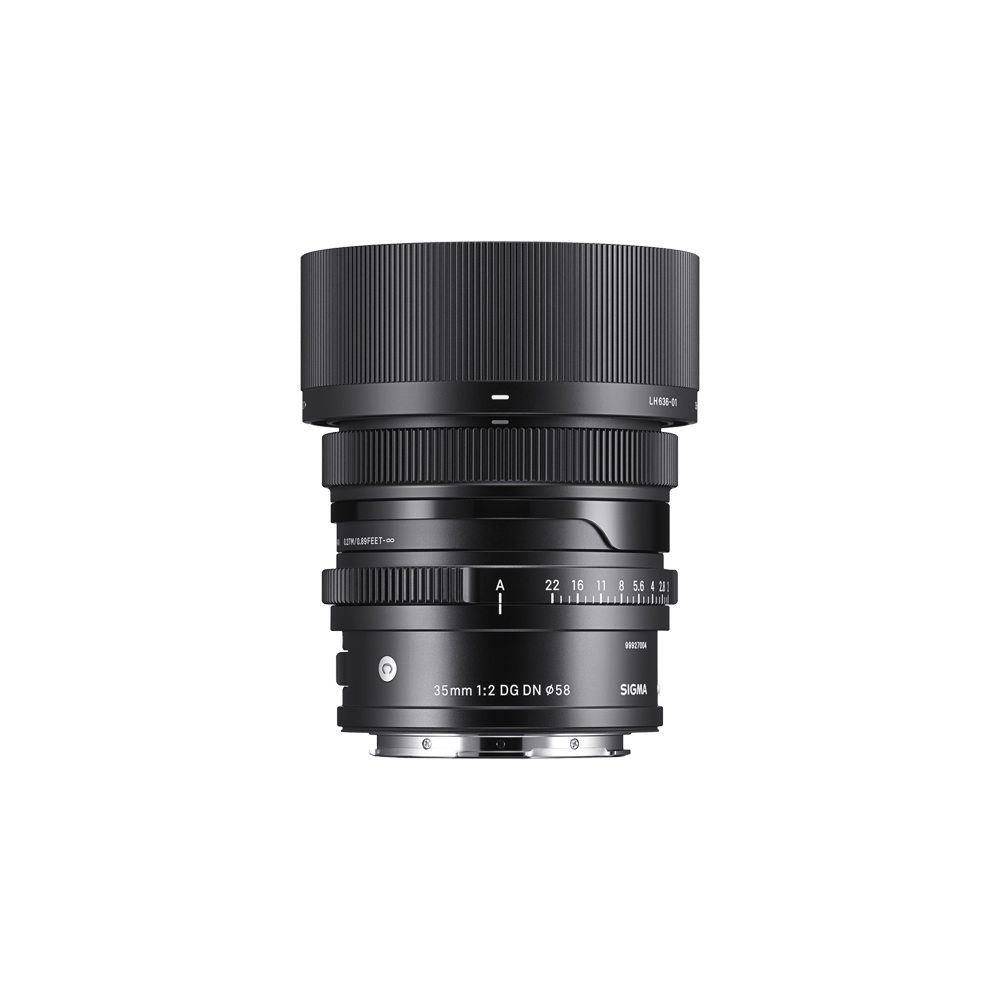
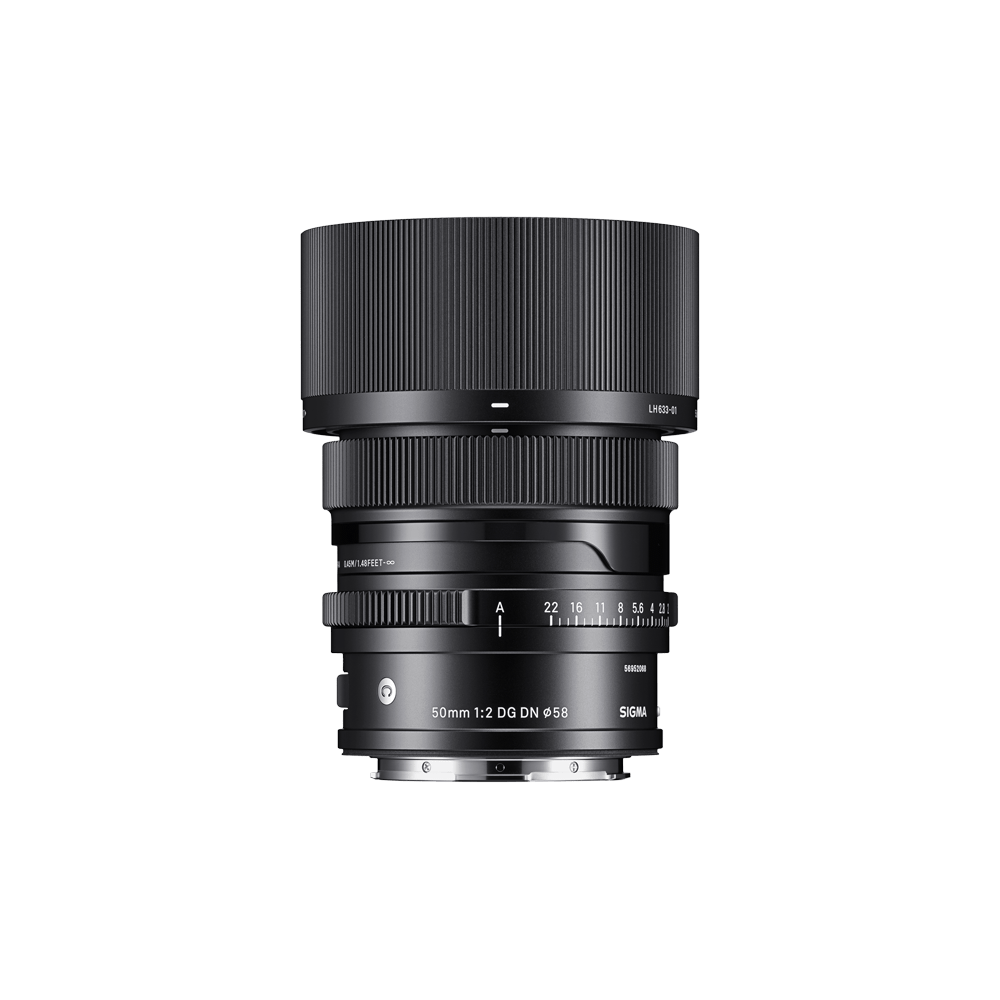
20mm, 24mm, 35mm, 50mm and 65mm — five lenses with F2 brightness in the lineup
New standards of optical performance for the Contemporary line
The Sigma 24mm F2 DG | Contemporary, like the Sigma 35mm F2 DG | Contemporary and the Sigma 65mm F2 DG | Contemporary, combines the highest level of optical performance even at its maximum aperture of F2 and a well-balanced body.
The lens uses two SLD glass elements and one FLD glass element to correct axial chromatic aberration, which is a particular concern with bright lenses. It also incorporates two high-precision glass-molded aspherical elements, made possible by the processing technology of Sigma’s sole production facility in Aizu. This has enabled the total number of lens elements to be kept down and the size and weight of the lens to be reduced, while providing excellent correction of various aberrations.
In anticipation of wide-angle lens applications, Sigma’s optical designers have ensured the lens resolution is extremely high, and is uniform from the center to the periphery of the image. Sagittal coma flare is also well suppressed, giving the lens a high degree of rendering power that makes it ideal for night sky photography.
The AF drive system incorporates a quiet, high-speed stepping motor. This allows photographers to capture every detail of the spacious 24mm scene with light AF.
Use of multiple high-precision aspherical glass molded lenses
The surface of molds for glass molding, which is a process that forms optical components by pressing glass materials at high temperatures, requires ultra-high precision.
Sigma uses high-precision molds whose surfaces are controlled with an accuracy of ±5 nanometers (0.000005 mm) or smaller. High precision aspherical glass molded lenses achieve both excellent aberration correction and a compact lens size.
Mold for aspherical glass molded lenses.
Mold for aspherical glass molded lenses
Exceptional I series build quality with a compact form-factor
All I series lenses have an all-metal construction. The precision-cut aluminum parts not only give the barrel a sleek, stylish finish, but provide superb durability that improves the quality of the entire product.
Metal materials are also used in internal structures that slide with the operation ring for added robustness. These high-precision components crafted with Sigma’s cutting-edge metalworking technology are also used in Sigma’s CINE LENS line-up for professional cinematographers and provide a tactile, ergonomic feel that make the lens a pleasure to use.
The cover ring between the focus ring and the aperture ring has hairline processing that is also used for the rear cylinder of the Art line. This covering functions as a finger hold when attaching or detaching the lens.
Magnetic metal lens cap
The I series lenses are accompanied by a dedicated magnetic metal lens cap, in addition to a normal plastic cap. This dedicated metal cap clips to the front surface of the lens magnetically. It is no exaggeration to say that this meticulously crafted cap represents the finishing touch for the I series.
Magnetic metal lens cap holder LENS CAP HOLDER CH-11 (sold separately)
When a cap is removed from the lens it should have a proper place where it can be kept. Using this as a starting point, a cap holder using the magnetic force of the dedicated cap was created.
With the cap attached to the ring plate, and the plate clipped to a bag or belt, the cap is always within easy reach and is less likely to get lost. Plus, its elegant design is a stylish addition to a photographer’s equipment.
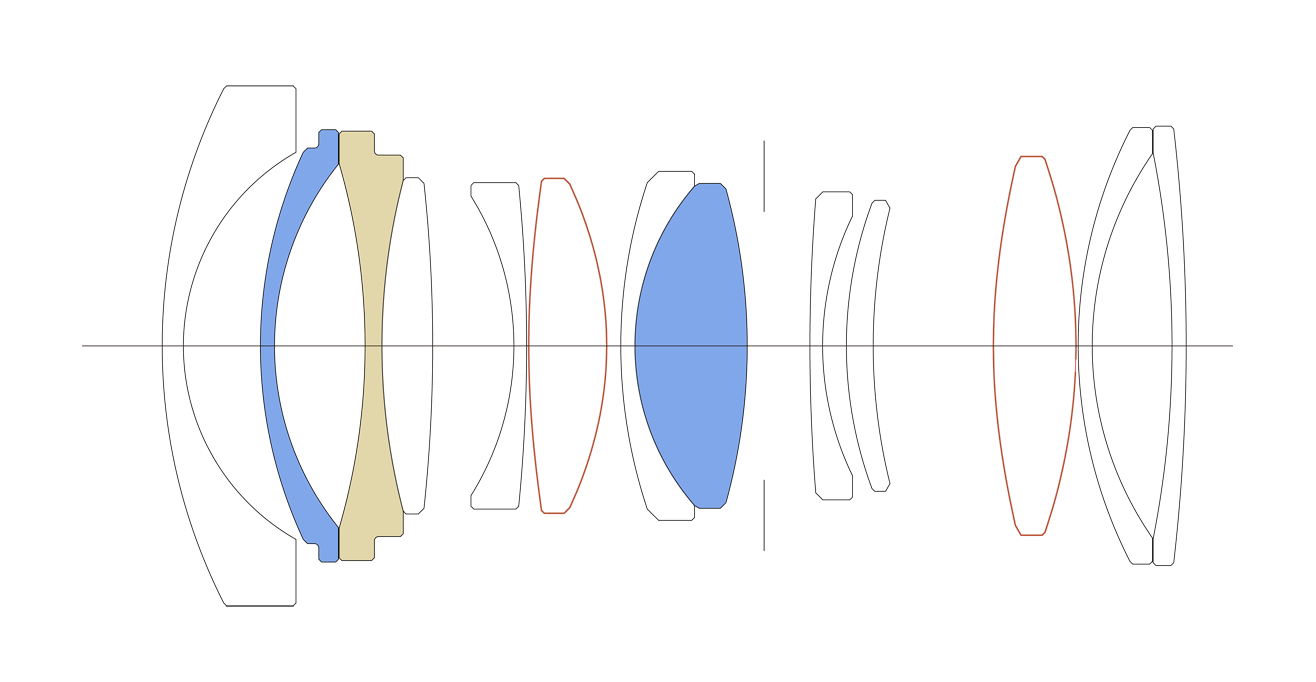
LENS CONSTRUCTION
SLD glassFLD glassAspherical lens
MTF CHART
DIFFRACTION MTFGEOMETRICAL MTF
Spatial frequency
S: Sagittal Line
M: Meridional Line
10lp/mm
30lp/mm
MTF CHART GUIDE
The MTF (Modulation Transfer Function) is one of the measurements used to evaluate lens performance. It indicates how faithfully subject contrast is reproduced on the image plane. The horizontal axis shows image height in millimeters, while the vertical axis indicates contrast (maximum value 1).
Curves closer to 1 indicate higher contrast and resolution. A solid line represents sagittal measurements; a dashed line represents meridional measurements. Curves for 10lp/mm indicate contrast; 30lp/mm indicates finer detail resolution.
* Charts show performance at the wide-open aperture. * For compatible lenses, image height may reflect distortion-corrected L-Mount values. * The spatial frequency represents variation before distortion correction.
Inner focus system
The focusing lens group moves inside the optical system, keeping the exterior lens length constant during focus changes.
Stepping Motor
A quiet stepping motor controls autofocus for still photography and video recording.
Compatible with Lens Aberration Correction
Compatible camera bodies can apply supported corrections for lens aberrations. Availability depends on the camera and mount.
Super Multi-Layer Coating
Sigma’s multilayer optical coating helps control internal reflections, flare, and ghosting.
Aperture ring
The aperture ring gives tactile, direct control over aperture settings.
Focus Mode Switch
The AF/MF switch provides a convenient way to select the focus mode on supported configurations.
Linear focus / Non-linear focus (for L-Mount only)
On compatible L-Mount camera bodies, the manual-focus ring can use supported linear or non-linear response settings.
Mount with Dust and Splash Resistant Structure
The mount incorporates sealing intended to help keep dust and splashes out; the lens is not waterproof.
Lens construction: 13 elements in 11 groups, with 1 FLD, 2 SLD and 2 aspherical lens elements
The optical design contains 13 elements in 11 groups, including 1 FLD, 2 SLD and 2 aspherical elements.
Compatible with high-speed autofocus
The stepping-motor autofocus drive is designed for fast, precise focus acquisition.
Support DMF and AF+MF
Supports supported camera-body DMF and AF+MF focusing functions. Exact operation depends on the camera.
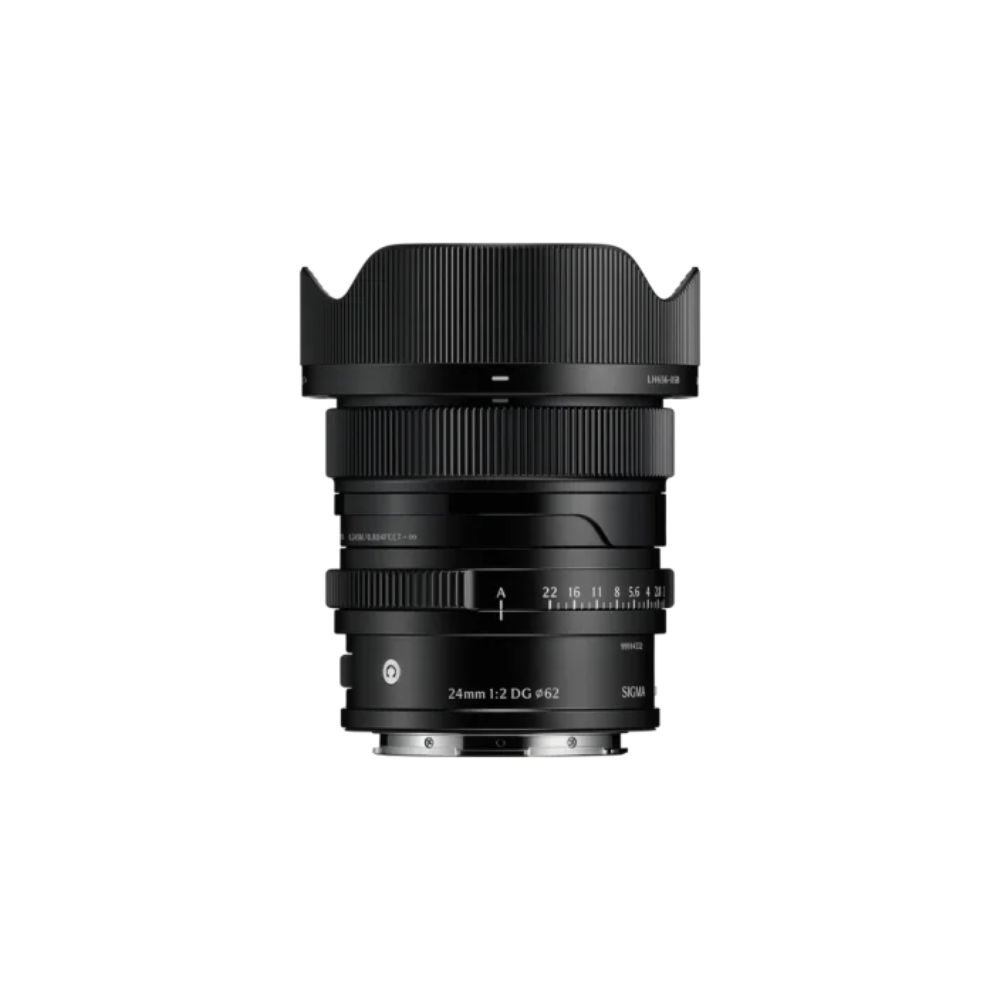
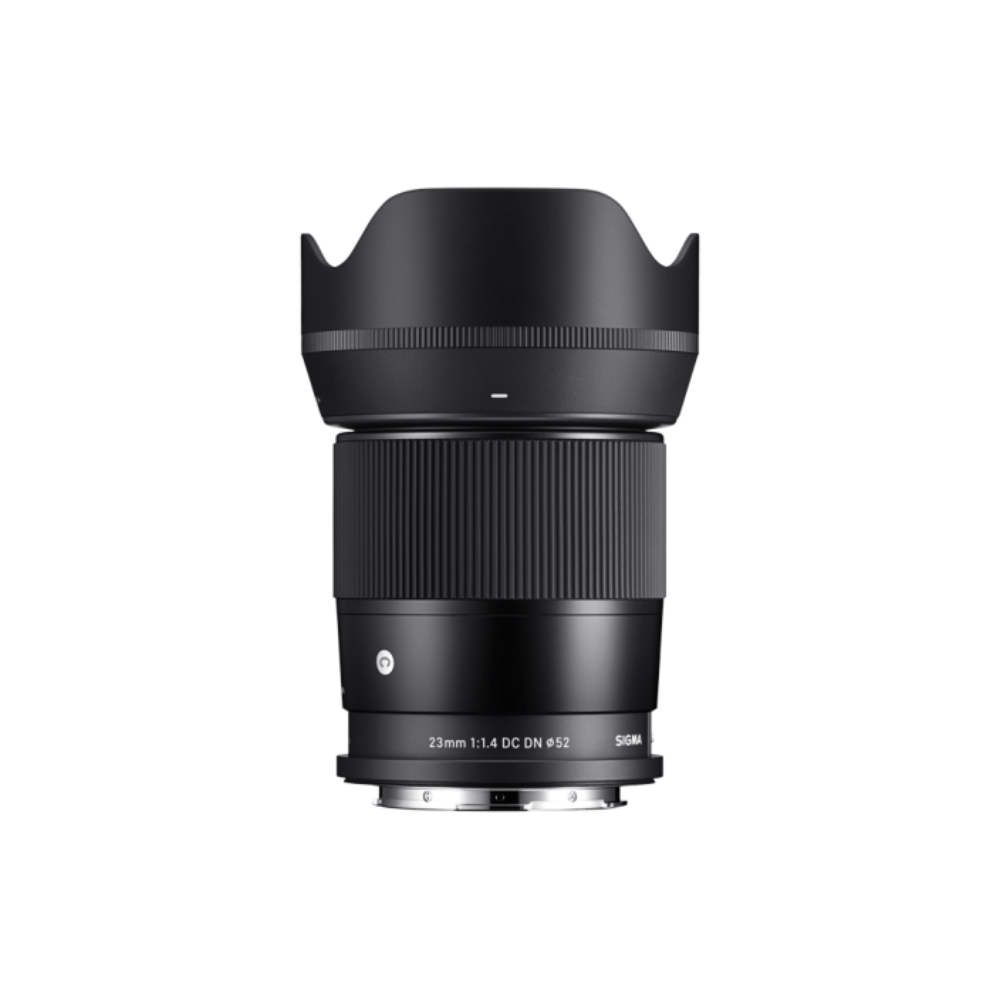
LENS HOOD(LH656-05B/LH656-05S)
Dedicated hood model LH656-05B / LH656-05S helps shield the front element from stray light.
Magnetic metal lens cap(LCF62-02 MB/LCF62-02 MS)
The magnetic metal cap LCF62-02 MB / MS is supplied for compatible lens versions.
Compatible with Sigma USB DOCK UD-11 (sold separately / for L-Mount only)
For L-Mount, the optional Sigma USB DOCK UD-11 supports compatible firmware and setting adjustments. See the official Sigma accessory page. Sigma USB DOCK UD-11 ↗
Designed to minimize flare and ghosting
Optical design and surface treatments help minimize unwanted flare and ghosting.
Every single lens undergoes Sigma’s proprietary MTF measuring system
Every lens is checked using Sigma’s proprietary MTF measurement process.
9-blade rounded diaphragm
Nine rounded diaphragm blades help provide smoother defocused highlights.
High-precision, durable brass bayonet mount
The durable precision-fit brass bayonet mount is designed for a secure body-to-lens connection.
* These sample images were taken using Sigma 24mm F2 DG DN | Contemporary. The optical performance is the same.













Reviews
There are no reviews yet.