I series | A new photographic experience, “Premium Compact Primes”for mirrorless users
The Sigma I series features full-frame-compatible lenses that offer mirrorless users a new and better alternative, both in the experience of shooting with the lens and in the impressive results it is able to achieve.
One of the key advantages of mirrorless cameras is their smaller form-factor, and this new 24mm optic is designed to be perfectly matched to these more compact systems without sacrificing performance. This combination of superb optical quality with exceptional portability, not previously possible with DSLR systems, will bring new opportunities to this and future generations of photographers.
Simultaneously, Sigma is aware that, in this day and age when we have such huge diversity when it comes to what we use to photograph, as represented by smartphones, people look for something more than a mere act of “taking pictures” when they choose to own a camera and lenses.
Sigma’s excellence in development and processing technologies has been built up since its founding in 1961, and has become further sophisticated with the introduction of the Sigma Global Vision in 2012. With this as a base, Sigma has given careful thought how photographers use and enjoy their lenses, including optical design, advanced functionality, build quality and the experience of picking up and using the lens, and with all of this carefully considered, the I series was born.
Beautiful details and bokeh for every scene
The high resolving power of the 24mm F3.5 DG | Contemporary covers the entire image from the center to the edges, which means photographers can rely on edge-to-edge sharpness at all apertures when shooting wide-angle scenes. With a minimum focus distance of around 10cm and a maximum reproduction ratio of 1:2, it enables photographers to explore a subject more freely, from capturing distant landscapes to photographing close-ups of smaller objects.
In addition to the attractive bokeh, it also gives photographers near-circular out-of-focus highlights, even at the edges of the frame. This helps create a close-up image of an in-focus subject with a blurred background, a technique that is very useful in a variety of settings.
The lens features the latest optical design optimized for mirrorless systems. This includes high-precision, glass-molded aspherical elements created with advanced processing technology, and SLD glass and high refractive index glass elements. Together they make it possible to combine high optical performance with compactness.
In addition, the smooth focus drive system designed around a quiet and fast stepping motor also makes the 24mm F3.5 DG | Contemporary a desirable choice for shooting video.
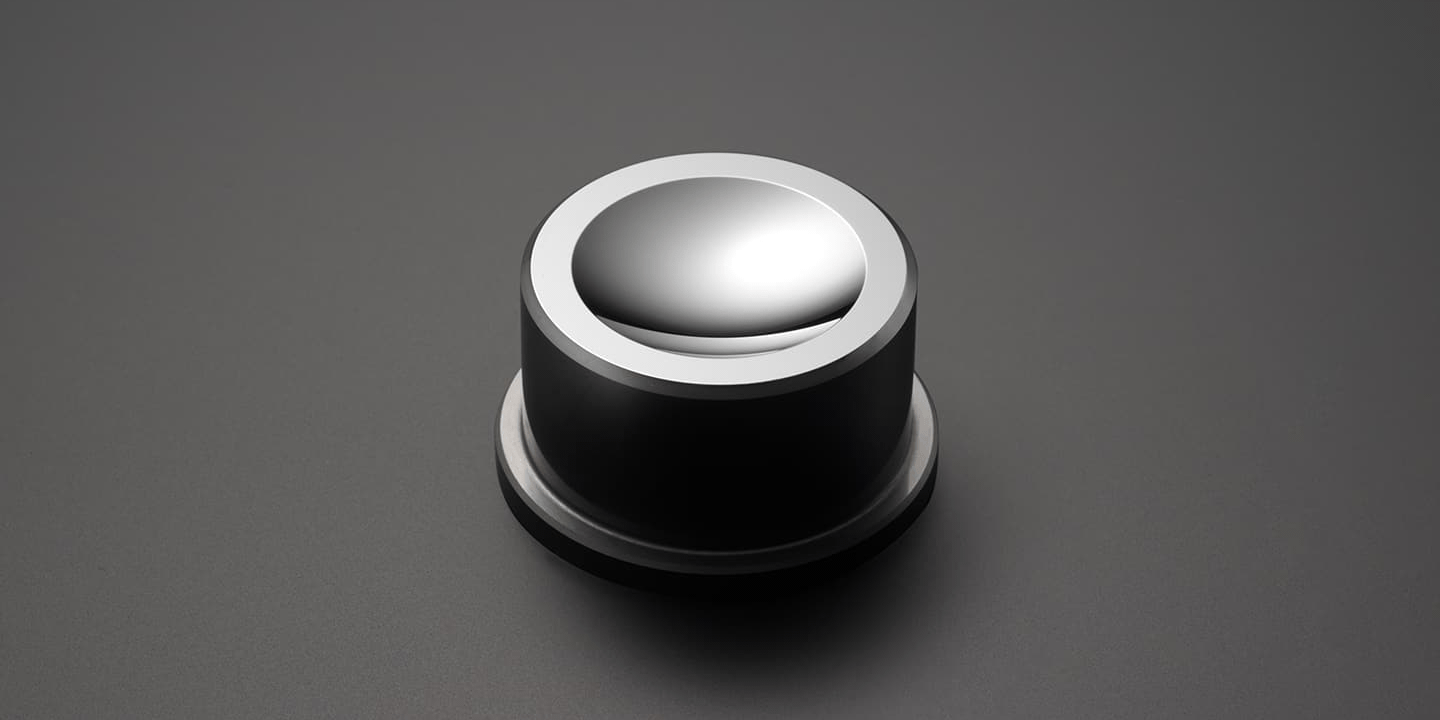
Use of multiple high-precision aspherical glass molded lenses
The surface of molds for glass molding, which is a process that forms optical components by pressing glass materials at high temperatures, requires ultra-high precision.
Sigma uses high-precision molds whose surfaces are controlled with an accuracy of ±5 nanometers (0.000005 mm) or smaller. High precision aspherical glass molded lenses archives both good aberration correction and compact lens size.
*Mold for aspherical glass molded lenses
*Mold for aspherical glass molded lenses
Exceptional I series build quality with a compact form-factor
All I series lenses have an all-metal construction. The precision-cut aluminum parts not only give the barrel a sleek, stylish finish, but provide superb durability, which improves the quality of the entire product.
Metal materials are also used in internal structures that slide with the operation ring for added robustness. These high-precision components crafted with Sigma’s cutting-edge metalworking technology are also used in Sigma’s cine lens line-up for professional cinematographers and provides an exquisite feel to touch as well as sound effects, making photographers want to reach for it and play with it over and over again.
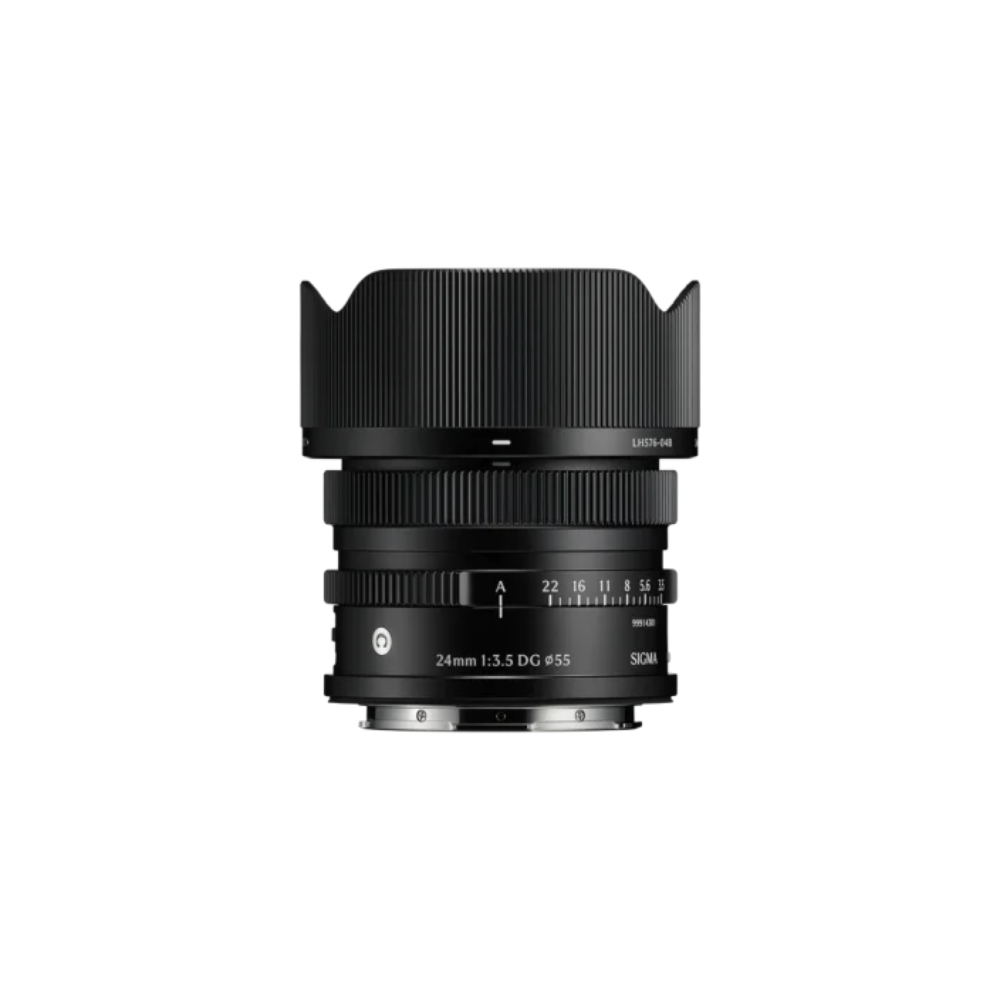
With a pairing with the 45mm F2.8 DG | Contemporary in mind, the 24mm F3.5 DG | Contemporary is compatible with the same filter size of 55mm, with a matching outermost diameter and similar overall lengths. With a combined weight of only 440g / 15.5oz.*, these two lenses can be used in tandem as part of a high-spec and compact camera system that covers a wide range of shooting situations.
Magnetic metal lens cap
The I series lenses are accompanied by a dedicated magnetic metal lens cap, in addition to a normal plastic cap. This dedicated metal cap clips to the front surface of the lens magnetically. It is no exaggeration to say that this meticulously crafted cap represents the finishing touch for the I series.
Magnetic metal lens cap holder LENS CAP HOLDER CH-11 (sold separately)
When a cap is removed from the lens it should have a proper place where it can be kept. Using this as a starting point, a cap holder using the magnetic force of the dedicated cap was created.
With the cap attached to the ring plate, and the plate clipped to a bag or belt, the cap is always within easy reach and is less likely to get lost. Plus, its elegant design is a stylish addition to a photographer’s equipment.
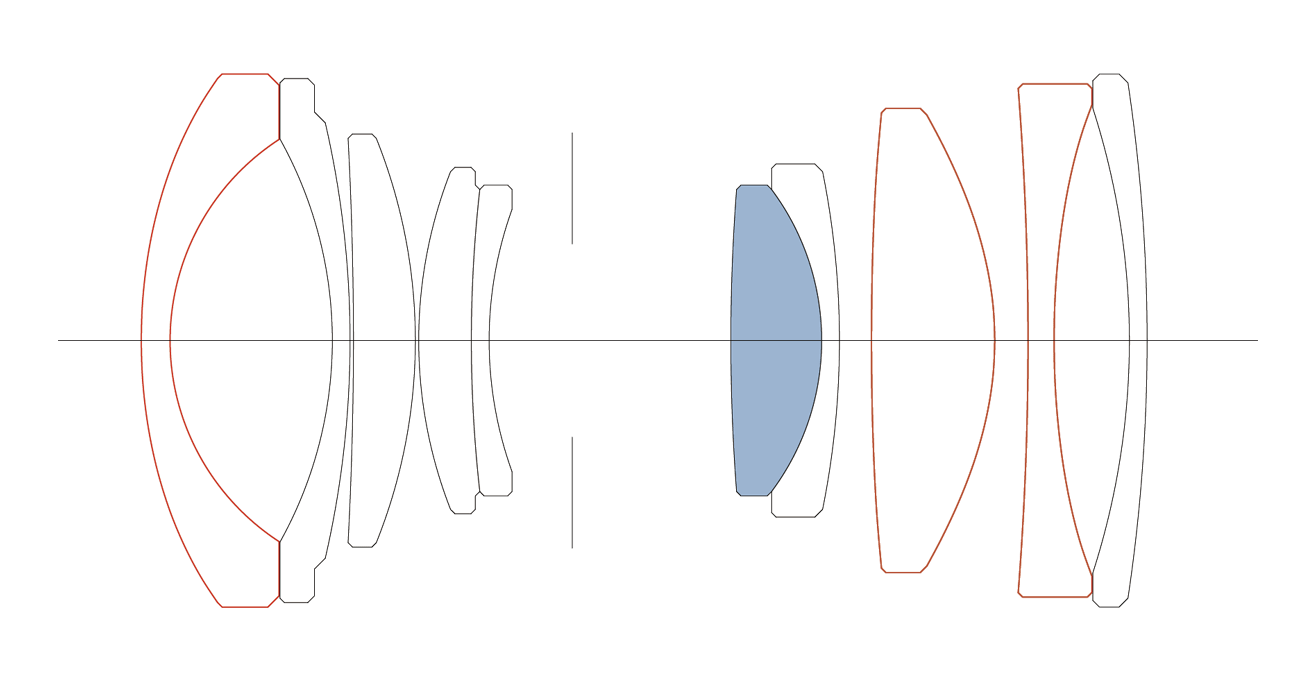
LENS CONSTRUCTION
SLD glassAspherical lens
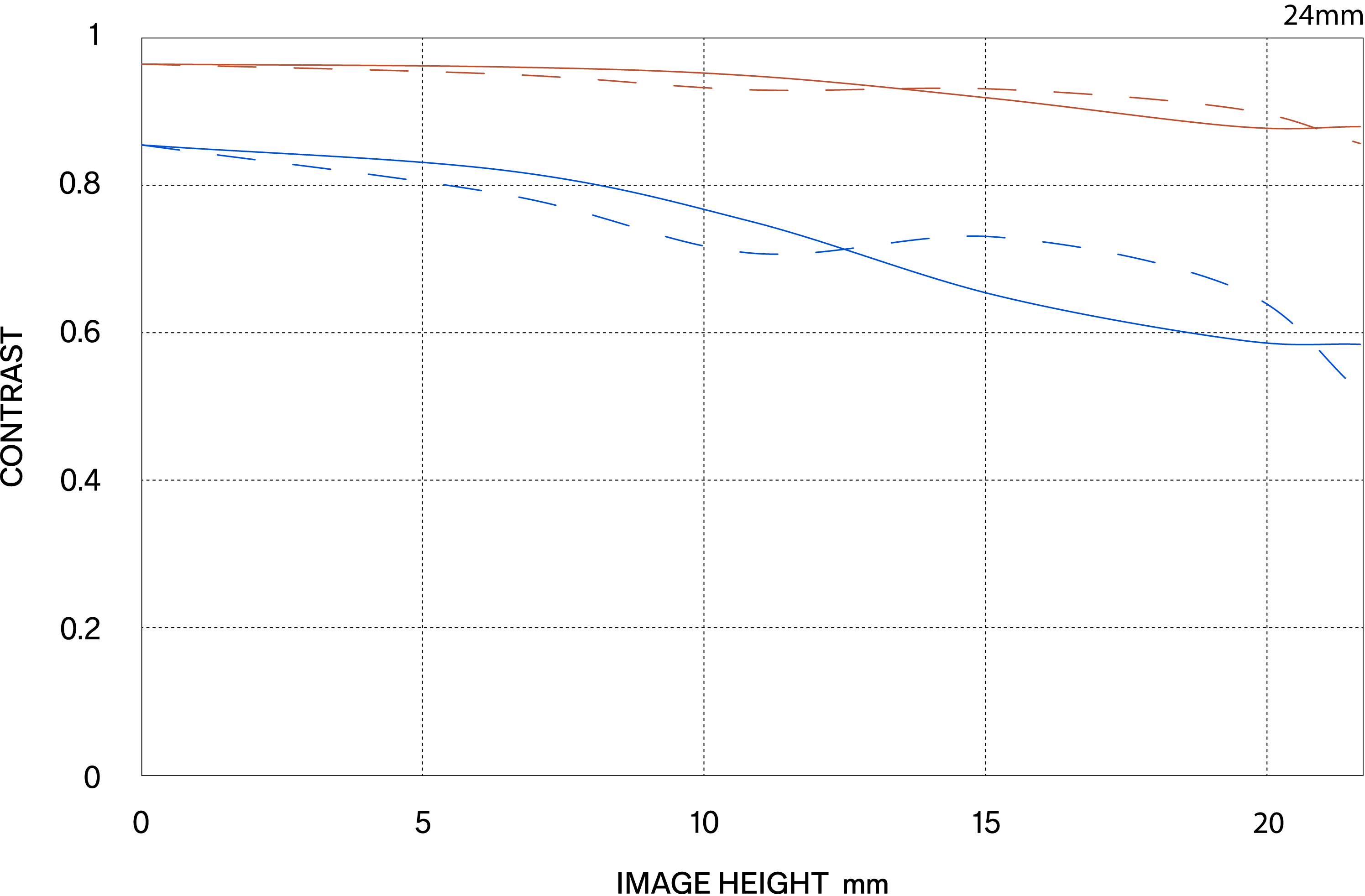
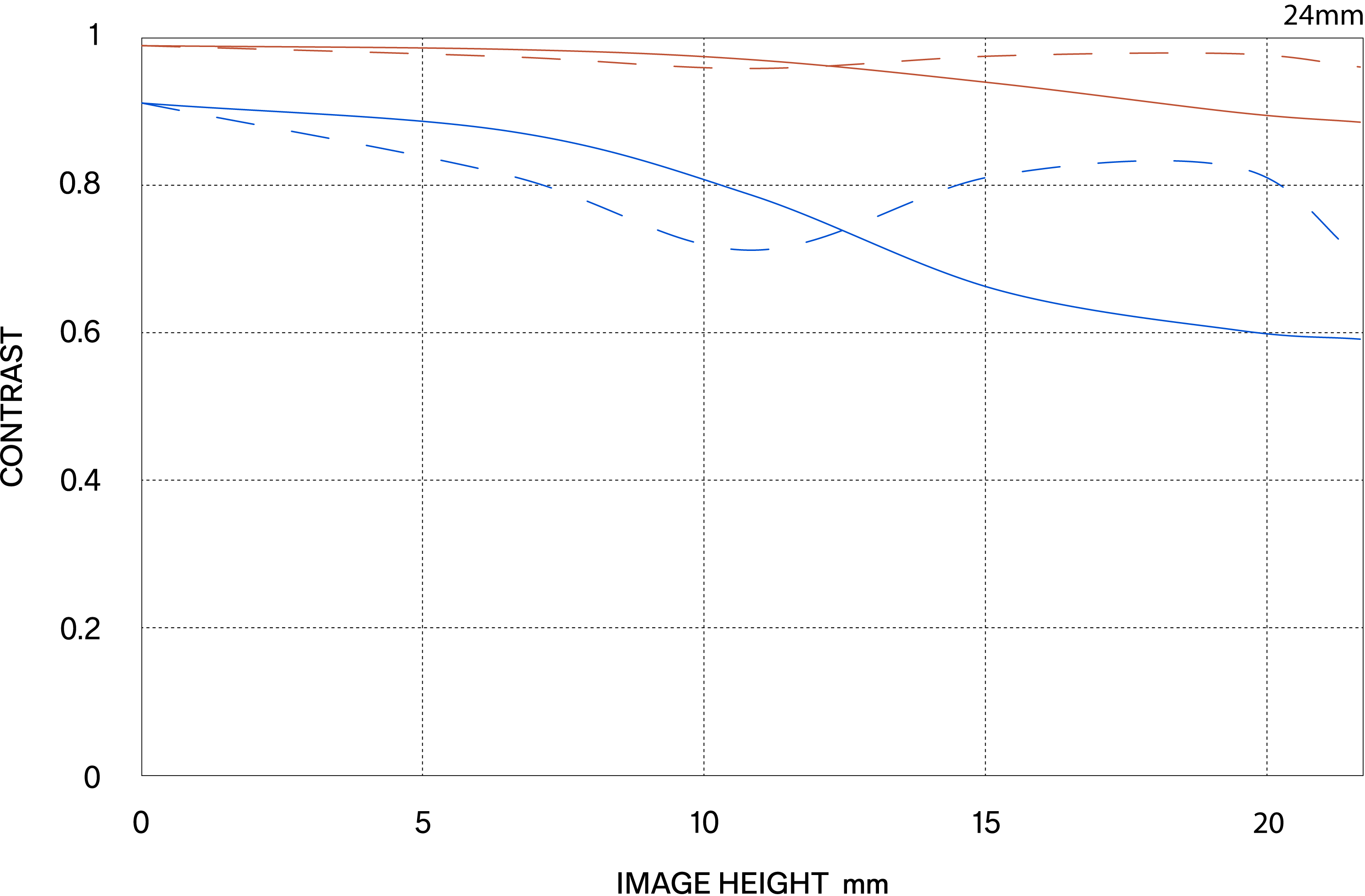
MTF CHART
DIFFRACTION MTFGEOMETRICAL MTF
Spatial frequency
S:Sagittal Line
M:Meridional Line
10lp/mm
30lp/mm
MTF CHART GUIDE
The MTF (Modulation Transfer Function) is one of the measurements for evaluating a lens’ performance, and it shows how faithfully the contrast of the subject can be reproduced on the image plane. The horizontal axis shows the image height (distance from the center of the image in mm) and the vertical axis shows the contrast value (maximum value is 1).
The closer the 10 line pairs/mm curve is to 1, the higher the contrast and clarity of the lens is, and similarly, the closer the 30 line pairs/mm curve is to 1, the better the resolution and sharpness of the lens is.
*The MTF chart depicts the result at the wide-open aperture.
*For mirrorless lenses that support distortion correction, the horizontal axis shows the image height equivalent to when an L-Mount lens is attached to a Sigma L-Mount camera with distortion correction applied. (The effect of distortion correction may differ depending on the mount and camera used.)
*The spatial frequency indicates the variation on the image plane before distortion correction is performed.
Inner focus system
The inner focus mechanism adjusts an internal lens group during focusing while helping keep the external lens assembly compact.
Stepping Motor
The stepping motor drives quiet, responsive autofocus for photographs and video.
Compatible with Lens Aberration Correction
Supported cameras can apply lens corrections according to camera body and mount capabilities.
Super Multi-Layer Coating
The lens coating is intended to suppress unwanted reflections, flare and ghosting.
Aperture ring
The aperture ring provides physical aperture control on this I series lens.
Focus Mode Switch
Autofocus/manual-focus switching depends on the lens version and its supported camera controls. Confirm the exact external controls for this model before publication.
Linear focus / Non-linear focus (for L-Mount only)
On supported L-Mount combinations, compatible focusing behavior may be configured through the camera or applicable Sigma software. Support varies by camera.
Mount with Dust and Splash Resistant Structure
A mount-side seal helps reduce exposure to dust and splashes. Dust/splash resistance does not mean the lens is waterproof.
High-precision, rugged brass bayonet mount
The metal mount is designed for precise lens-to-camera attachment and reliable mechanical fit.
Rounded diaphragm
Rounded diaphragm blades contribute to smoother out-of-focus highlights.
Exclusive low-dispersion glass
The optical design includes one SLD element to help correct chromatic aberrations.
Lens construction: 10 elements in 8 groups, with 1 SLD glass and 3 aspherical lenses
Official Sigma construction: 10 elements arranged in 8 groups, including 1 SLD and 3 aspherical lens elements.
Compatible with high-speed autofocus
Autofocus behavior depends on the body, mount, camera firmware and shooting settings.
Supports DMF, AF+MF
DMF and AF+MF support depends on the compatible camera and mount.
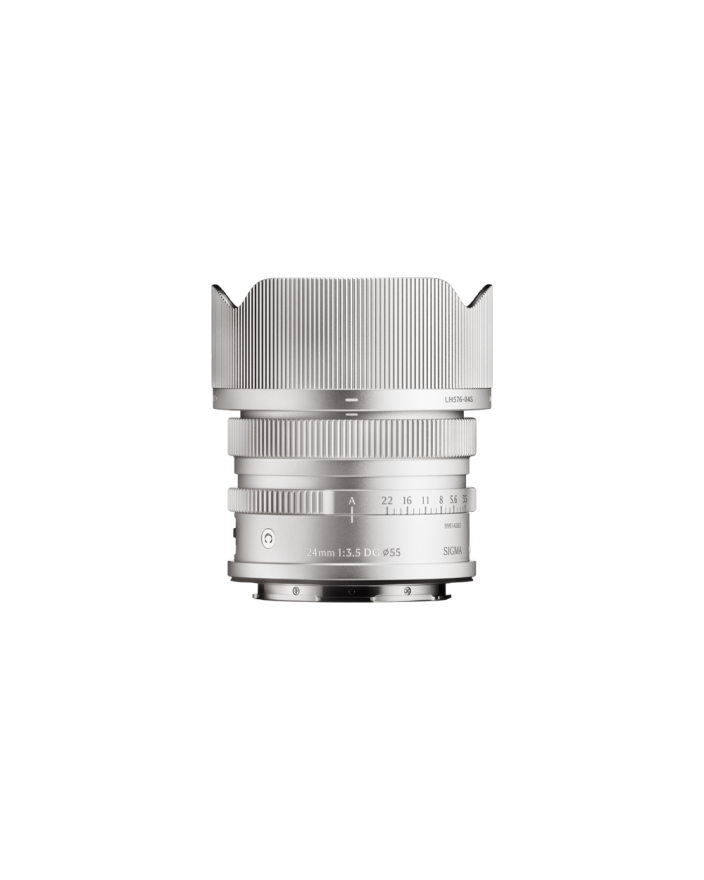
LENS HOOD(LH576-04B/LH576-04S)
The supplied hood helps reduce light entering the front element from outside the frame.
Magnetic metal lens cap(LCF55-02 MB/LCF55-02 MS)
The included magnetic metal cap attaches to the lens front as an alternative to the supplied plastic cap.
Compatible with Sigma USB DOCK UD-11 (sold separately / for L-Mount only)
USB DOCK UD-11 is a separately sold Sigma accessory for supported L-Mount functions. Sigma USB DOCK UD-11 ↗
Designed to minimize flare and ghosting
Lens geometry and coatings are designed to reduce flare and ghosting when shooting near strong light sources.
Every single lens undergoes Sigma’s proprietary MTF measuring system
Sigma performs proprietary MTF measurement as part of its manufacturing quality checks.
7-blade rounded diaphragm
The seven-blade rounded aperture helps produce near-circular bokeh highlights.
*The sample images shown here were taken using the 24mm F3.5 DG DN | Contemporary. The optical performance is the same.













Reviews
There are no reviews yet.