
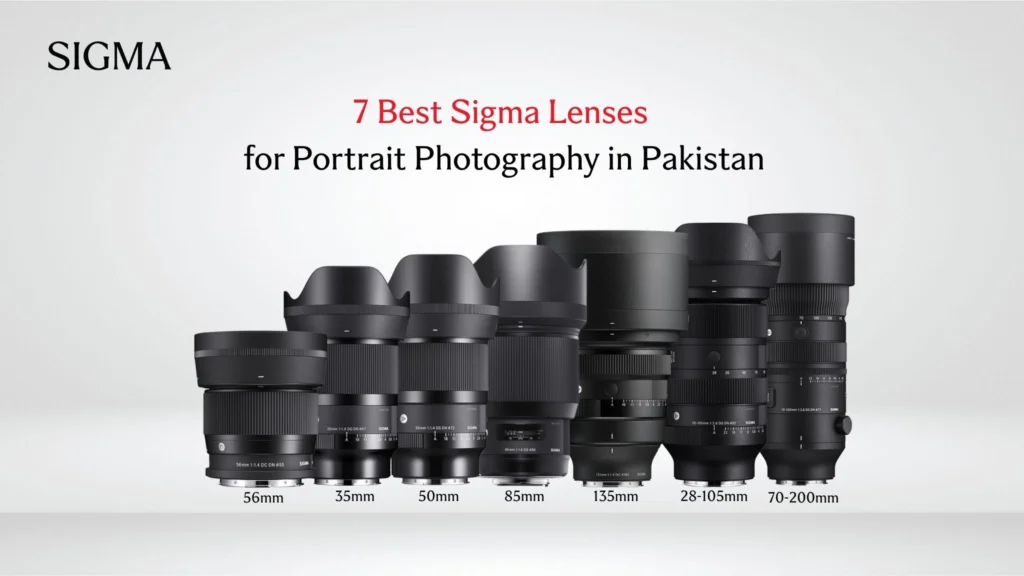
Your portraits look flat, and the background keeps stealing attention. Most of the time the camera is not the problem. The kit lens is. A fast prime changes skin rendering, background blur and subject separation in a single step. Sigma builds some of the most respected portrait glass on the market. Sigma Pakistan sells it locally with official warranty.
This guide covers seven Sigma lenses that suit headshots, couple shoots, mehndi nights and studio sessions. You will see which focal length fits your camera, your room and your budget. Picking the best lens for portrait photography gets simple once you match focal length to shooting distance.
Which SIGMA Lens Is Best for Portrait Photography?
The Sigma 85mm F1.4 DG DN Art is the strongest all-round choice for full-frame shooters in Pakistan. It gives flattering compression, clean subject separation and a comfortable working distance.
Your sensor and your room decide the rest. Crop bodies suit the 56mm F1.4 DC DN, while tight spaces favour the 50mm F1.4 DG DN Art. The focal length table below sets all five options side by side.
Good portrait photography rewards distance and aperture far more than megapixels.
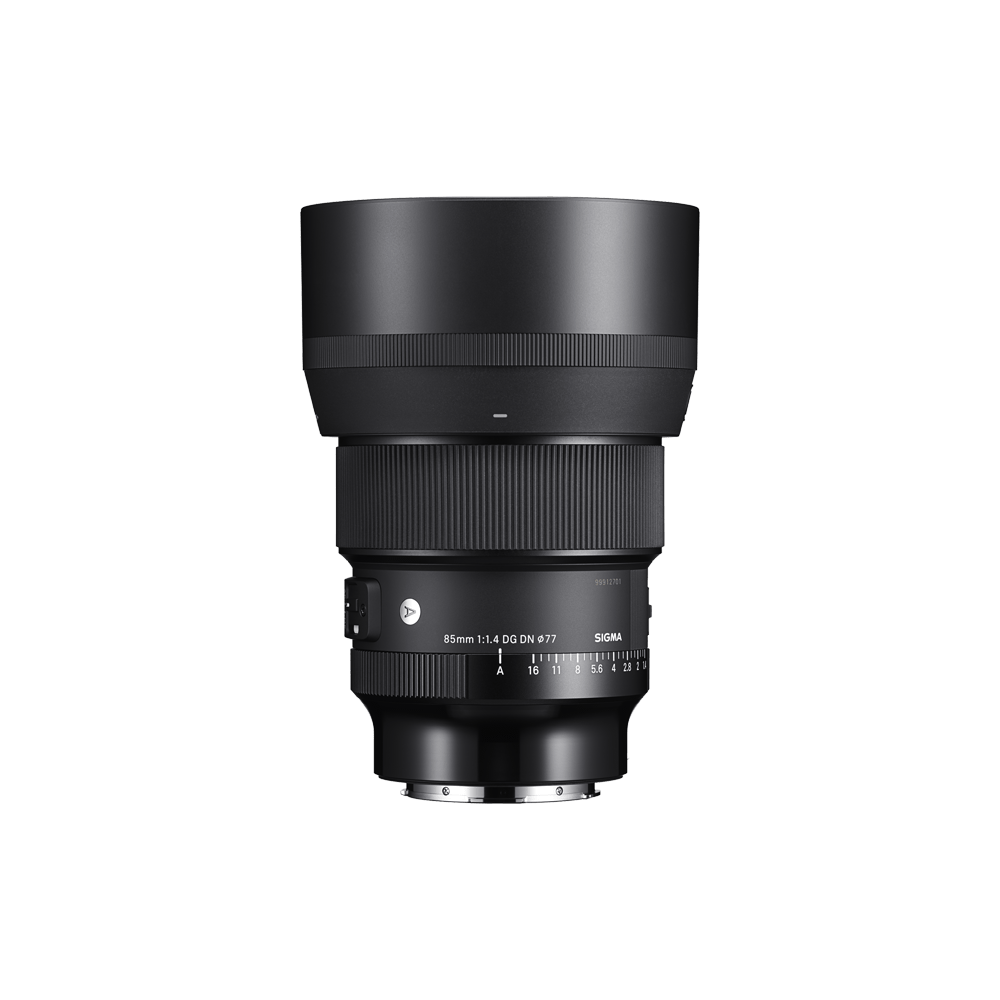
1. SIGMA 85mm F1.4 DG DN Art – Best Overall Portrait Lens
The 85mm F1.4 DG DN Art is the best portrait lens in the Sigma line-up for full-frame users. It sits at the classic portrait focal length with a fast F1.4 aperture and an 11-blade rounded diaphragm.
At 85mm you stand around two metres from your subject. That distance keeps facial features natural and avoids the stretched look that wider lenses create. Backgrounds fall away cleanly, so a busy street behind your subject stops competing for attention.
The lens weighs roughly 625g, which is light for its class. Sony E and L-Mount shooters both get a native version.
Watch out for: you need room to step back, so small rooms feel tight
Best for: headshots, bridal portraits, graduation shoots and studio work
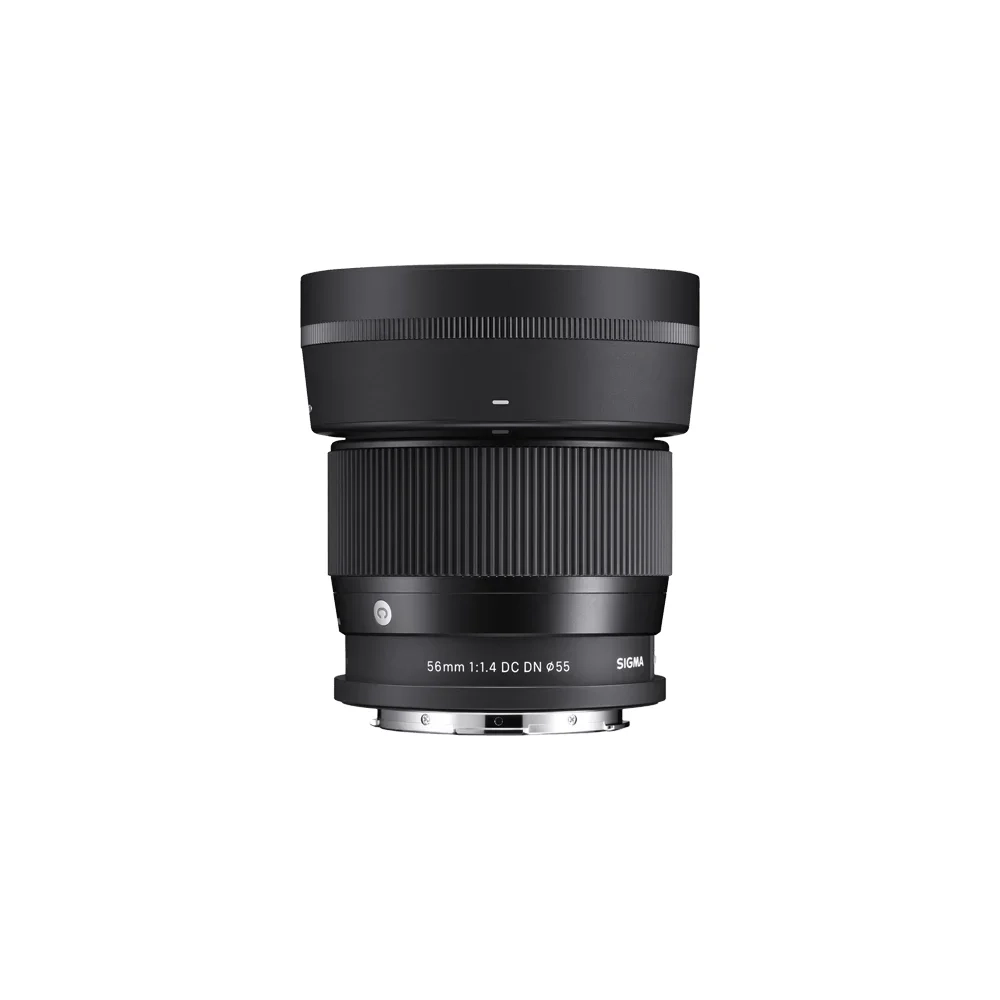
2. SIGMA 56mm F1.4 DC DN Contemporary – Best APS-C Portrait Lens
For crop-sensor cameras, the 56mm F1.4 DC DN Contemporary is the smartest first portrait buy. On a 1.5x crop sensor it frames like an 84mm lens, which is true portrait territory.
It weighs around 280g and costs far less than a full-frame Art prime. That combination suits students, new creators and second shooters. A 9-blade rounded diaphragm keeps out-of-focus highlights smooth and round.
Mount availability matters here. Nikon Z users get only three Sigma primes. This lens joins the 16mm and 30mm F1.4 DC DN.
One limitation: it covers crop sensors only, so it will vignette on a full-frame body
Ideal for: Sony, Fujifilm X, Canon RF and Nikon Z crop bodies
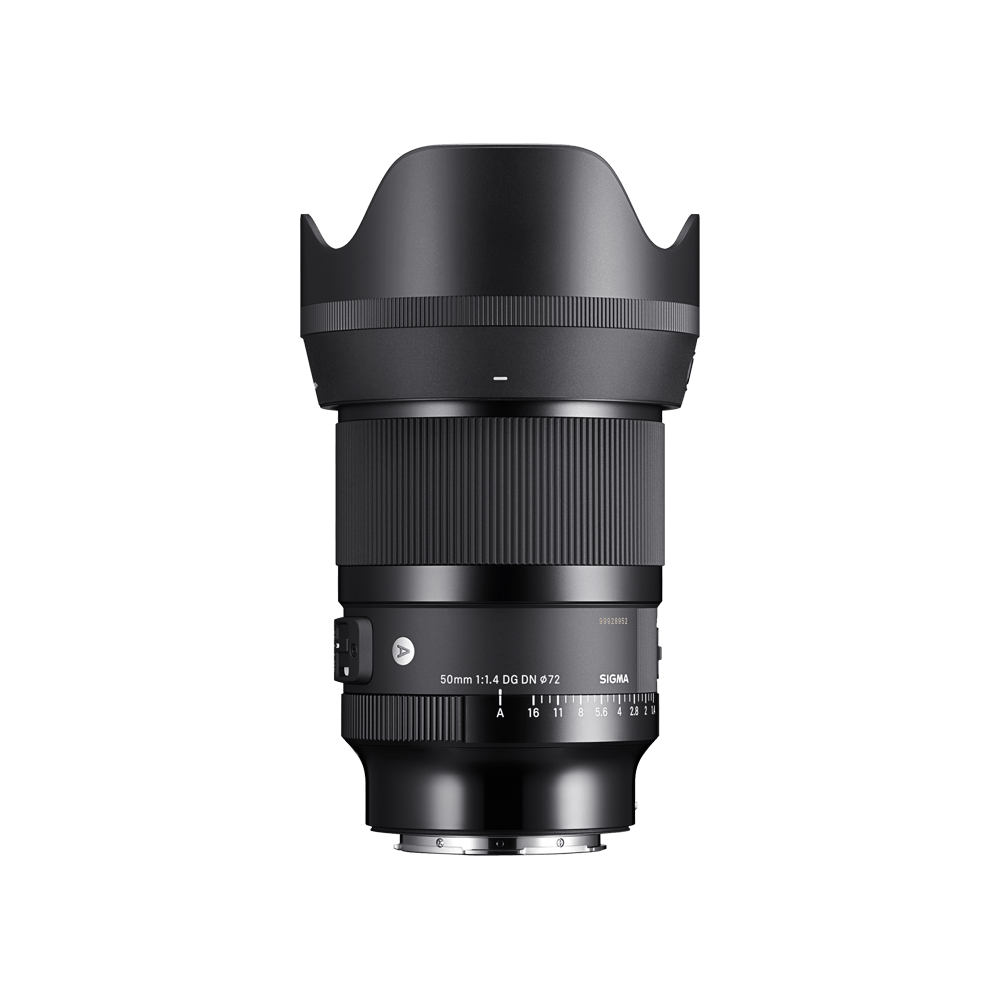
3. SIGMA 50mm F1.4 DG DN Art – Best for Indoor Portraits
The 50mm F1.4 DG DN Art is the better pick when you shoot portraits indoors. Fifty millimetres fills the frame from a shorter distance, which helps in small rooms and home studios.
Its minimum focus distance of about 45cm allows tight head-and-shoulder frames. It also handles half-body portraits and detail shots at the same event.
Skin tones stay natural at F1.4, and the lens holds its sharpness wide open. Plenty of Pakistani wedding shooters keep it on a second body for indoor hall coverage.
Keep in mind: 50mm sits slightly wide, so hold some distance to avoid facial distortion
Strongest at: indoor portraits, small studios, family sessions and dim venues
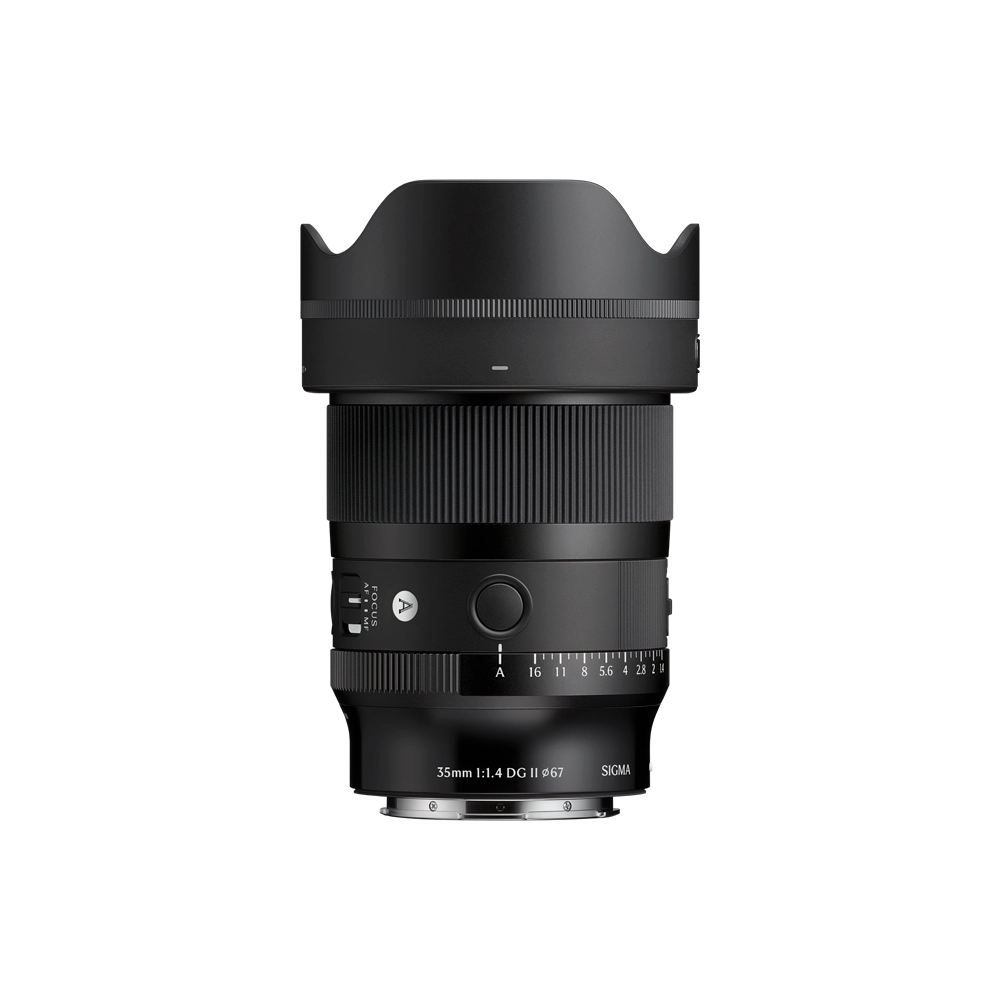
4. SIGMA 35mm F1.4 DG II Art – Best for Environmental Portraits
Environmental portraits need context, and the 35mm F1.4 DG II Art delivers it. This second-generation Art prime shows the subject and the place around them in one frame.
Sigma rebuilt the optics with a 15-element, 12-group design and an 11-blade rounded diaphragm. The lens is roughly 14% shorter and 20% lighter than the 2021 model, landing near 525g.
That weight saving matters on long shoots. Walking the lanes of the Walled City with a light prime beats carrying a heavy zoom all afternoon.
The trade-off: there is no optical stabilization, so mind your shutter speed in low light
Works well for: storytelling portraits, street work, travel sessions and wide couple frames
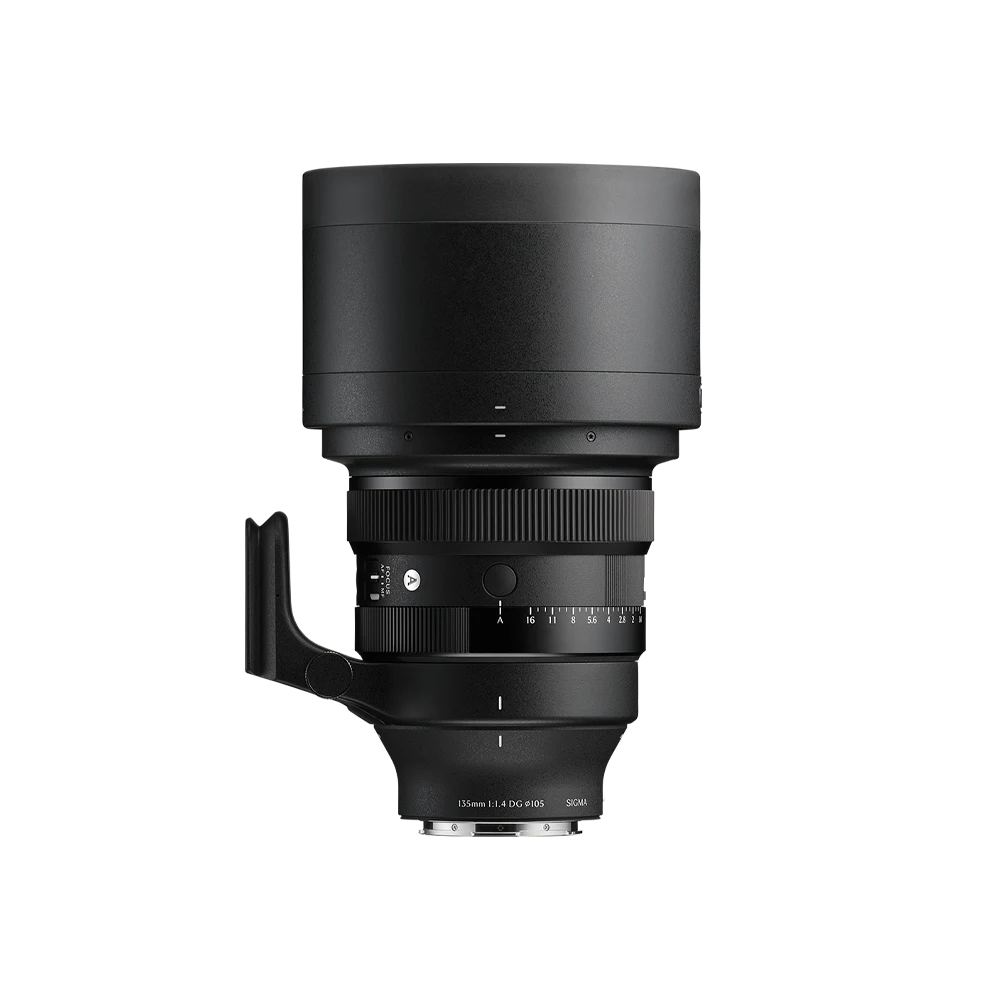
5. SIGMA 135mm F1.4 DG Art – Best for Professional Portraits
The 135mm F1.4 DG Art is the professional choice when background blur is the whole point. It is the world’s first autofocus 135mm lens to reach an F1.4 aperture.
The optical formula runs 17 elements in 13 groups, including four FLD elements. A 13-blade diaphragm keeps bokeh circles round across the frame, and minimum focus sits at 1.1 metres.
This is a serious tool at roughly 1420g with a 105mm filter thread. Sigma offers it in Sony E and L-Mount.
The catch: depth of field is razor thin at F1.4, so eye detection has to be reliable
Built for: paid portrait work, fashion shoots and outdoor sessions with space
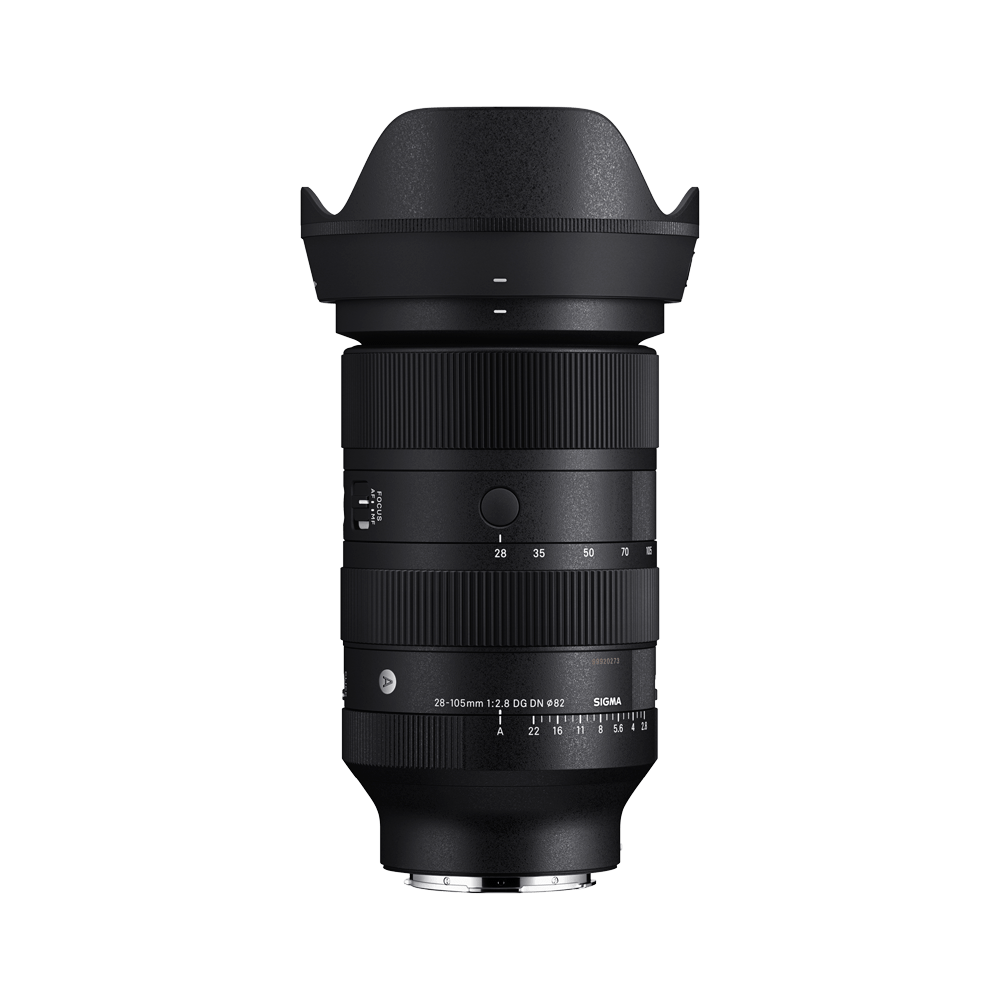
6. SIGMA 28-105mm F2.8 DG DN Art – Best Versatile Portrait Lens
The 28-105mm F2.8 DG DN Art covers wide, standard and short telephoto framing in one lens. That range handles group shots, half-body portraits and tight headshots without a single swap.
A constant F2.8 aperture keeps exposure steady as you zoom. You will not match an F1.4 prime for blur, yet 105mm at F2.8 still separates a subject well.
It is the practical answer when you work an event alone and cannot swap glass.
Bear in mind: it front-loads the camera at roughly 995g, so a padded strap helps
Covers: mixed coverage, corporate portraits, engagement shoots and content days
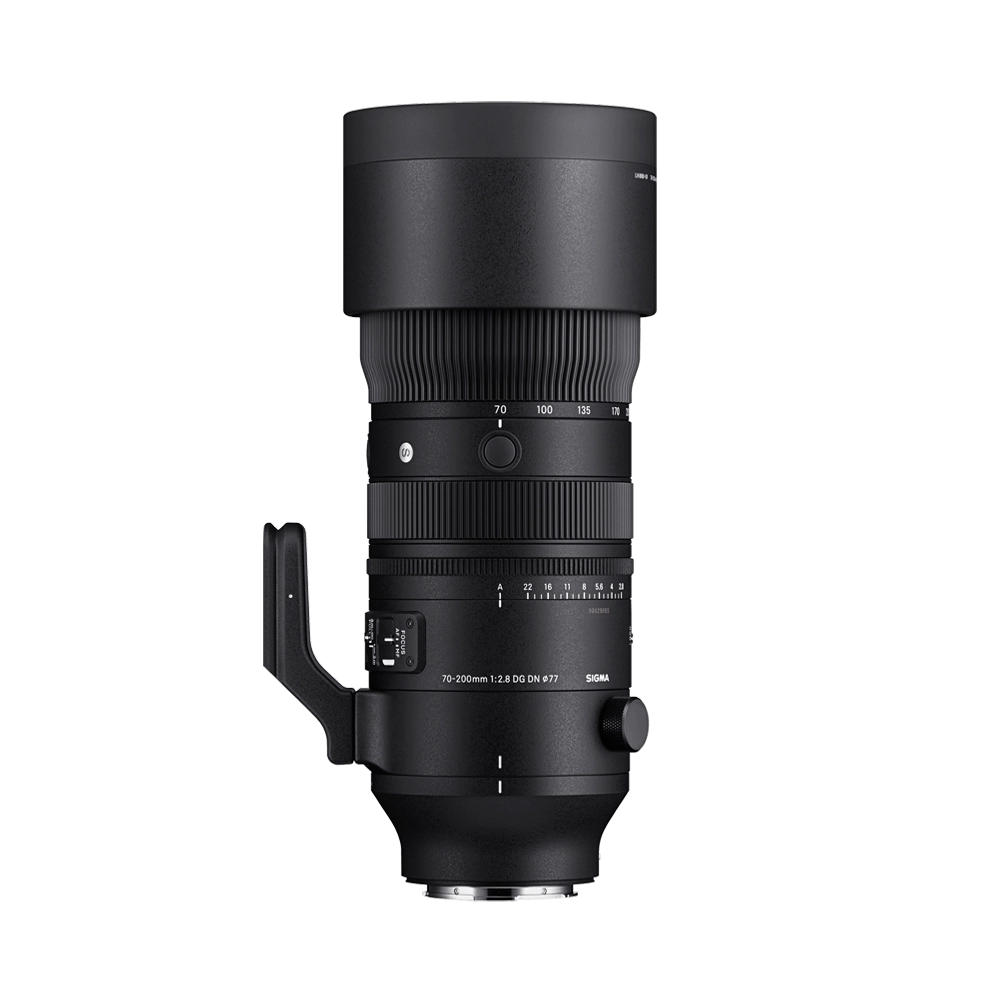
7. SIGMA 70-200mm F2.8 DG DN OS Sports – Best for Weddings and Events
For weddings, the 70-200mm F2.8 DG DN OS Sports gives reach and compression from a distance. You can catch candid expressions during the barat without standing in the aisle.
Built-in optical stabilization helps inside dim halls where shutter speeds drop. The constant F2.8 aperture holds through the entire zoom range.
At 200mm the background compresses heavily, so stage lights turn into smooth pools of colour. That look suits stage portraits and ceremony moments.
One constraint: at over 1.3kg it earns a monopod for long ceremony coverage
Made for: weddings, events, stage portraits and outdoor sessions with distance
35mm vs 50mm vs 56mm vs 85mm vs 135mm for Portraits
Focal length controls three things: working distance, facial rendering and background blur. Longer lenses compress features and blur more, while wider lenses include more of the scene.
| Focal Length | Best For | What to Expect |
|---|---|---|
| 35mm | Environmental portraits | Subject plus setting; needs careful distance |
| 50mm | Indoor and half-body | Natural framing inside small rooms |
| 56mm (APS-C) | Crop-sensor portraits | Frames like approximately 84mm on a 1.5× APS-C camera; compact and affordable |
| 85mm | Headshots and bridal | Flattering perspective at typical portrait distances with strong subject separation |
| 135mm | Professional sessions | Strong background blur and subject isolation; needs more working distance |
The best lens for portraits usually comes down to how much room you shoot in.
50mm vs 85mm for Portrait Photography
Pick 85mm for flattering headshots and 50mm for tight spaces. Both offer F1.4, so the real difference is working distance and facial rendering.
| Factor | 50mm F1.4 Art | 85mm F1.4 Art |
|---|---|---|
| Working Distance | About 1.2m | About 2m |
| Room Needed | Under 4m deep | 4m to 5m deep |
| Face Rendering | Natural; can look wider at close distances | Flattering perspective at longer working distances |
| Background Blur | Strong | Stronger at similar framing |
| Best Use | Indoor and seated portraits | Headshots and bridal portraits |
Measure the space you shoot in most often. That single number settles the choice faster than any spec sheet.
APS-C vs Full Frame: Which SIGMA Portrait Lens Should You Choose?
Buy a DC lens for APS-C bodies and a DG lens for full-frame bodies. SIGMA uses DC for crop sensors and DG for full frame, so the label tells you what fits. A crop sensor multiplies focal length by about 1.5x. That is why the 56mm DC DN behaves like an 84mm portrait camera lens on a crop body.
- SIGMA lenses in Canon RF mount are crop sensor only.
- Nikon Z availability is limited to the 16mm, 30mm and 56mm F1.4 DC DN primes
- Full-frame bodies give shallower depth of field at the same aperture and framing.
Best SIGMA Portrait Lens for Photo and Video Creators
Hybrid creators should start with the 28-105mm F2.8 DG DN Art. One lens covers interviews, b-roll and portrait frames without a swap.
Primes still win on look. The 50mm F1.4 DG DN Art suits talking-head setups in small rooms. The 85mm gives clean separation against a plain wall.
- An aperture ring with a de-click switch for smooth exposure changes
- Focus breathing, which shifts framing during a focus pull
- Weight balance on your gimbal or shoulder rig
Upgrading From a Kit Lens: Which Portrait Lens Should You Buy First?
Buy an 85mm F1.4 if you shoot full frame, and a 56mm F1.4 if you use a crop body. Either one delivers an immediate jump over a kit zoom. Kit lenses usually open to F3.5 or F5.6. That aperture cannot blur a background properly or hold a safe shutter speed indoors. A fast prime fixes both problems on the same camera body.
- First lens: 85mm or 56mm prime
- Second lens: 35mm or 50mm for wider stories
- Third lens: a 70-200mm zoom for event coverage
What to Check Before Buying a SIGMA Portrait Lens in Pakistan
Check mount, sensor format, working distance and warranty before you buy a portrait lens. Those four points prevent almost every mismatch and return.
Camera Mount and Sensor Compatibility
Confirm your mount first, because each SIGMA lens is built for one mount only. Sony E and L-Mount users get the widest full-frame Art selection. Crop-sensor owners on Canon RF and Nikon Z work from a shorter list. Check the Sigma lens catalogue before ordering, since mount availability shifts with every release. SIGMA Pakistan also runs a mount conversion service for older lenses, which is worth asking about at the counter.
Working Distance, Aperture and Weight
Match the focal length to the space you use most often. An 85mm lens needs roughly two metres for a head-and-shoulders frame, and a 135mm needs more. Aperture controls both background blur and low-light performance. F1.4 gives you two stops over F2.8, which counts inside a dim banquet hall. Weight decides whether you actually carry the lens. A 1420g telephoto feels very different from a 280g crop prime after four hours on your feet.
Numbers only take you so far. SIGMA Pakistan runs live demo and touch-and-try sessions with SIGMA ambassadors. Professionals and hobbyists both attend, and you can test each lens on your own camera body before deciding. Details appear on the Sigma events page.
Price, Availability and Official Warranty in Pakistan
Buy from SIGMA Pakistan or an authorized dealer to keep your warranty valid. The site is operated by Hope Enterprises, the sole authorized SIGMA distributor in the country. Grey imports often arrive with no warranty cover and no local service route. Official stock includes warranty registration and support through the SIGMA service centre on Japan Street, Nisbat Road, Lahore.
Prices move with exchange rates, so check the live figure on the product page before you commit. The SIGMA Pakistan showroom sits at 86 Chamberlain Road, Camera Market, Nisbat Road, Lahore.
Which SIGMA Portrait Lens Should You Buy?
For most people the answer is the 85mm F1.4 DG DN Art on full frame. Crop-sensor owners should take the 56mm F1.4 DC DN. Both deliver the portrait look at a sensible price.
- New to portraits on APS-C: 56mm F1.4 DC DN Contemporary
- Full-frame portrait work: 85mm F1.4 DG DN Art
- Small indoor spaces: 50mm F1.4 DG DN Art
- Story-led and travel portraits: 35mm F1.4 DG II Art
- Paid professional sessions: 135mm F1.4 DG Art
- Solo event coverage: 28-105mm F2.8 DG DN Art
- Weddings with distance: 70-200mm F2.8 DG DN OS Sports
The best lens for portrait photography is the one that matches your sensor, your shooting room and your working style. All seven come through SIGMA Pakistan with official warranty. Find your nearest stockist on the authorized dealers page.
FAQs About SIGMA Portrait Lenses
What is the best SIGMA lens for portrait photography?
The SIGMA 85mm F1.4 DG DN Art. It suits most full-frame portrait work, giving flattering compression, strong background blur and a comfortable two-metre working distance.
Is 50mm or 85mm better for portraits?
85mm suits headshots and 50mm suits tight rooms. Choose 85mm if you can step back four metres. Pick 50mm for indoor sessions in smaller spaces.
Which SIGMA lens is best for APS-C portraits?
The SIGMA 56mm F1.4 DC DN Contemporary. On a crop sensor it frames like an 84mm lens. That is the ideal portrait range in a compact 280g body.
Is SIGMA 56mm F1.4 good for portrait photography?
Yes. Its F1.4 aperture blurs backgrounds well even on a smaller sensor. Nine rounded blades keep highlights smooth, which suits headshots, graduation shoots and indoor family portraits.
Which SIGMA lens is best for wedding portraits?
The 70-200mm F2.8 DG DN OS Sports. Its reach captures candid barat moments from a distance, and optical stabilization holds sharpness inside dimly lit halls.
Which SIGMA portrait lens should a beginner buy after a kit lens?
Start with the 85mm F1.4 DG DN Art on full frame, or the 56mm F1.4 DC DN on APS-C. Both jump well beyond kit zoom quality.
