
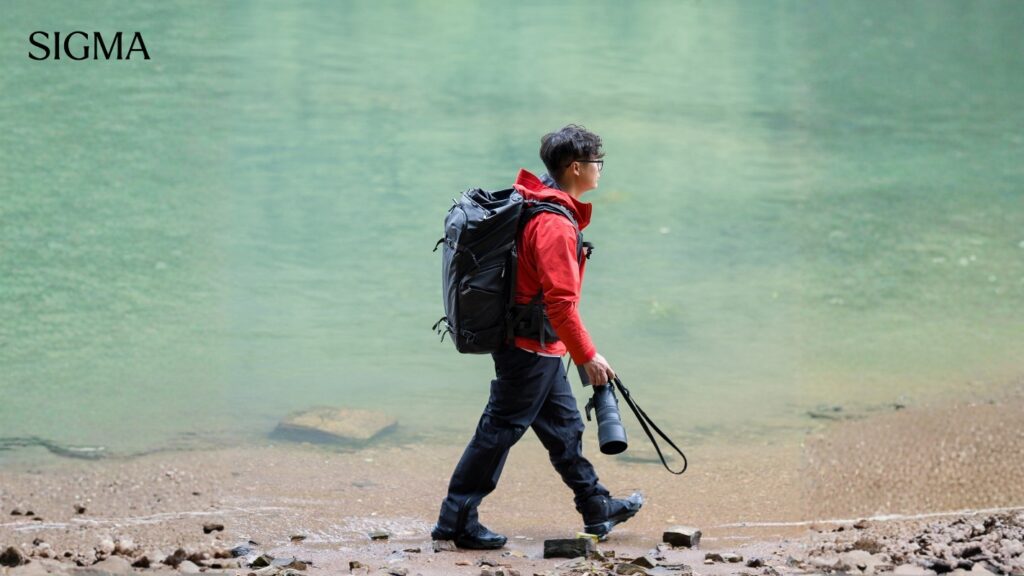
Scroll through Instagram today. Half of what you see may not be shot with a camera at all. AI photography is everywhere and photographers are asking real questions. Is this the end of their craft? Should they put down their cameras and learn prompts instead?
AI is changing photography, not killing it. According to Adobe’s Creators’ Toolkit Report, 86% of creators worldwide are already using generative AI in their creative workflows. The photographers who understand this are already adapting and growing. Those who ignore it are falling behind.
In this blog, we’ll break down what AI actually does, where it falls short, and why your lens still matters more than any algorithm. Whether you’re a beginner or a working professional, this guide gives you a clear, honest picture of where photography stands in 2026.
Why AI Photography Is Trending in 2026
AI photography is trending because it makes high-quality visual creation faster, cheaper, and more accessible than ever before. Furthermore, the rapid evolution of tools like Midjourney, Adobe Firefly, Ideogram 3.0, and Canva Magic Studio has redefined what’s possible in digital art. Consequently, creators can now generate stunning, professional-grade visuals in a matter of seconds.
This shift has effectively dismantled traditional barriers to entry for aspiring designers and marketers. Specifically, you no longer need to invest in expensive camera gear or master complex lighting setups. Moreover, the requirement for years of technical editing skills has been replaced by the ability to write a simple, descriptive prompt.
Three reasons explain why it’s growing so fast:
- Speed — AI generates images in seconds
- Cost — no equipment, studio, or crew needed
- Accessibility — anyone can create professional-looking visuals
But speed and cost don’t tell the whole story. Trends move fast. Reality moves slower. And the reality is more nuanced than the hype suggests.
Will AI Replace Photographers? The Reality Explained
The reality is simple AI is a tool, not a photographer. And no tool can replace human presence. AI is reshaping photography into a collaborative craft where human vision and AI work side by side. It handles the technical. Photographers handle the soul. It generates images but it cannot show up. It cannot shoot a real wedding, document a street protest, or capture a child’s first laugh. Those moments need a human behind the lens.
What AI is replacing is low-skill, repetitive work. Stock templates. Generic product backgrounds. Basic social media graphics. If that’s your only offering, you’ll feel the pressure. But photographers who bring human experience, emotion, and real storytelling to their work are impossible to replace. No algorithm touches that. They’re not going anywhere. In fact, they’re more valuable than ever.
AI Photography vs Real Photography
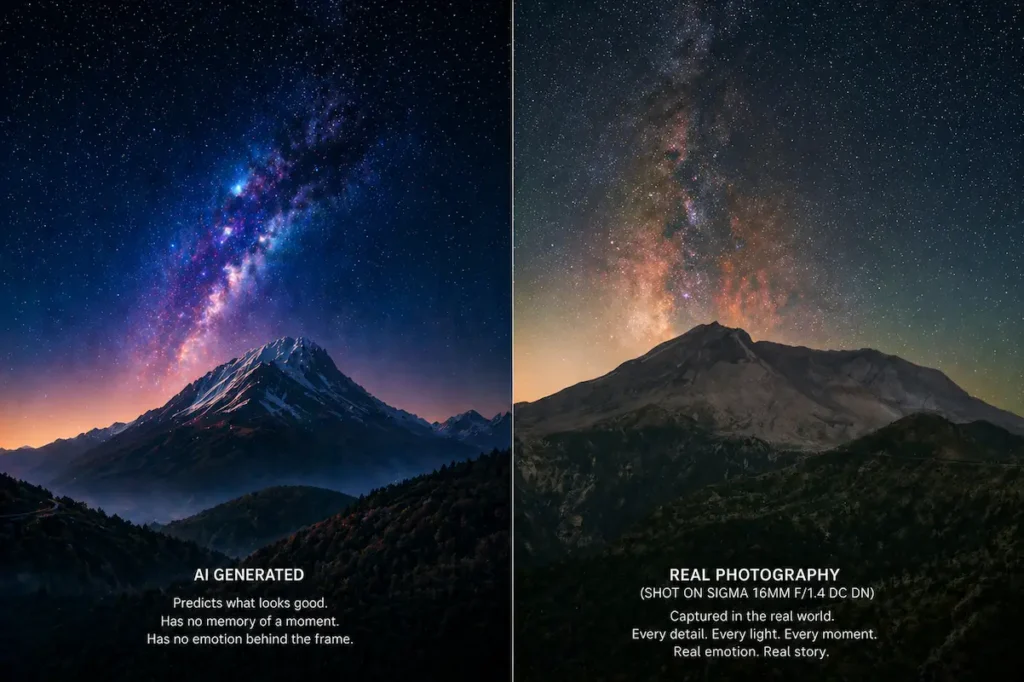
This is where things get interesting. AI vs real photography is not just a technical debate. It’s a philosophical one.
AI generates images based on patterns and data. It predicts what looks good, carries no memory of a moment, and brings no emotion behind the frame. Real photography is different. A photographer sees something, feels something, and makes a decision in a split second. That’s not data. That’s human judgment.
| Feature | AI Photography | Real Photography |
| Speed | Instant | Requires time and setup |
| Authenticity | Simulated | Captured from real life |
| Emotion | Absent | Present |
| Legal ownership | Complex | Clear |
| Storytelling | Limited | Deep and personal |
Both have value. But they serve different purposes. The smart approach is knowing when to use which.
What AI Can Do Better Than Photographers
Let’s be honest. AI wins in certain areas. AI photography tools are genuinely impressive at:
- Speed editing: AI can retouch hundreds of photos in minutes. What used to take a full day now takes an hour.
- Background removal: Tools like Adobe’s generative fill do this flawlessly. No manual masking needed.
- Upscaling and restoration: Old, blurry, or low-resolution images can be enhanced instantly.
- Generating concepts: Need a mood board for a campaign? AI produces it in minutes.
- Colour grading: AI can match tones across an entire shoot automatically.
For working photographers, these tools save real time. A wedding photographer who used to spend 20 hours editing can now finish in 8. That’s not a threat. That’s a gift.
What AI Cannot Replace in Photography
No AI can replace genuine human presence and that’s the core truth. When a photographer is in the room, something shifts. People react. Moments happen. Trust builds between photographer and subject. That connection produces images you simply cannot generate.
Consider real examples:
- A street photographer in Lahore’s old city captures an elderly man laughing in the afternoon light. That image has history, culture, and soul. No AI was there.
- A documentary photographer follows flood-affected families in rural Pakistan for weeks. Those images spark national conversations. No algorithm could produce that.
AI photography also struggles with:
- Consistent real-world lighting in unpredictable environments
- Legal, editorial, and journalistic credibility
- Long-form visual storytelling
- Personal, relationship-based work like portraits and events
The emotional depth of real photography comes from lived experience. That’s irreplaceable.
The Ethics of AI Photography (Transparency, Copyright, C2PA)
This is a conversation the industry is having right now. When you use AI to create an image, who owns it? If a brand uses AI to fake a “real customer” moment, is that honest? These questions matter.
The C2PA standard (Coalition for Content Provenance and Authenticity) is growing. It allows images to carry metadata about how they were made. Was it shot on a camera? Edited with AI? Generated entirely? Platforms like LinkedIn and Adobe are already integrating this.
Copyright is still murky. In many countries, AI-generated images cannot be copyrighted by the person who prompted them. This creates real risk for commercial use.
Transparency is becoming expected. Audiences are getting smarter. When a brand passes off AI visuals as real, people notice. And the backlash can be severe.
For photographers, this is actually an advantage. Real, authentic, verified images carry more trust than AI-generated ones.
Why Real Cameras and Lenses Still Matter in 2026
Here’s something no AI debate can change. Optical physics is real.
A great lens captures light in a way no algorithm can replicate from scratch. The bokeh from a fast prime lens, the sharpness across a wide frame, the micro-contrast in a portrait these come from glass, its design, and physics.
In AI photography, the irony is that AI-generated images often try to mimic the look of premium glass. Film grain, lens flare, shallow depth of field, these are all features of real cameras that AI copies because audiences love them.
So if people love the look of real lenses, why not just use real lenses?
Cameras like Sigma BF, Sony’s Alpha series, Nikon Z-mount bodies, and Canon R-series have all evolved significantly. Paired with quality glass like Sigma lenses, they produce images that stand apart. Choosing the right body for your shooting style is a philosophy gaining ground among serious photographers who invest in lenses that last decades.
A good camera lens is not just a tool. It’s a long-term investment that AI cannot devalue.
How Photographers Can Use AI to Improve Their Work
The smartest photographers aren’t fighting AI. They’re using it. This is how working photographers are integrating AI tools practically:
- Speed up editing: Use Lightroom AI masking, Luminar Neo, or Topaz to cut editing time significantly.
- Client communication: Use AI tools to draft emails, create quotes, or write image descriptions faster.
- Social media content: Use AI to write captions, plan posting schedules, or resize images for different platforms.
- Mood boarding: Generate visual concepts with AI to show clients before the actual shoot.
- Learning and critique: Some photographers use AI tools to analyze their images and get compositional feedback.
The key mindset shift is this: AI is your assistant, not your replacement. When you treat it that way, it makes you more productive without taking away your creative identity.
Is Photography Still Worth Learning in 2026
Photography is absolutely worth learning in 2026. The demand for skilled photographers in Pakistan is genuinely growing. Content creators, brands, real estate developers, fashion labels, and NGOs all need professional visuals. The opportunity is real and expanding.
AI is not killing photography, it’s raising the bar. The basics: light, composition, timing, storytelling these still define great images. AI cannot teach you to see. That skill comes from practice, mentorship, and real experience behind the camera.
If you want to learn photography with structure and expert guidance, look for programmes that combine technical skills with creative thinking. Theory without practice doesn’t build photographers. Real shoots, real feedback, and real mentorship do.
That’s exactly the approach taken at Sigma Academy where photography education is built around practical learning and creative development, not just theory. Whether you’re starting from zero or levelling up as a working photographer, structured learning gives you a foundation AI cannot replace.
Best Sigma Lenses for Photographers in Pakistan
If you’re serious about photography, your glass matters as much as your body. Sigma lenses have earned a strong reputation globally and in Pakistan, they offer exceptional value for working photographers. Here are the top picks for photographer:
- Sigma 35mm f/1.4 DG DN Art: A favourite for street, portrait, and documentary work. The sharpness and bokeh quality rival lenses twice its price. Perfect for photographers in urban environments like Karachi, Lahore, and Islamabad.
- Sigma 85mm f/1.4 DG DN Art: Built for portrait photographers. The rendering is smooth, the autofocus is fast, and the build quality is solid. A go-to lens for studio and outdoor portraits.
- Sigma 24-70mm f/2.8 DG DN ll Art: A professional zoom that covers most shooting situations. Event photographers love this for its versatility without sacrificing image quality.
- Sigma 16mm f/1.4 DC DN Contemporary: An excellent option for videographers and content creators shooting on APS-C bodies. Great low-light performance at an accessible price point.
- Sigma 70-200mm f/2.8 DG DN OS Sports: A powerful telephoto zoom built for professionals. Ideal for weddings, sports, and outdoor events where subject distance varies. The fast f/2.8 aperture delivers sharp, beautifully separated shots even in challenging light conditions.
For photographers in Pakistan looking to invest in quality glass, Sigma Pakistan offers genuine products, local warranty support, and expert guidance. Investing in the right lens now means better images for years ahead.
Final Thoughts
AI is not killing photography. It’s changing it. The photographers who will thrive are the ones who stay curious, keep learning, and use every tool available including AI. The ones who will struggle are those who either ignore AI completely or rely on it entirely.
Real photography has something AI will never have. A human behind the lens who sees the world, feels a moment, and decides to press the shutter. That decision that human choice is what makes an image worth keeping. If you’re a photographer in Pakistan, Today is genuinely a good time to invest in your skills and your gear. The market is growing. The demand for authentic visuals is rising. And the gap between average and great work has never been more visible.
Stay sharp. Shoot real. And keep learning.
Frequently Asked Questions
What is AI photography?
AI photography uses artificial intelligence to generate, edit, or enhance images. It can create visuals from text prompts, remove backgrounds, retouch photos, and improve image quality automatically. Tools like Adobe Firefly, Midjourney, Ideogram 3.0 and Canva magic studio are popular examples used by creators and brands today.
What are the benefits of AI in photography?
AI dramatically speeds up editing, auto-culling, and retouching, cutting hours of work into minutes. E-commerce brands are reducing production costs by up to 80%. It handles the repetitive tasks so photographers can focus on storytelling, creativity, and direction.
How are photographers using AI to improve their work?
Photographers use AI to speed up sorting of images, batch editing, noise reduction, and retouching. Generative fill removes unwanted objects cleanly and quickly. AI maintains consistent editing styles across hundreds of images automatically. This cuts tedious work significantly, giving photographers more time for creative vision and meaningful client interaction.
Why does Gen Z take blurry photos?
Gen Z takes blurry photos intentionally, it’s a choice, not a mistake. It’s a direct reaction against polished, AI-enhanced images that feel staged and fake. Blurry, imperfect shots feel nostalgic, energetic, and genuinely in the moment. For Gen Z, raw and chaotic feels far more real than curated and perfect.
Can AI create better photos than a camera?
It depends on what “better” means to you. AI excels at creating flawless, idealised, and fantastical visuals that look perfect. But real cameras capture authentic, high-fidelity moments that actually happened. For genuine storytelling and real-world photography, a camera wins. For creative concepts and imagination, AI holds its own.
