
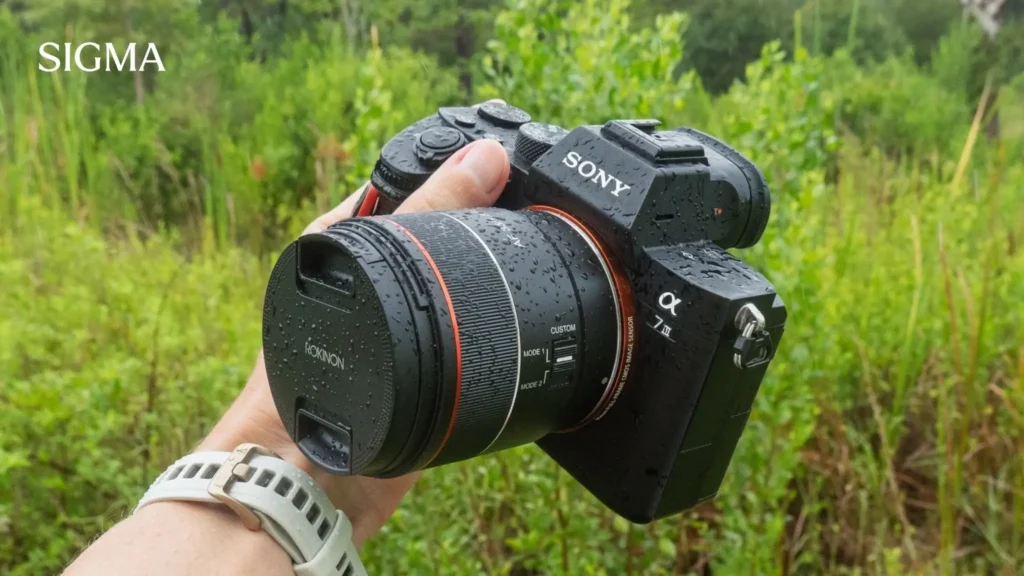
The first monsoon shower hits Lahore and every photographer faces the same choice. Pack the gear away, or step outside and shoot. Wet streets turn into mirrors. Grey skies soften harsh light. Empty parks fill with a mood you cannot fake in summer. Most photographers stay home because they fear water damage, and that fear is understandable. Good gear is expensive to replace here. Water only wins when the gear is unsealed.
Sigma weather sealed lenses handle rain far better than most shooters realize. With sealed glass, a few habits, and the right rain photography tips, monsoon becomes the most rewarding shooting window of the year.
This guide covers sealing, protection, settings, shoot ideas, and the Sigma lenses built for monsoon conditions.
Is It Safe to Shoot in the Rain?
Yes, shooting in light to moderate rain is safe with a weather-sealed camera and lens. The condition is proper drying afterward. The risk comes from careless handling, not from rain itself. Water damages gear when it enters through unsealed gaps, unsealed mounts, or open battery doors.
Two habits prevent almost every failure:
- The body and lens must both be sealed, because sealing is only as strong as its weakest part.
- Never change lenses while water is falling on the mount.
Heavy downpours are a different situation. During intense monsoon spells, shoot from shelter or use a cover. Most monsoon photography tips Pakistan photographers rely on begin with knowing when to stop shooting.
What Weather-Sealed Really Means
A weather sealed lens uses rubber gaskets at the mount, focus ring, zoom ring, and switches to block dust and splashes. It does not mean waterproof. No camera lens is submersible, and Sigma never claims that.
Here is what sealing actually protects against:
- Light rain and drizzle during outdoor shoots
- Splashes from puddles and street spray
- Humidity, mist, and morning fog in Murree or Naran
- Dust storms before the rain arrives
Here is what sealing does not protect against:
- Dropping your camera in water
- Long exposure to heavy rain without a cover
- Water entering through an unsealed camera body
- Water sitting on the gear for hours after the shoot
Sigma builds its sealing in layers. The mount carries a rubber gasket. Rings and switches get individual seals. Front elements on many Art and Sports lenses use a water and oil repellent coating. Rain beads up and rolls off instead of smearing. That coating also makes wiping the front element fast and safe between shots.
A weather resistant camera lens gives you working minutes in rain, not hours.
Which Sigma Lenses Are Built for Wet Conditions
Sigma Sports lenses carry the most complete sealing in the lineup, followed by the Art series, then select Contemporary models. The Sports line is designed for cricket grounds, wildlife hides, and open-air stadiums where photographers cannot pause for weather.
The 70-200mm F2.8 DG DN OS Sports and the 150-600mm F5-6.3 DG DN OS Sports both use full sealing across the barrel. Both handle monsoon shoots without complaint.
Sigma Art lenses such as the 24-70mm F2.8 DG DN II and the 35mm F1.4 DG II use a dust and splash resistant structure with a sealed mount. They are the practical choice for wedding and event work during rainy months, though a rain cover is always recommended for heavy downpours to keep your professional kit performing at its best
Several Contemporary lenses, including the 100-400mm F5-6.3 DG DN OS and the 16-300mm F3.5-6.7 DC OS, also carry sealed mounts. Always confirm the sealing level on the product page before you rely on it. The team at the Sigma Pakistan display center on Japan Street, Nisbat Road can show you the gaskets in person.
How to Protect Your Camera and Lens in the Rain
The most effective way to protect camera from rain is a physical barrier plus disciplined handling. Sealing is your backup, not your first line of defense. Professionals in Pakistan treat covers as standard kit during July and August.
Build these habits before the season starts:
- Attach a lens hood and leave it on. It keeps drops off the front element.
- Skip the UV filter in rain. Water on a filter creates flare and haze.
- Keep the battery door and card door shut until you are indoors.
- Carry two microfibre cloths in a sealed plastic bag.
- Sling the camera under your jacket when walking between locations.
- Never change lenses in the open during rain.
Rain Covers, Lens Hoods, and Quick DIY Options
A rain cover is the cheapest insurance you can buy, and a decent one costs less than a single lens repair. Dedicated covers wrap the body and barrel while leaving the viewfinder and controls usable.
Local photographers rely on three tiers of protection:
| Option | Best for | Cost & limitation |
|---|---|---|
| Branded rain sleeve | Full-day professional shoots and long lens setups. | Higher investment; requires matching the specific sleeve size to your lens/camera body. |
| Disposable plastic sleeve | Travel kits and as a “just-in-case” backup. | Inexpensive; material is thin and prone to tearing during active use. |
| Plastic bag or shower cap | Sudden rain and short-duration bursts. | Virtually free; can be bulky and may obstruct the viewfinder or camera controls. |
The DIY method works when the rain arrives without warning. Cut a hole in a clear plastic bag for the lens front. Secure it around the hood with a rubber band. Leave the eyepiece open. It looks rough and it works.
The lens hood does more than block flare. It creates a physical roof over the front element. During a monsoon street walk in Lahore, a deep hood keeps the glass usable for hours. Combine the hood with a large umbrella held by an assistant, and you can shoot through moderate rain comfortably.
What to Do If Your Lens Gets Wet
Act within the first hour, because damage from moisture builds slowly and quietly. Panic causes more harm than the water. Follow a fixed sequence every time.
- Move under shelter before touching anything.
- Wipe the outside with a dry microfibre cloth, front element last.
- Keep the lens mounted. Removing it exposes the rear element and sensor.
- Once indoors, remove the battery and memory card.
- Leave the gear out in open air at room temperature for several hours.
- Store it in a dry box or airtight container with fresh silica gel.
Never use a hairdryer. Heat pushes moisture deeper and can warp internal seals. Never leave a damp lens inside a closed camera bag overnight either. That trapped humidity is exactly how fungus starts growing on internal elements.
Pakistan’s humid post-monsoon weeks make lens fungus prevention a year-round concern, not a seasonal one. Once fungus etches the coating, cleaning becomes expensive and results are never perfect. Our detailed camera lens fungus guide covers storage boxes, silica gel schedules, and early warning signs.
Best Camera Settings for Rain Photography
Rain scenes need faster shutter speeds and higher ISO than most photographers expect, because clouds cut available light sharply. Your camera meter also gets confused by bright reflections on wet surfaces. These rain photography tips for exposure fix both problems.
Start with these baseline rain photography settings and adjust from there:
| Situation | Shutter | Aperture & ISO |
| Frozen raindrops | 1/500s or faster | F2.8 to F4, ISO 800 to 3200 |
| Rain streaks | 1/60s to 1/125s | F5.6 to F8, ISO 200 to 800 |
| Street reflections at night | 1/125s | F1.8 to F2.8, ISO 1600 to 6400 |
| Rainy landscape on tripod | 1/15s or slower | F8 to F11, ISO 100 to 400 |
Shoot in RAW without exception. Grey monsoon light compresses tonal range, and RAW gives you room to lift shadows later.
Shutter Speed for Rain Effects
Shutter speed controls whether rain appears as frozen dots or falling streaks, and this single choice defines the mood of your image. Nothing else changes the feel of a rain photo more.
Use 1/500s or faster to freeze individual drops in mid-air. This works beautifully with backlight, when drops catch light against a dark background. Position yourself so a streetlight or the sun sits behind the rain.
Drop to 1/60s and rain becomes visible streaks. The frame gains motion and atmosphere. Below 1/30s, streaks stretch long and the image starts to feel painterly.
Rain also disappears against busy backgrounds. Find a dark wall, a shadowed alley, or an unlit doorway. Contrast is what makes rain visible in a photograph.
Aperture and ISO for Cloudy Weather
Open your aperture and raise ISO without hesitation, because monsoon clouds routinely cost you three to four stops of light. Modern sensors handle ISO 3200 cleanly, and a slightly noisy sharp frame always beats a clean blurry one.
Wide apertures around F1.8 to F2.8 serve two purposes. They let you keep shutter speed high, and they separate your subject from cluttered wet streets. Fast Sigma primes make low light photography manageable when the sky turns dark at 4 p.m.
For landscapes, close down to F8 or F11 and use a tripod. Depth of field matters more than shutter speed on static scenes.
Set exposure compensation to positive one third or positive two thirds when shooting people against wet reflective streets. Bright surfaces fool the meter into underexposing faces. Check your histogram often rather than trusting the rear screen, which looks brighter than reality under grey skies. These monsoon photography camera settings need small adjustments as clouds shift.
Monsoon Photography Ideas to Try in Pakistan
The three ideas that work best during Pakistan’s monsoon are street reflections after dusk, portraits under overcast light, and storm landscapes in the north. Monsoon transforms familiar locations into fresh material, which is why local photographers plan shoots around the forecast. Wet surfaces add colour, reflection, and separation that dry summer light never provides. Each idea below needs a different light, so pick by the hour you are free to shoot. .
Street Reflections and City Lights
Wet roads turn into a mirror after dusk, making rain reflection photography the easiest high-impact monsoon technique. Shoot low. Drop your camera near the puddle surface, almost at ground level.
Try these spots and setups:
- Warm bulb light in the narrow lanes and bazaars of Lahore’s Walled City
- Lit-up facades along Fort Road food street, with the Badshahi Mosque behind
- Rickshaw and bike headlights cutting through standing water
- Sea View in Karachi after evening showers
- Blue Area in Islamabad, where wide roads hold clean reflections
Shoot during the twenty minutes after sunset. Sky brightness and street lights balance perfectly in that window. Underexpose slightly to keep the neon saturated.
Monsoon Portraits and Pre-Wedding Shoots
Overcast skies act as a giant softbox, which makes monsoon the best portrait light of the year in Pakistan. Harsh shadows disappear. Skin tones render evenly without a single reflector.
Couples increasingly request rain sessions, and the results stand out in a saturated wedding market. Practical monsoon photoshoot ideas Pakistan clients respond to include:
- A shared umbrella against a plain wet wall
- Backlit rain behind the couple, using a flash or car headlight
- Rain-soaked greenery in Model Town or Race Course Park
- Close crops on hands, dupatta edges, and water droplets
Brief your clients honestly. Tell them clothes will get wet. Keep a towel and a spare kit in the car. Book a covered backup location nearby.
Landscape Shots in the Rain
Rain clears haze and saturates colour, which makes the monsoon window ideal for landscape work in northern Pakistan. Clouds wrap around ridges in Naran, Swat, and Hunza. Waterfalls run at full strength. Rivers turn dramatic.
Storm light is the prize. Shoot in the minutes right after rain stops, when broken clouds let sunlight through. Use a polariser to cut glare off wet leaves and rock.
Travel safely. Landslides are common on northern roads during monsoon, so check conditions before you drive.
Best Sigma Lenses for Monsoon Photography in Pakistan
The best lens for rain photography in Pakistan is a sealed Sigma zoom that removes the need to swap glass outdoors. One versatile lens beats three specialized ones when water is falling. Prices below are current at Sigma Pakistan.
| Sigma Lens | Series | Ideal monsoon use | Price |
| 24-70mm F2.8 DG DN II | Art | Weddings, street, general | ₨ 308,000 |
| 35mm F1.4 DG ll | Art | Streets, Documentary, Events with extra reach | ₨ 271,900 |
| 70-200mm F2.8 DG DN OS | Sports | Sports, Portraits, compressed rain | ₨ 424,000 |
| 100-400mm F5-6.3 DG DN OS | Contemporary | Distant storms, wildlife | ₨ 263,000 |
| 16-300mm F3.5-6.7 DC OS | Contemporary | Travel, one-lens APS-C kit | ₨ 196,000 |
| 28-70mm F2.8 DG DN | Contemporary | Light, budget-friendly zoom | ₨ 245,000 |
For most working photographers, the 24-70mm F2.8 DG DN II is the answer. It covers wide to short telephoto, holds F2.8 throughout, and carries a sealed mount.
Choosing the best Sigma lens for landscape photography during monsoon depends on your view. Ultra-wide glass suits valley scenes in the north. The 100-400mm compresses distant ridges and storm cells beautifully. The best Sigma lens for outdoor photography across mixed conditions remains a fast standard zoom. It handles rain, low light, portraits, and travels without a change.
Check the current Sigma lens price in Pakistan on sigmaphoto.com.pk, or visit the display center at Japan Street, Nisbat Road, Camera Market, Lahore. Every unit sold through Sigma Pakistan and Hope Enterprises is original and warranty backed.
How to Dry and Store Your Camera After Shooting
Drying your gear correctly within a few hours of a wet shoot prevents almost all long-term damage. Skipping this step is the real cause of most fungus and corrosion cases in Pakistan.
Follow this routine after every monsoon session:
- Wipe the body and barrel with a dry microfibre cloth.
- Remove the battery and card, then leave both doors open.
- Take off the lens indoors only, in a dry room.
- Wipe the rear element and mount contacts gently.
- Leave everything in the open air for four to six hours.
- Store in a dry box with silica gel at 40 to 50 percent humidity.
A few points deserve emphasis. Replace or recharge silica gel packets every few weeks during monsoon. Never store a camera bag in a closed cupboard, because trapped air holds moisture. Avoid the fridge, and avoid direct sunlight for drying.
Photographers in Karachi face salt-laden humid air, which accelerates corrosion on metal contacts. A dedicated dry cabinet is a worthwhile investment there. Cleaning your weather sealed camera lens contacts with a dry cloth once a week also prevents connection errors.
If you notice web-like strands or haze inside the glass, stop using the lens. Contact Sigma Pakistan service support immediately.
Final Thoughts
Monsoon rewards photographers who prepare instead of retreating. Sealed gear, a rain cover, a hood, and a drying routine cover ninety percent of the risk. The rest is willingness to get slightly wet. Pakistan’s monsoon light is genuinely rare. Soft skies, saturated colour, and mirrored streets last only a few weeks each year. Applying these rain photography tips turns that short window into your strongest work.
Sigma Pakistan is here when you need sealed glass, honest advice, or service support. Visit us on Nisbat Road in Lahore, or browse the full range online.
Monsoon Photography FAQs
Can I use my camera in light rain?
Yes, if your camera body and lens are both weather-sealed. Light rain and drizzle are safe for short periods. Wipe the gear down afterward and dry it fully before storage. A rain cover adds protection during longer shoots.
Which Sigma lenses are weather-sealed?
Sigma Sports lenses carry the most complete sealing. Examples include the 70-200mm F2.8 DG DN OS and 150-600mm F5-6.3 DG DN OS. Art lenses like the 24-70mm F2.8 DG DN II use a sealed mount. Some Contemporary models are sealed.
What happens if water gets inside my lens?
Trapped moisture can rust the metal contacts and grow fungus on internal elements. Move under shelter and wipe the outside dry. Remove the battery indoors. Leave the lens in open air for several hours, then store with silica gel.
What are the best camera settings for rainy day photography?
Use 1/500s or faster to freeze raindrops, or 1/60s for streaks. Open the aperture to F2.8 and raise ISO to 1600 or higher. Shoot RAW, since grey light needs recovery in editing. Check the histogram rather than the rear screen.
How do I protect my camera from rain?
Use a rain cover as your first line of defense. Keep a lens hood on to shield the front element. Close the battery and card doors. Never change lenses in the open while rain falls.
