
Two photographers stand outside Badshahi Mosque at the same spot. One captures the entire courtyard in a single frame. The other fills the frame with one carved arch. Same camera, same distance, two completely different pictures. The difference sits in the number printed on the lens barrel. That number is the focal length, and it is measured in millimeters. It controls how much of a scene fits into your photo. It also decides how your subject looks against the background. Understand this one idea and you stop buying lenses you never use.
What Is Focal Length and Why Does It Matter?
Focal length is the distance between the optical center of a lens and the camera sensor. It is measured in millimeters when your subject sits in sharp focus. A small number such as 16mm records a wide scene. A large number such as 400mm pulls a distant subject close.
Camera focal length appears on the front ring of every lens you own. A zoom shows a range, such as 24-70mm. A prime shows one fixed value, such as 50mm.
This measurement matters because it controls three things at once. It sets your framing, your magnification, and the size of your background. Many photographers blame the camera body for flat, ordinary images. The lens choice is usually the real reason.
A common mix-up is worth clearing up early. Zoom describes a lens that covers several settings. The millimeter number describes your view at any one of those settings. A 24-70mm lens is a zoom, and 24mm is one point inside it.
Quick reference for beginners:
- Short numbers from 14mm to 35mm fit more of the scene into the frame.
- Middle numbers from 35mm to 70mm look closest to normal human vision.
- Long numbers above 70mm magnify distant subjects and shrink the background.
How Focal Length Changes Your Field of View
A shorter lens gives a wider field of view, and a longer lens gives a narrower one. The relationship is fixed and works in both directions.
Angle of view is the technical term for the same idea. It is measured in degrees across the diagonal of your frame.
On a full-frame camera the numbers work out roughly like this:
- 16mm covers about 107 degrees
- 24mm covers about 84 degrees
- 35mm covers about 63 degrees
- 50mm covers about 47 degrees
- 85mm covers about 29 degrees
- 200mm covers about 12 degrees
- 600mm covers about 4 degrees
Doubling the millimeter number roughly halves the width of your scene. This explains a common problem at indoor weddings in Lahore. A 50mm lens pushes you against the back wall of the hall. A 24mm lens lets you cover the same table from two steps away.
Treat these degree figures as a full-frame baseline. Crop bodies see less at every setting, as the crop factor section explains. Videographers feel this difference immediately. A 24mm view fits your face and your background at arm’s length. A 50mm view fills the frame with your face alone.
Wide-Angle, Standard, and Telephoto Focal Lengths
Lenses fall into three practical groups. Wide-angle sits below 35mm, standard runs from 35mm to 70mm, and telephoto starts above 70mm. These borders are guides rather than strict rules.
Use this focal length chart as a quick reference for full-frame bodies.
| Focal Range | Lens Type | Best For |
|---|---|---|
| 14-24mm | Ultra-wide and wide | Interiors, architecture, mountains |
| 24-35mm | Moderate wide | Street, travel, vlogging |
| 35-70mm | Standard | Events, everyday, product |
| 70-135mm | Short telephoto | Portraits, weddings, details |
| 150-600mm | Long telephoto | Cricket, wildlife, stage |
Angle of view narrows from about 114 degrees at 14mm to about 4 degrees at 600mm.
Wide-Angle Lenses
Wide-angle lenses exaggerate space and make foregrounds feel larger. They suit tight rooms, tall buildings, and open landscapes. Interior shoots in small DHA apartments often become possible only at these settings.
Watch the edges of your frame carefully. Faces near the corners stretch and look unnatural. Keep people close to the center when shooting groups. Wide settings also demand clean foregrounds. Empty floor or dull sky ruins an otherwise strong composition. Our wide-angle lens guide for Pakistan covers these mistakes in more depth.
Standard Lenses
Standard lenses record a scene close to what your eyes already see. Nothing looks stretched and nothing looks compressed. That makes them the safest choice for everyday and documentary work.
A 35mm or 50mm prime teaches framing faster than any zoom. You move your feet instead of turning a ring. This range also performs well in low light. Fast primes here let you shoot indoor events without flash. Read our standard lens uses and focal range breakdown for practical shooting examples.
Telephoto Lenses
Telephoto lenses magnify distant subjects and compress the background. Mountains look closer to your subject than they really are. Cricket players fill the frame from behind the boundary rope.
These lenses demand faster shutter speeds and steadier handling. Stabilization and clean technique matter more as the number climbs. Heat haze also becomes a real problem over long distances in Punjab summers. Shooting early or late gives cleaner results. Our guide on what a telephoto lens does explains types and use cases.
Focal Length vs Moving Closer to Your Subject
Zooming in and walking closer are not the same thing. Distance controls perspective, while the lens controls how much fits into the frame.
Shoot a portrait at 35mm from one meter away. The nose looks larger and the background looks small and distant. Now shoot the same face at 85mm from three meters. Features look natural and the background appears larger and softer. Try this test on your own street. Frame a friend at the same size using 24mm and 85mm. The two images will look nothing alike. That difference is perspective, and only your feet control it.
This principle also protects your image quality. Cropping later throws away pixels, while the right lens keeps them. Plan your shooting position first, then pick the lens that frames the shot.
How Focal Length Affects Depth of Field and Background Appearance
Longer lenses produce a shallower depth of field at the same aperture and shooting distance. Shorter lenses keep more of the scene acceptably sharp.
Four factors decide how much of your image stays sharp:
- Aperture, since f/1.4 blurs far more than f/8
- Focus distance, since closer subjects reduce the sharp zone
- The millimeter setting, since longer values magnify the blur
- Sensor size, since larger sensors blur backgrounds more easily
Background appearance changes too. A 200mm shot pulls the background forward and turns it into a soft color. A 20mm shot pushes it away and keeps details visible. Portrait shooters use this to hide messy surroundings at busy venues.
Here is a practical portrait setting. Stand three meters back and open the aperture to f/1.8. The face stays sharp while the background melts away. Group shots need f/5.6 or smaller so every face lands in focus.
Crop Factor: Why the Same Lens Looks Different on APS-C and Full-Frame
Crop factor describes how a smaller sensor narrows the view of the same lens. Most APS-C bodies from Sony, Nikon, and Fujifilm use a 1.5x factor. Canon APS-C bodies use 1.6x instead.
The 35mm equivalent is simple to work out. Multiply the millimeter number by the crop factor of your body.
| Lens | On Full-Frame | On APS-C (1.5x) |
|---|---|---|
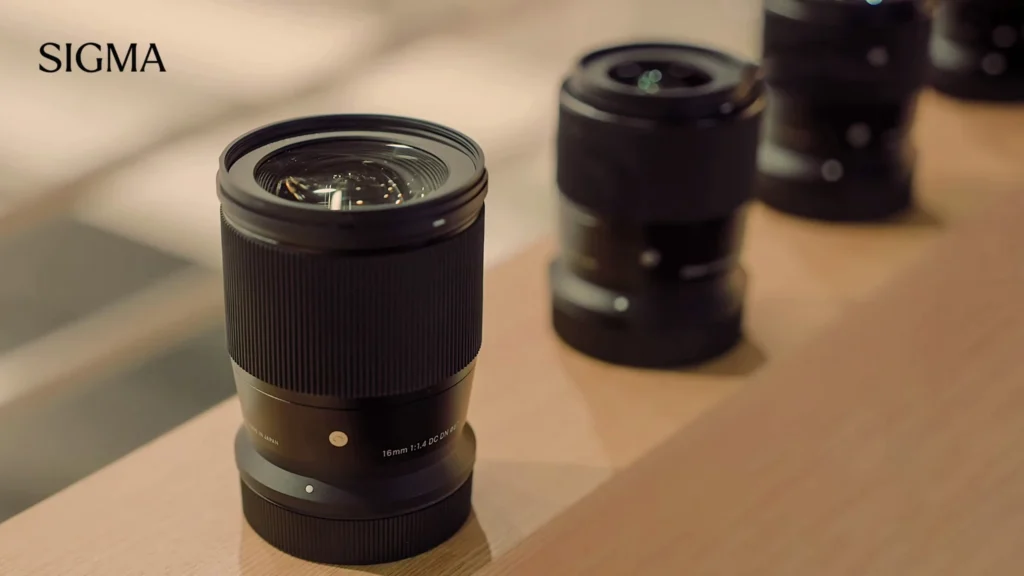
| Sigma 16mm F1.4 DC DN | 16mm | 24mm |
| Sigma 30mm F1.4 DC DN | 30mm | 45mm |
| Sigma 56mm F1.4 DC DN | 56mm | 84mm |
| Sigma 18-50mm F2.8 DC DN | 18-50mm | 27-75mm |
The lens itself does not change at all. The focal length printed on the barrel stays exactly the same. A smaller sensor simply records a narrower part of the image circle.
This matters at the buying stage. A Sigma 18-50mm F2.8 DC DN behaves like a 27-75mm on APS-C. That single lens covers wide, standard, and short portrait work. DC DN lenses are built for APS-C bodies, while DG DN lenses cover full-frame sensors.
Video adds one more layer to consider. Some cameras crop further in 4K, which narrows the view again. Check your camera manual before buying a wide lens for video work.
Which Focal Length Should You Use?
Choose your focal length by subject distance and how much background you want visible. Start with the subject, not with the lens already on the shelf.
A simple starting kit for most Pakistani shooters looks like this:
- One wide zoom for travel, interiors, and vlogging
- One fast prime near 35mm or 50mm for daily work
- One telephoto zoom for sports, wildlife, and events
Portrait Photography
The 50mm to 135mm range flatters faces and separates subjects cleanly. Features stay natural and the background falls away.
APS-C shooters get an ideal portrait view from the Sigma 56mm F1.4 DC DN. Full-frame users often settle on the Sigma 85mm F1.4 DG DN Art. Both handle outdoor sessions at Bagh-e-Jinnah and studio work in Karachi. Avoid shooting portraits below 35mm from close range. Noses and foreheads enlarge in a way clients rarely like.
Landscape and Street Photography
Landscape work favors 14mm to 35mm for depth and scale. Street work sits comfortably between 28mm and 50mm.
Wide options suit the valleys around Hunza and Skardu. The Sigma 10-18mm F2.8 DC DN gives APS-C travellers a very wide view in a compact body. For street sessions around Anarkali, a 35mm prime keeps you close without crowding people. Pack one wide zoom for mountain trips rather than three primes. Changing glass in dust and wind risks sensor marks.
Sports and Wildlife Photography
Sports and wildlife usually need 150mm and beyond. Your distance is fixed by boundary ropes and safety, so reach becomes the only answer.
The Sigma 150-600mm F5-6.3 DG DN OS Sports covers cricket at Gaddafi Stadium comfortably. Wildlife shooters in Deosai and Kirthar rely on similar reach. Shorter zooms leave subjects too small to crop usefully. Match your shutter speed to your reach as a starting rule. At 600mm, aim for 1/600 second or faster.
Prime vs Zoom Focal Lengths
A prime lens offers one fixed setting, while a zoom covers a range. Primes usually deliver wider apertures, smaller bodies, and sharper corners. Zooms save you from swapping glass during fast-moving events.
Beginners often learn framing faster with a prime. Wedding and event shooters lean on zooms for speed. Many working photographers in Pakistan simply carry one of each. Our full comparison of prime lens vs zoom lens options covers the trade-offs in detail.
Why Focal Length Matters When Choosing a Sigma Lens
Buying by brand name alone wastes money. Matching lens focal length to your actual subjects saves it. Sigma builds separate lines for different needs. Contemporary lenses stay light and travel friendly. Art lenses chase maximum sharpness and wide apertures. Sports lenses handle reach, weather sealing, and heavy daily use.
Mount compatibility matters just as much. Sigma Pakistan stocks options for Sony E, L-Mount, Fujifilm X, Canon RF, and Nikon Z bodies. Availability varies by mount, so confirm before you order. The budget also shapes the decision. A used body with better glass usually beats a new body with a kit lens.
Testing a lens in hand beats reading specifications online. You can try Sigma glass at the Sigma Pakistan display and service centre. It sits on Japan Street, Nisbat Road, Camera Market, Lahore. Staff can mount a lens on your body and show the difference instantly. Browse the full Sigma lens range before your visit.
Final Thoughts
Focal length is the first decision in almost every photograph you take. Aperture, shutter speed, and editing all come afterwards. Learn the three broad groups and their typical uses. Apply the crop factor whenever your camera uses an APS-C sensor. Then pick glass that matches the work you actually shoot most often.
Rent or borrow before committing to a long telephoto. A weekend of real use tells you more than any spec sheet. One well-chosen lens outperforms three random purchases. Sigma Pakistan supports photographers nationwide with genuine lenses, warranty cover, and proper after-sales service.
Focal Length FAQs
What does focal length mean in photography?
Focal length is the distance in millimeters between a lens’s optical center and the camera sensor. It decides how much of a scene fits into your frame. Shorter numbers capture wider views.
Is focal length the physical length of a lens?
No. It is an optical measurement, not the barrel’s physical size. A compact 400mm telephoto can look shorter than a bulky 24mm zoom because internal elements bend the light path.
What is a 50mm lens equivalent to on APS-C?
A 50mm lens gives roughly a 75mm view on APS-C bodies with a 1.5x crop factor. Canon APS-C uses 1.6x, giving about 80mm. That places it in short portrait territory.
What focal length is best for beginners?
Start with 35mm or 50mm on full-frame, or around 30mm on APS-C. These ranges match natural vision, stay affordable, and teach framing faster than any zoom. A fast prime also handles indoor light well.
Does focal length affect depth of field?
Yes. Longer lenses give shallower depth of field at the same aperture and shooting distance. A 200mm shot at f/2.8 blurs backgrounds far more than 24mm. Aperture and subject distance also matter.
What is the difference between 35mm and 50mm?
35mm captures a wider scene and suits street, travel, and group work. 50mm looks closer to human vision, isolates subjects better, and flatters portraits with softer backgrounds. Both suit full-frame bodies.
